About the Book
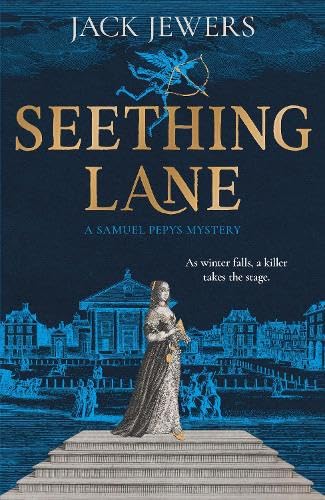
January 1670. London is enduring its worst winter in decades. But for Samuel Pepys, the darkest days are yet to come.
When a strange young man turns up at his office on Seething Lane asking for help, Samuel Pepys is too distracted to take him seriously. Nell Gwyn is about to make her scandalous return to the stage and he wouldn’t miss it for all the world.
But in the cold of a winter’s dawn, tragedy strikes. Called upon to investigate the brutal murder of a libertine aristocrat, Pepys discovers that the dead man is connected to his mysterious visitor in the most shocking way possible.
A trail of secrets leads Pepys from the backstreets of London to the glamorous world of the theatre, where nothing is quite as it seems. But whatever the dangers, he may find that the deadliest threat lies closer to home..
Format: Hardback (473 pages) Publisher: Moonflower Publishing
Publication date: 3rd September 2026 Genre: Historical Fiction, Crime
Find Seething Lane on Goodreads
Purchase Seething Lane from Bookshop.org [Disclosure: If you buy a book via the above link, I may earn a commission from Bookshop.org, whose fees support independent bookshops]
My Review
Seething Lane is the second book in the author’s historical mystery series featuring famous diarist Samuel Pepys. In reality Samuel Pepys kept a diary for almost ten years but then suddenly stopped for reasons that are unknown but have been the subject of much speculation. As in the first book, The Lost Diary of Samuel Pepys, the author imagines the events Pepys might have recorded in his diaries had he continued.
This is an unsettled period in English history. King Charles II is without a legitimate heir, despite fathering numerous children with his equally numerous mistresses, thus creating uncertainty about the succession. Without an heir, Charles’s brother James will inherit the throne but he is a Catholic which threatens a return to civil unrest. London is a city being rebuilt in the wake of the Great Fire of London but theatres have re-opened and, scandalously for some, women can now appear on the stage. The author cleverly incorporates elements of these into a plot that involves murder, conspiracy, treachery and political intrigue whilst at the same time being a rip-roaring adventure.
The focus for much of the action is the Drury Lane Theatre. Pepys is a dedicated theatre-goer but unexpectedly finds himself playing a role in a production of Shakespeare’s As You Like It, sponsored by the King as a vehicle for his current mistress, Nell Gwyn. Nell is an accomplished actress with the ability to bring the house down with a cheeky wink or unscripted double entrendre. I loved Nell’s bawdy wit and her realism, understanding that her position as the King’s mistress will only be temporary so she better make the most of it while it lasts.
As imagined by the author, Samuel Pepys is not only a diligent diarist but an intrepid investigator, a faithful friend and someone with an unexpected taste for adventure. He also proves to be doggedly determined but dangerously impulsive at times. However, his focus on the investigation he has been tasked with means he’s distracted from events at home.
The book immerses the reader in the London of the period in all its grimy and fetid detail. The streets and alleyways are places of danger and desperate poverty. For many it’s a miserable existence. In contrast, the theatre is a magical place, transformed from empty auditorium to a scene of spectacle once the players take to the stage.
The book includes some great characters, many based on real individuals, including Pepys’ longtime assistant Will Hewer. Some things we learn about characters made me think ‘Surely that’s an invention?’ but it turned out it was rooted in fact. The book contains beautifully drawn maps and floor plans of key locations.
By the end of the book, it’s clear there are some things that, for reasons of state, must be kept under wraps. As for Pepys, well, certain events have changed his life forever.
With its combination of intriguing plot, colourful characters and great period atmosphere, Seething Lane will definitely appeal to fans of historical crime mysteries.
My thanks to Amanda at Moonflower Books for my proof copy.
In three words: Entertaining, inventive, intriguing
Try something similar: Rags of Time by Michael Ward
About the Author

Jack Jewers is a filmmaker and writer. His 2022 debut, The Lost Diary of Samuel Pepys, was named one of the Sunday Times‘ historical fiction books of the year, and a book of the month by The Independent and Financial Times. His career has been spent telling stories across multiple media formats and his work includes film, TV, and digital media.
His films have been shown at international film festivals, including Cannes, New York, Marseille, Dublin, and London’s Fright-Fest, garnering multiple accolades, including an award from the Royal Television Society and a nomination from BAFTA Wales for Best Short Film.Jack’s passion for history has led him to many unexpected places, from hidden love stories in 3000-year-old poetry, to sending a portrait of Shakespeare into space.
Seething Lane is Jack’s second novel.
Connect with Jack
Website | Instagram | Bluesky