
My guest today on What Cathy Read Next is Chris Thorndycroft. As a fan of the ghost stories of M. R. James, I very much enjoyed Chris’s book The Visitor at Anningley Hall, a prequel to James’s story ‘The Mezzotint’.
Chris’s new book, Defender of the Wall which is published today, transports the reader to a quite different age – 4th century Britain. It’s the first book in the planned ‘Dragon of the North’ trilogy and tells the story of the legendary King Cunedag, a dark age warlord who went on to build the Kingdom of Gwynedd from the ashes of post-Roman Britain. Defender of the Wall is available to purchase as an ebook from Amazon.
I’m delighted to bring you an extract from Defender of the Wall. If you’re a fan of the novels of Bernard Cornwell, Matthew Harffy, Simon Scarrow, Gordon Doherty or Simon Turney, I think this is one to add to your wishlist. I certainly can’t wait to read it.
About the Book

Britain, 390 A.D. As a barbarian prince fostered by a Roman family below Hadrian’s Wall, Cunedag’s loyalties have always been conflicted. His own people despise the Romans with a passion, yet he has grown to manhood among them and is now a cavalry officer stationed on the Wall.
But Rome’s grip on Britain is slipping and the north, sensing weakness, explodes in all-out rebellion. As the Picts sweep down to harry the frontier, the province marshals its forces to fight back. And Cunedag is presented with a difficult choice; continue to defend Rome or rule his people as a free king.
Extract from Defender of the Wall by Chris Thorndycroft
“Hold position!” he yelled. “Let them come to us!”
Several javelins were thrown and were embedded in the shields of Cunedag’s men before the Attacotti rushed them. Bucklers slammed against oval cavalry shields, iron bosses scraping as swords and long knives tried to work their way in. Feet slid on the cobbles as each side tried to gain ground against the other.
One of Cunedag’s men fell to a Gaelic blade, blood spurting from his opened neck to run down his shield. His body was quickly hauled away and a fresh man took his place in the shield wall. As more Attacotti warriors appeared from the northern part of the fortress to join the fray, Cunedag knew they couldn’t hold out against such odds for long.
The streets heading east and north were jammed with warriors, his own men four soldiers wide, shield rims scraping the walls on either side as they tried to hold back the press of enemy warriors on both fronts. At last, to his great relief, he heard a cavalry horn bellowing to their rear. His men had arrived! They were saved, at least for the time being.
“Push!” Cunedag yelled, lending his weight to the rear of his men, shoving the man in front of him forward with his shield. “Give our boys some room!”
The cavalry dismounted at the gate and rushed into the fort to aid their comrades. The extra press of bodies as more and more men flooded in through the gate pushed the enemy back and boosted the morale of those in the shield wall no end. They took up a war cry; “Roma! Roma! Roma!” as those who had dared sack a Roman fort were forced away from the gate, leaving more room for the rest of Cunedag’s soldiers to swarm in.
Eventually, realising that they were now the ones who were outnumbered, the Attacotti gave up the fight in the streets and headed back to the northern part of the fort, some darting between the barrack blocks while others headed for the towers to mount a defence atop the walls.
“Hold!” Cunedag roared to his men as they made to pursue. This couldn’t turn into a disorganised rout, or he would lose more men than he had to. They would move in an organised fashion, from street to street, sweeping them clean of the enemy like vermin.
He divided his men back into what was left of his three turmae. None were at full strength anymore, but he took some satisfaction in knowing that he had more than enough men now to clear the fort of Attacotti warriors and reclaim it for Rome. What happened after that, he tried not to dwell on.
He sent one turma along the via principalis to the eastern end of the fort and led his own to the middle, just below the principia, leaving the remaining one by the western gate. The left and right turmae would move north, following the walls, clearing them of enemies while his own would search the principia. In this fashion, they would sweep the fort as one, pushing the enemy towards the northern gate where they would converge and slaughter them all.
The enemy were panicked. They knew they had lost the fort and had failed in their mission. Cunedag’s men marched, shields overlapping, along the streets and walls, stabbing and hacking at any Attacotti who dared get too close. They moved like a machine, Roman military discipline at its most ruthless.
They found the principia empty but for the bodies of those who had died defending it, the signs of smashed barricades telling of a valiant last stand in the courtyard which had ended in butchery. The praetorium was likewise deserted, the bodies of Candidius’s slaves strewn across the bloodstained mosaics. As they passed the barrack blocks, every cell was checked for hiding warriors, but none were found. The Attacotti tribesman had all fled to the northern gate where they were mounting a futile defence from its towers and walls.
“We’ve got the bloody bastards pinned!” said Elffin as they marched up the via praetoria that led to the northern gate. “Nowhere to run!”
“It’s time to finish them and avenge Cilurnum,” said Cunedag.
About the Author
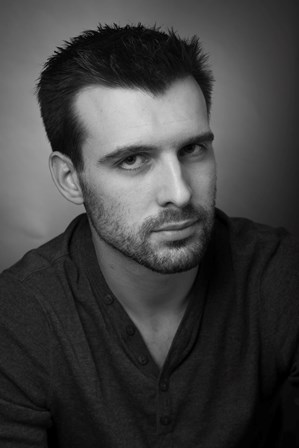
Chris Thorndycroft is a British writer of historical fiction, horror and fantasy. His early short stories appeared in magazines and anthologies such as Dark Moon Digest and American Nightmare. His first novel under his own name was A Brother’s Oath – book one in the Hengest and Horsa trilogy. He currently lives in Norway with his wife and two children. He also writes books inspired by the trashier side of pop culture like B movies and pulp magazines under the pseudonym P. J. Thorndyke.
Connect with Chris
Website ǀ X ǀ Goodreads



 What Cathy Read Next...