Interview: David Boyle, author of Regicide

Today’s guest on What Cathy Read Next is David Boyle, author of the historical mystery, Regicide: Peter Abelard and the Great Jewel.   David has kindly agreed to answer some questions about the book, its inspiration and his approach to writing.

regicideAbout the Book

England, 1100. King William Rufus is killed with an arrow on a hunt. Rumours start immediately that he was murdered.

Nineteen years later in France, Hilary the Englishman is dismissed from his position as tutor when his student, Alys, a young girl with whom he has fallen in love, dies of fever. Turned out in the street Hilary meets a strange man offers to buy Hilary a meal if he does him a favour. He gives Hilary a pouch of silver, and a message to be delivered to Count Fulk in Anjou. But by morning the man is dead, and the crows feasting on his body. Fearing he will be accused of murder, Hilary flees. But he owes a debt of honour to deliver the message. Hilary knows only one man can help him. His former teacher, the brilliant Peter Abelard.

Much has happened to Abelard in the years since Hilary knew him. Although he may not be the man he was, he comes to the aid of his former student, deciphering the message… A message about the death of King William Rufus all those years before. A message about who benefited from that death and about the Great Jewel of Alfred the Great… a jewel which rested in the crown used at the coronation of kings, but has been missing since 1066. Hilary and Abelard’s journey will take them through France, England, and Jerusalem as they race against time to save their own lives, and the fate of the monarchy. For there is a mysterious Saxon claimant to the throne.

To purchase Regicide from Amazon.co.uk click here (link provided for convenience, not as part of any affiliate programme)


Q&A with David Boyle

Without giving too much away, can you tell me a bit about Regicide?

Regicide starts in 1118 and is about a not very successful poet and clerk in holy orders, Hilary the Englishman, who is sacked from his tutor job, and finds himself – through no fault of his own – caught up in a medieval espionage murder, which appears to be related to the death, 18 years before, of William Rufus, the King of England, while out hunting. Chased across France by both sides, and himself accused of murder, Hilary begs for help from the one man who he believes can help him, his old teacher, Peter Abelard in Paris. He finds Abelard gone, chastened and beaten after his affair with Heloise – but they manage to escape for Jerusalem, knowing that they must return and find out who killed the King, to clear Hilary’s name…

Your previous books have been largely non-fiction: history, economics, politics, biography. What tempted you to enter the world of historical fiction?

I’ve always written fiction but tended in the past to keep it to myself! But I fell in love with the 12th century – its tolerance and relative openness and its art (and Abelard is key to that too) – when I was writing about Richard the Lionheart and I couldn’t resist trying to bring it alive.

How did you get the idea for Regicide?

I think the first thought was that the mystery about the death of William Rufus would lend itself well to detective fiction. The second thought was that Abelard – his great near contemporary – would make an excellent Sherlock Holmes figure. The third was that, as I researched Abelard’s life, I found he had a friend called Hilary the Englishman, a minor poet. Six of Hilary’s poems survive: three love poems to nuns and three to young monks. Immediately I discovered them, a picture of Hilary rose into my mind.

Peter Abelard is an interesting figure, a medieval philosopher best known for his affair with Heloise d’Argenteuil. What made you decide to make him a central character?

Abelard was an extraordinary man out of his own time. He is famous now for his affair but he was a brilliant teacher and thinker, a great controversialist, arousing rage and delight in equal measures. If he could have solved the Rufus mystery, I felt sure he would have done so!

How did you approach the research for the book? Do you enjoy the process of research?

I love it but have to be careful not to lose myself in it. I read around the characters and the period. It is important to me that everything I have in the book is consistent with history as we know it.

What was the biggest challenge you encountered when writing the book?

The danger if you do too much research is that you lose the story in atmosphere. I think I’ve managed to avoid that but it was a close run thing!

If you could travel back in time, what period would you choose to visit and why?

Definitely the twelfth century in Europe, perhaps in the troubadour courts of southern Europe – I managed to include the first troubadour as a character in Regicide. But I would make sure I would go to the dentist before I started my journey there!

Do you have a special place to write or any writing rituals?

I try and write in a hut surrounded by papers at the bottom of my garden. But I also have two children and a dog who require constant attention, so it is difficult.

What other writers do you admire?

I’m a huge admirer of William Boyd. Also, two generations back, of Henry Williamson.

What are you working on next? Will it be more historical fiction?

As a matter of fact I have been working on a novel, set during the Brexit debate but involving the Pilgrim’s Way – a late 12th century development. So that is rather the other way around.  I have also been commissioned to write three short historical novels about the Enigma code and there is no obvious link there with the 12th century at all…

Thank you, David, for answering my questions. I can’t wait to read Regicide and find out how the mystery is resolved.

Follow my blog with Bloglovin


DavidBoyleAbout the Author

David Boyle is the author of The Troubadour’s Song: The Capture and Ransom of Richard the Lionheart and a series of books about history, social change and the future. His book Authenticity: Brands, Fakes, Spin and the Lust for Real Life helped put the search for authenticity on the agenda as a social phenomenon. The Tyranny of Numbers and The Sum of Our Discontent predicted the backlash against the government’s target culture. He lives in Crystal Palace, in south London, with Sarah and Robin (two years old).

Connect with David

Website
Twitter

Reading the Walter Scott Prize for Historical Fiction Shortlist 2017

WalterScottPrize

The Walter Scott Prize for Historical Fiction was founded in 2010 by the Duke and Duchess of Buccleuch and Alistair Moffat, the Chair of Judges. The Duke and Duchess wanted to mark the very great achievements of their distant kinsman, Sir Walter Scott, and celebrate the resurgence of the genre he created.

Past winners of the prize include Wolf Hall by Hilary Mantel in 2010, The Garden of Evening Mists by Tan Twan Eng in 2013 and An Officer and a Spy by Robert Harris in 2014.

More information about the prize can be found here.

As historical fiction is my favourite genre, I was very interested to see the shortlist for this year’s prize which contains some familiar – and not so familiar – titles (to me, at least).


ACountryRoadATreeA Country Road, A Tree by Jo Baker (Doubleday)

When war breaks out in Europe in 1939, a young, unknown writer journeys from his home in neutral Ireland to conflict-ridden Paris and is drawn into the maelstrom. With him we experience the hardships yet stubborn vibrancy at the heart of Europe during the Nazis’ rise to power; his friendships with James Joyce and other luminaries; his quietly passionate devotion to the Frenchwoman who will become his lifelong companion; his secret work for the French Resistance and narrow escapes from the Gestapo; his flight from occupied Paris to the countryside; and the rubble of his life after liberation. And through it all we are witness to workings of a uniquely brilliant mind struggling to create a language that will express his experience of this shattered world. Here is a remarkable story of survival and determination, and a portrait of the extremes of human experience alchemized into timeless art.

DaysWithoutEndDays Without End by Sebastian Barry (Faber)

Thomas McNulty, aged barely seventeen and having fled the Great Famine in Ireland, signs up for the U.S. Army in the 1850s. With his brother in arms, John Cole, Thomas goes on to fight in the Indian Wars—against the Sioux and the Yurok—and, ultimately, the Civil War. Orphans of terrible hardships themselves, the men find these days to be vivid and alive, despite the horrors they see and are complicit in. Moving from the plains of Wyoming to Tennessee, Sebastian Barry’s latest work is a masterpiece of atmosphere and language. An intensely poignant story of two men and the makeshift family they create with a young Sioux girl, Winona, Days Without End is a fresh and haunting portrait of the most fateful years in American history and is a novel never to be forgotten.

TheVanishingFuturistThe Vanishing Futurist by Charlotte Hobson (Faber)

When twenty-two-year-old Gerty Freely travels to Russia to work as a governess in early 1914, she has no idea of the vast political upheavals ahead, nor how completely her fate will be shaped by them. Yet as her intimacy with the charismatic inventor, Nikita Slavkin, deepens, she’s inspired by his belief in a future free of bourgeois clutter, alight with creativity and sleek as a machine. In 1917, revolution sweeps away the Moscow Gerty knew. The middle classes – and their governesses – are fleeing the country, but she stays, throwing herself into an experiment in communal living led by Slavkin. In the white-washed modernist rooms of the commune the members may be cold and hungry, but their overwhelming feeling is of exhilaration. They abolish private property and hand over everything, even their clothes, to the collective; they swear celibacy for the cause. Yet the chaos and violence of the outside world cannot be withstood forever. Nikita Slavkin’s sudden disappearance inspires the Soviet cult of the Vanishing Futurist, the scientist who sacrificed himself for the Communist ideal. Gerty, alone and vulnerable, must now discover where that ideal will ultimately lead.

goodThe Good People by Hannah Kent (Picador Australia)

County Kerry, Ireland, 1825. Nóra Leahy has lost her daughter and her husband in the same year, and is now burdened with the care of her four-year-old grandson, Micheál. The boy cannot walk, or speak, and Nora, mistrustful of the tongues of gossips, has kept the child hidden from those who might see in his deformity evidence of otherworldly interference. Unable to care for the child alone, Nóra hires a fourteen-year-old servant girl, Mary, who soon hears the whispers in the valley about the blasted creature causing grief to fall upon the widow’s house. Alone, hedged in by rumour, Mary and her mistress seek out the only person in the valley who might be able to help Micheál. For although her neighbours are wary of her, it is said that old Nance Roche has the knowledge. That she consorts with Them, the Good People. And that only she can return those whom they have taken…

GoldenHillGolden Hill by Francis Spufford (Faber)

New York, a small town on the tip of Manhattan Island, 1746. One rainy evening in November, a handsome young stranger fresh off the boat pitches up at a counting-house door in Golden Hill Street: this is Mr Smith, amiable, charming, yet strangely determined to keep suspicion simmering. For in his pocket, he has what seems to be an order for a thousand pounds, a huge amount, and he won’t explain why, or where he comes from, or what he can be planning to do in the colonies that requires so much money. Should the New York merchants trust him? Should they risk their credit and refuse to pay? Should they befriend him, seduce him, arrest him; maybe even kill him?

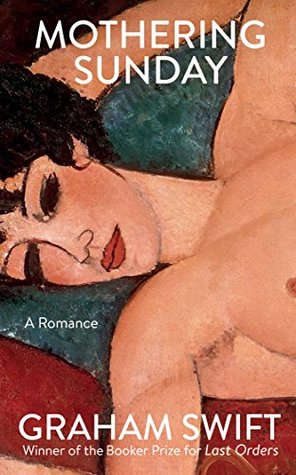
MotheringMothering Sunday by Graham Swift (Scribner)

It is March 30th 1924. It is Mothering Sunday. How will Jane Fairchild, orphan and housemaid, occupy her time when she has no mother to visit? How, shaped by the events of this never to be forgotten day, will her future unfold? Beginning with an intimate assignation and opening to embrace decades, Mothering Sunday has at its heart both the story of a life and the life that stories can magically contain.


TheGustavSonataThe Gustav Sonata by Rose Tremain (Chatto & Windus)

What is the difference between friendship and love? Or between neutrality and commitment? Gustav Perle grows up in a small town in ‘neutral’ Switzerland, where the horrors of the Second World War seem a distant echo. But Gustav’s father has mysteriously died, and his adored mother Emilie is strangely cold and indifferent to him. Gustav’s childhood is spent in lonely isolation, his only toy a tin train with painted passengers staring blankly from the carriage windows. As time goes on, an intense friendship with a boy of his own age, Anton Zwiebel, begins to define Gustav’s life. Jewish and mercurial, a talented pianist tortured by nerves when he has to play in public, Anton fails to understand how deeply and irrevocably his life and Gustav’s are entwined.


Surprisingly (or perhaps, shamefully) for a self-styled historical fiction aficionado, I’ve only read one of the shortlisted titles – Hannah Kent’s The Good People. I do have Golden Hill and Mothering Sunday on my Kindle waiting to be read so I’ll have to shuffle them to the top of the pack. I intend to acquire the others and (try to) read them all before the winner is announced at the Baillie Gifford Borders Book Festival in Melrose, Scotland on 17th June 2017.

I have to say, if it was judged on covers, then either Mothering Sunday or The Vanishing Futurist would be worthy winners in my book!

Have you read the short-listed titles? 

If so, what would be your pick for the prize?

Do literary prizes influence your reading habits?