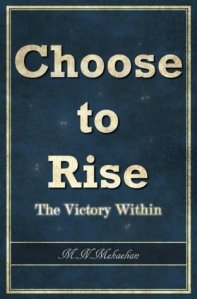
Extract: Choose to Rise by M N Mekaelian

One of the reasons I love reading historical fiction is that, not only does it entertain, but quite often it educates as well. The book written by today’s guest on What Cathy Read Next is a case in point. Author M N Mekaelian’s book, Choose to Rise: The Victory Within, takes as its subject the Armenian Genocide. I know very little about that period of history – other than the fact that, for political reasons, the UK government is yet to officially recognise it as a genocide.  So I was intrigued enough to accept the author’s offer to read the book. Unfortunately, that won’t be for a little while yet but, in the meantime, I’m delighted to bring you two extracts from the book.
Follow my blog with Bloglovin


ChoosetoRiseAbout the Book

Choose to Rise begins in 1971, when Professor Vartan Hagopian has a stroke. With the family around Vartan, now comatose in a hospital bed, the doctor mentions a name Vartan called out prior to the attack – Nadia. The mention of her name prompts Armen, Vartan’s younger brother, to tell the haunting story of their youth. Choose to Rise then opens in 1913, two years before the Armenian Genocide. The sultan has been overthrown and a new government – the Young Turks – has taken control. They rule with a promising hand, yet overtax and subjugate the Armenians who just want equal rights. Then, as World War One breaks out in 1914, the situation changes and conditions worsen. When 1915 approaches, the government’s plan for the Armenians becomes quite clear, forcing Vartan and Armen to find the courage and inner strength necessary to overcome the brutality.

Format: ebook (437 pp.), paperback (436 pp.) Published: 4th March 2017 Genre: Historical Fiction

Purchase Links*
Amazon.co.uk ǀ Amazon.com ǀ Barnes & Noble
*links provided for convenience, not as part of any affiliate programme

Find Choose to Rise: The Victory Within on Goodreads


Extract: Choose to Rise by M N Mekaelian

I didn’t respond. If that was the best he could do, I decided to abandon our lazy argument. Now uncaring and distracted, I occupied myself at the back of the cart and watched as the dirt road to the church lengthened as we crawled over it, creating a small trail of dust that would eventually settle over the rolling green pastures. Like a net, the natural scenery around it captured my fullest attention. Something about the beauty mesmerized me: the soft, dancing slopes, the green grass, the dark-blue sky above. The peace of it all. For that moment, as the uplifting and warm breeze moved around my body, I closed my eyes and listened as the wooden wheels turned and felt each rock we passed over.

Simplicity. I had found it.

Once I opened my eyes, I faced forward and watched as we neared the landmark of the area – an old bare tree, uniformly thick that, long ago, bore fruit. Stocky and twisted, it stood alone near the edge of a pasture where a herd of sheep flocked with their shepherds – five Turkish boys that I knew.

I stood up, keeping my balance, and waved to them. From atop their donkeys, with their long, thin sticks in hand, they waved back, smiling, happy to see us once again.

As Armenians who spoke the Armenian language, ate Armenian food, partook in Armenian culture, and lived in our own granted state of Armenia, it was still common for us to also speak the Ottoman Turkish language and adopt parts of the Turkish culture. This came as a direct result of the Moslem Turks and Christian Armenians readily intertwining their everyday lives within the Ottoman Empire.

Thrilled to have seen my Turkish friends once again, I sat back down with satisfaction as we continued to crawl over the scattered stones of the road until we arrived at the edge of the churchyard, to Soorp Asdvadzadzin, our church.

*******

“Armen, listen to me. We have one chance to get out of here, and we have to do it right now. Are you ready?”

His heart beat rapidly. He was scared. I heard it in his voice. I nodded my head.

Immediately, Vartan sprung up and so did I. I sprung up so fast, in fact, that my foot slipped and I lost traction. I threw my arms out and tried to catch myself but fell backwards and hit my forearm on the windowsill. The adrenaline in my body was too great for me to care, so I pushed myself off and plowed through the door after my brother. It flung open, making a hollow woody sound and quickly rocked back to equilibrium. I then jumped off the porch and onto the frosty ground. Everything about our escape was rough; it was loud, hastily arranged, and anything but covert. Upon seeing us, the soldiers snapped their reins high and whistled. They kicked their heels into their horses and started a swift gallop towards us. With one leap from behind, Vartan mounted the horse and I grabbed his hand from the side. With a swinging motion, he pulled me up and we began our escape.

Lowering his chin to the back of the horse’s neck, Vartan reached behind him and pointed to the ground.

“Keep your head down!” he exclaimed. “We’ll go faster!”

As I lowered my head as close to the horse as I could, we increased our speed and I felt the hair of the horse cut through the cold wind as the steady beat of her breath froze in the air. My eyes quickly began to water and I blinked hard to get rid of the tears just so I could see. I then turned to look behind us and the soldiers in the lead took out their pistols and aimed them at us

“Gun!” I screamed. “Vartan! Gun!”

At that moment, a blast went off, and I felt a bullet whiz by so close to my head that I felt it inside my ear. The horse neighed at the disruption as the bullet struck the ground in front of us. Waking up to the realization that all this was, indeed, my living reality, I immediately raised my hand and touched the side of my head to see if I’d been struck. Vartan, too, turned and checked.

“I’m fine!” I screamed. “Go!”

One after the other, and sometimes two at a time, the bullets screamed past us as we rode away. The dirt around us jumped up as my body twisted and turned with the horse as we followed a curved path. The only thing on my mind was to escape. I had no time to think about anything else. Vartan had done a great job of making a getaway, and thus far, it was working.

MNMekaelianAbout the Author

M N Mekaelian is of Armenian heritage. Choose to Rise is the author’s first book, inspired by family history and is the product of extensive historical research.

Connect with M N Mekaelian

Instagram ǀ Goodreads


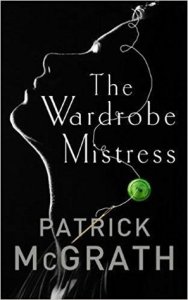
Book Review: The Wardrobe Mistress by Patrick McGrath

TheWardrobeMistressAbout the Book

January 1947. London is in ruins, there’s nothing to eat, and it’s the coldest winter in living memory. To make matters worse, Charlie Grice, one of the great stage actors of the day, has suddenly died.

His widow Joan, the wardrobe mistress, is beside herself with grief. Then one night she discovers Gricey’s secret.

Plunged into a dark new world, she realises that the war isn’t over after all.

Format: ebook Publisher: Cornerstone Pages: 320
Publication: 7th Sep 2017 Genre: Historical Fiction

Purchase Links*
Amazon.co.uk ǀ Waterstones UK
*links provided for convenience, not as part of any affiliate programme

Find The Wardrobe Mistress on Goodreads


My Review

Firstly, as an aside, can I say how good it is to come across a book blurb that is concise and doesn’t give too much away! Secondly, can I admit this is the first book I’ve read by Patrick McGrath but, on the strength of The Wardrobe Mistress, it certainly won’t be the last.

The book opens at the funeral of Charlie ‘Gricey’ Grice and the reader is immediately introduced to the ‘chorus’ who will be the book’s narrators, omnipresent onlookers to all the action. There is a sense that they already know what’s going to happen, that events are playing out in front of them as if in a play.

Gricey’s widow, Joan, is grief stricken at his death, finding solace in the touch and smell of his clothes, imagining she can hear his voice and sure she can sense his lingering presence. Her belief that Gricey’s spirit lives on is confirmed by the uncanny ability of the actor who takes over Gricey’s part in the play – Frank Stone – to enact the role exactly as her husband did – every mannerism, gesture and mode of speech exactly as he would have performed it. But, of course, everyone else knows Gricey is dead.

‘It’s certainly what we thought, and to think otherwise was mad, frankly, and heartbreaking too, poor Joan. But it seemed she could think both things at once, that he was dead, and alive too, in the body of another man.’

Frank’s performance – his ability to inhabit so perfectly the role performed by Gricey – is the spark that brings him and Joan together.   In addition, Frank’s obvious poverty as a not very successful actor and his aura of neediness awaken something in Joan. Only later does she begin to detect the fierce streak of ambition under the surface.

And it’s not long before Joan discovers that her beloved Gricey wasn’t the man she thought he was. He’d concealed things from her, things that would have made her think quite differently about him: ‘Gricey – the hypocrite. Gricey the deceiver. The betrayer. The charlatan, the traitor. Oh, he was a character all right…’ It becomes apparent that his life outside the theatre was as much a performance as when he was on stage: ‘Their life together now seemed nothing but an elaborate performance of pretence and disguise, yes, his whole life a performance, he’d never stopped performing…’

Joan’s disgust when she finds out the truth leads her down a path that will have far-reaching consequences and only increase her sense of grief, loneliness, betrayal and desperation. ‘It was another kind of grief she felt, and far worse, with what she thought of as the second death. Her sorrow now was for herself, that he hadn’t allowed her to hold him in her memory as she would have liked to, but had left her with only a mask.’

The author evocatively conjures up the atmosphere of post-war London: the food shortages, the cold, the grime, and the people struggling to get by.  ‘Magnificent in victory, oh yes – and bankrupt. Morally magnificent and economically broke. Exhausted. Oh, England. Smog, ruins, drab clothes, bad food, bomb craters and rats. There was work to be had – demolition.’  And although the war may be over, it isn’t the end of the evil forces that caused it or the need to fight against extremism and hate (a need which, sadly, continues to this day).

Against this backdrop, it’s easy to see the lure of the theatre with its bright lights and ability – if only temporary – to transport the audience to another place, away from the everyday struggle to earn a living, to keep warm.   If it isn’t too obvious a metaphor, the theatre plays a starring role in the book along with the recurrent theme of performance.  The craft of the actors on stage and the thrill of live performance is celebrated.

‘He had of course that fierce bright fire in his eyes, it was always there when they came off stage at the end of the night, when they were full of life and of themselves.’

The role of the backstage staff, like Joan, proud of her skill as a wardrobe mistress and ruling the sewing room with a rod of iron, is recognised as well.

‘For it was an assault, what was suffered by the costumes in which actors stepped out each night then ripped off between scenes, until Joan and her girls took them in hand, applied sharp needles and, whispering soft words, brought them back good as new before sending them out to be ravaged again the next night.’

And as the book shows, it’s not only actors who use costume as a means of creating a character for themselves.  Nowhere is the single-minded intensity needed to be a successful actor more effectively conveyed than in the character of Vera, Joan’s daughter. In Vera, the insecurities of an actor preparing for performance are writ large. One moment she’s withdrawing into her own private space and the next she’s almost preying on others to harvest the real-life experiences needed to produce her stage performance.

The Wardrobe Mistress had it all for me: atmospheric period setting, intriguing mystery and well-developed characters.  I also enjoyed its very moving exploration of grief and betrayal, its joyful celebration of the theatre and insightful examination of the act of performance.  Highly recommended.

I received an advance reader copy courtesy of NetGalley and publishers Cornerstone, return for an honest review.

Follow my blog with Bloglovin

In three words: Atmospheric, compelling, moving

Try something similar…Miss Treadway and the Field of Stars by Miranda Emmerson (click here to read my review)


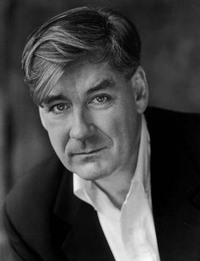
PatrickMcGrathAbout the Author

Patrick McGrath was born in London in 1950. He grew up in the grounds of Broadmoor Hospital, the largest top-security mental hospital in the UK, where his father was Medical Superintendent. He was educated at Stonyhurst College, a Jesuit public school in Lancashire. In 1967 he left Stonyhurst under a cloud. In 1971 he graduated from the City of Birmingham College of Commerce with an honors degree in English and American Literature, awarded externally by the University of London.

Later that year he moved to Penetang, Ontario, where he worked in the Oakridge top-security unit of the Penetang Mental Health Centre. He then moved to British Columbia. There he worked as a kindergarten teacher, a bar-room musician, and a graduate student at Simon Fraser University. Since 1981 he has lived in Manhattan. He is married to actress and theatre director, Maria Aitken, and lives in New York City.

In 2017, Patrick McGrath accepted the offer of an honorary doctorate from the University of Stirling, in Scotland.

Connect with Patrick

Website ǀ Twitter ǀ Goodreads