Book Review – Queen Macbeth by Val McDermid

About the Book

A thousand years ago in an ancient Scottish landscape, a woman is on the run with her three companions – a healer, a weaver and a seer. The men hunting her will kill her – because she is the only one who stands between them and their violent ambition. She is no lady: she is the first queen of Scotland, married to a king called Macbeth.

As the net closes in, we discover a tale of passion, forced marriage, bloody massacre and the harsh realities of medieval Scotland. At the heart of it is one strong, charismatic woman, who survived loss and jeopardy to outwit the endless plotting of a string of ruthless and power-hungry men. Her struggle won her a country. But now it could cost her life.

Format: Hardcover (152 pages) Publisher: Polygon
Publication date: 2nd May 2024 Genre: Historical Fiction

Find Queen Macbeth on Goodreads

Purchase Queen Macbeth from Bookshop.org [Disclosure: If you buy books linked to our site, we may earn a commission from Bookshop.org, whose fees support independent bookshops]

My Review

Queen Macbeth, part of the Darkland Tales series, is aimed at exploring the truth behind the story – the myth, as the author would have it – Shakespeare presents in the play Macbeth. Her particular focus is the woman we know as Lady Macbeth in the play but whose real name was Gruoch and herself possessed royal blood.

The book alternates between past and present timelines, all written from the point of view of Gruoch (Helpfully, one is in italics.) The past timeline starts when Gruoch meets her husband’s cousin Macbeth for the first time. She considers him a vast improvement on her husband whose only interest in her is to get an heir, something she has been unable to provide. Macbeth offers a much more enticing prospect.

The author replaces Shakespeare’s rendition of events with historical fact, adding parts of Macbeth and Gruoch’s life together that are not mentioned in the play. For example, that they undertook a pilgrimage to Rome. Macbeth comes across as a (relatively) more benevolent and sane ruler than he does in the play, even if it was very likely he gained the throne by murdering his cousin. But then most kings of Scotland at the time gained – and lost – their thrones that way. Real life figures such as Duncan, Macduff and Malcolm feature but with more historical accuracy. Other characters from the play appear but in different roles. For example, the equivalents of the three witches are Gruoch’s waiting women, one of whom is gifted with ‘second sight’.

Little is known about Gruoch’s life after Macbeth’s death so McDermid engages her writer’s imagination to continue the story. In the present day timeline it’s four years on from Macbeth’s death and Gruoch has been in hiding from King Malcolm, to whom she poses a threat as a rallying point for rebellion. Their hiding place having been discovered, Gruoch and her faithful companions are forced to flee across the country. Unfortunately they are captured and it looks like the end of Gruoch’s story. However, the book’s blurb warned to ‘expect the unexpected’ and the author definitely delivers it at this point. In Shakespeare’s play Lady Macbeth meets a bloody end, in this one it’s more sail off into the sunset.

As you’d expect from Val McDermid, Queen Macbeth is very well written and I liked the occasional inclusion of Scottish words (there’s a helpful Glossary) and the way she sometimes incorporated into the dialogue quotations from Macbeth. (Probably a lot more of them than I noticed.) The book provides a vivid picture of medieval Scottish life in a noble household including detailed descriptions of food.

Although it was fascinating to learn about the ‘real’ Lady Macbeth, it’s fair to say quite a lot of events in the book are drawn from the author’s imagination given Gruoch simply disappears from the historical record.

In three words: Fascinating, dramatic, authentic
Try something similar: Learwife by JR Thorp

About the Author
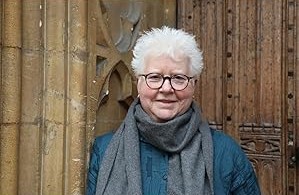
Author Val McDermid

Val McDermid grew up in Fife and played in the ruins of Macduff’s Castle as a child. She was the first state school pupil to study at St Hilda’s College, Oxford, where she read English. After a career in news journalism, culminating as Northern Bureau Chief of a national Sunday newspaper, she became a full-time writer in 1991. She has produced thirty-nine novels, two non-fiction titles, a children’s picture book, short stories and several dramas for stage and radio. Her books, translated into more than forty languages, have sold more than nineteen million copies and won many awards. She is Patron of the Scottish Book Trust, sponsor of McDermid Ladies football team and lead vocalist of the Fun Lovin’ Crime Writers.

Connect with Val
Website | Facebook | Instagram | Bluesky

Book Review – Glorious Exploits by Ferdia Lennon

About the Book

Front cover of Glorious Exploits by Ferdia Lennon

Ancient Sicily. Enter GELON: visionary, dreamer, theatre lover. Enter LAMPO: feckless, jobless, in need of a distraction.

Imprisoned in the quarries of Syracuse, thousands of defeated Athenians hang on by the thinnest of threads.

They’re fading in the baking heat, but not everything is lost: they can still recite lines from Greek tragedy when tempted by Lampo and Gelon with goatskins of wine and scraps of food.

And so an idea is born. Because, after all, you can hate the invaders but still love their poetry.

It’s audacious. It might even be dangerous. But like all the best things in life – love, friendship, art itself – it will reveal the very worst, and the very best, of what humans are capable of.

What could possibly go wrong?

Format: Paperback (288 pages) Publisher: Fig Tree
Publication date: Genre: Historical Fiction

Find Glorious Exploits on Goodreads

Purchase Glorious Exploits from Bookshop.org [Disclosure: If you buy books linked to our site, we may earn a commission from Bookshop.org, whose fees support independent bookshops]

My Review

Shortlisted for the Walter Scott Prize for Historical Fiction 2025, Glorious Exploits transports the reader to Syracuse in Sicily in the 5th century BC during the Peloponnesian War between Athens and Sparta, and its allies. (I knew next to nothing about the Peloponnesian War but, to be honest, you don’t really need to know anything about it to enjoy the book.)

At the point the book opens an Athenian expedition to Sicily has ended in disaster with its fleet sunk and thousands of Athenians taken prisoner. With nowhere else to house them they’ve been imprisoned in a quarry in the baking sun barely surviving on the meagre rations they’re given. Sounds like a grim backdrop to a book doesn’t it? But somehow the author manages to find the humanity and the humour, albeit dark humour, in the situation through two brilliantly imagined characters: Lampo and Gelon.

Lampo is our narrator, telling the story with a delightful Irish lilt and wry humour. Somehow the modern dialogue doesn’t seem out of place, it’s just really funny. Shopping for supplies for an outing, he says, ‘I also grab an Italian white which the vintner says is “causing quite the stir”.’

Gelon has a passion for Greek plays, in particular those of the Athenian playwright Euripides and, fearing the defeat of Athens may mean his work being lost forever, comes up with the seemingly crazy notion of staging Euripides’ play Medea, and his new work The Trojan Women, using some of the prisoners as cast and the quarry as a theatre. Because perhaps it’s possible to be at war with another nation and still appreciate their art? Ironic then that Medea and The Trojan Women are about revenge and the consequences of war.

Lampo and Gelon hold casting sessions (with the promise of more generous rations for the successful) and set out to obtain financial backing for the enterprise, sets and costumes. They succeed in finding a patron who is an avid collector of objects from across the world. One object in his collection is particularly curious.

Their bold undertaking is fraught with problems but as Gelon says, ‘It’s poetry we’re doing… It wouldn’t mean a thing if it were easy’. Although they do meet with success, it quickly turns to tragedy as what’s being portrayed on stage is played out in real life, showing that, although art can convey universal emotions, unfortunately one of those is hate. It results in Lampo and Gelon embarking on an even more onerous task but one that shows a finer side of humanity.

Lampo and Gelon have been friends since childhood and their friendship is heartwarming. Lampo finds comfort in Gelon’s certainty, whilst Gelon depends on Lampo’s seemingly endless ability to get them out of sticky situations. But there’s sadness beneath the surface in both their lives. Gelon has lost his wife and son. Heartbreakingly, he often thinks he glimpses her but it always turns out to be just an illusion. Lampo, lame in one leg, is looking for love but the woman who’s captured his heart isn’t free to choose her own destiny. His efforts to rectify the situation are endearing.

Glorious Exploits is a terrifically entertaining story of friendship, and of optimism; the belief that ‘something’ will turn up. As Lampo says, ‘Anything is possible, and it always has been. For the world was once just a dream in a god’s eye, and the man who gives up on himself makes that very same god look away’.

In three words: Imaginative, funny, immersive

About the Author

Author Ferdia Lennon

Ferdia Lennon was born and raised in Dublin. He holds a BA in History and Classics from University College Dublin and an MA in Prose Fiction from the University of East Anglia. Glorious Exploits is his first novel. A Sunday Times bestseller, it was adapted for BBC Radio 4 and was the winner of the Waterstones Debut Fiction Prize 2024 and the Bollinger Everyman Wodehouse Prize for Comic Fiction. After spending many years in Paris, he now lives in Norwich with his wife and son. (Photo: Amazon author page)

Connect with Ferdia
Website | Instagram