
Welcome to today’s stop on the blog tour for The Bermondsey Bookshop by Mary Gibson, published yesterday in hardback and as an ebook by Head Of Zeus. Thanks to Vicky Joss for inviting me to take part in the tour and for my review copy via NetGalley.
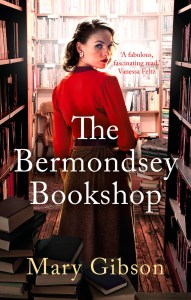 About the Book
Set in 1920s London, this is the inspiring story of Kate Goss’s struggle against poverty, hunger and cruel family secrets.
Her mother died in a fall, her father has vanished without trace, and now her aunt and cousins treat her viciously. In a freezing, vermin-infested garret, factory girl Kate has only her own brave spirit and dreams of finding her father to keep her going. She has barely enough money to feed herself, or to pay the rent. The factory where she works begins to lay off people and it isn’t long before she has fallen into the hands of the violent local money-lender.
That is until an unexpected opportunity comes her way – a job cleaning a most unusual bookshop, where anyone, from factory workers to dockers, can learn to read and then buy books cheaply. A new world opens up, but with it come new dangers, too.
Based on the true story of the Bermondsey Bookshop, this is the most inspiring and gripping novel Mary Gibson has yet written.
Format: Hardcover, ebook (448 pages) Publisher: Head of Zeus
Publication date: 6th February 2020 Genre: Historical Fiction
Find The Bermondsey Bookshop on Goodreads
Purchase links*
Amazon.co.uk | Amazon.com | Hive (supporting UK bookshops)
*links provided for convenience, not as part of any affiliate programme
My Review
The story moves at a pace that allows plenty of opportunity for the author to provide detail about daily life for working class families in 1920s Bermondsey. The contrast between their experience – poor and overcrowded housing, ill health, insecure work – and that of the wealthier and more privileged is vividly depicted. In a neat inversion, it is Kate who lives in a garret and Martin, the artist for whom she models, who lives in a swanky flat.
I might have wished for a little more of the story to be focused on the Bermondsey Bookshop itself (which actually existed, founded in 1921 by Ethel Gutman, who also appears in the book). Instead its main role is to act as a location for Kate to meet other characters that she might not otherwise have encountered. For example, wealthy French teacher, Nora, or Martin, the aforementioned artist.
In Kate, the author has created an incredibly engaging main character – spirited, independent-minded, intelligent, and resilient. She certainly needs to be all those things because the author gives her plenty of trials and tribulations to face including homelessness, unemployment, debt, intimidation and cruelty from people who should treat her better. Happiness is indeed precarious. Through it all, you can’t help rooting for Kate – or forgiving her the odd purloined sticky bun or fisticuffs with her cousin Stan.
Initially, I couldn’t warm to Kate’s childhood sweetheart, Johnny, despite his own unhappy situation, but later I was forced to reappraise my view. I also thought Kate’s idealised picture of the father who’d abandoned her as a child, although evidence of her generous nature, showed more than a little naivety. I wasn’t completely surprised by how things turned out.
As Kate learns, it’s not merely distance that separates Bermondsey and Belgravia, money doesn’t necessarily buy you happiness, ‘wealth is not the same as worth’, and dreams are sometimes just that. ‘She’d learned the folly of pinning her hopes on someone else to give her a better life, but she’d also learned her own power.’
The Bermondsey Bookshop has all the ingredients readers look for in this brand of historical fiction: a well-crafted story with great period atmosphere; moments of melodrama; a varied cast of characters, some likeable, others definitely not; and an inspiring message of the possibility of triumph over adversity. Cinderella meets My Fair Lady, if you like.
For more information about the setting of the book (and biscuits) you can read my Q&A with Mary as part of the blog tour to celebrate publication of her previous book, Hattie’s Home.
In three words: Heart-warming, dramatic, emotional
Try something similar: A Ration Book Christmas by Jean Fullerton
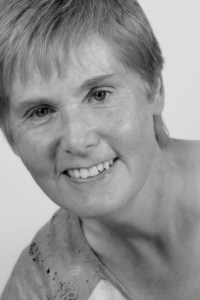 About the Author
Mary Gibson was born and brought up in Bermondsey, south east London. After a thirty year career in publishing, she took the opportunity of early retirement to write a book of her own. Her début novel, Custard Tarts and Broken Hearts, was inspired by the lives and times of her grandparents in World War One Bermondsey. It went on to become a top ten Kindle best seller and was selected for World Book Night 2015.
Connect with Mary
Website | Twitter | Facebook

 About the Book
 About the Author

