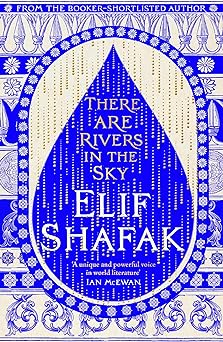
Book Review – There Are Rivers in the Sky by Elif Shafak

About the Book

In the ruins of Nineveh, an ancient city of Mesopotamia, there lies, hidden in the sand, fragments of a long-forgotten poem, the Epic of Gilgamesh.

In Victorian London, an extraordinary child is born at the edge of the dirt-black River Thames. Arthur’s only chance of escaping poverty is his brilliant memory. When his gift earns him a spot as an apprentice at a printing press, Arthur’s world opens up far beyond the slums, with one book sending him across the seas: Nineveh and Its Ruins.

In Turkey in 2014, Narin, a Yazidi girl living by the River Tigris, waits to be baptised with water brought from the holy Lalish in Iraq. The ceremony is cruelly interrupted, and soon Narin and her grandmother must journey across war-torn lands in the hope of reaching the sacred valley of their people.

In London in 2018, broken-hearted Zaleekhah, a hydrologist, moves to a houseboat on the Thames to escape the wreckage of her marriage. Zaleekhah foresees a life drained of all love and meaning, until an unexpected connection to her homeland changes everything.

Format: Hardcover (484 pages) Publisher: Viking
Publication date: 8th August 2024 Genre: Historical Fiction

Find There Are Rivers in the Sky on Goodreads

Purchase There Are Rivers in the Sky from Bookshop.org [Disclosure: If you buy books linked to our site, we may earn a commission from Bookshop.org, whose fees support independent bookshops]

My Review

This was a book club pick and I’m so grateful to the person who chose it because it has been sitting on my bookshelf ever since I bought a copy at last year’s Henley Literary Festival. I loved it and, with one exception, all the other book club members enjoyed the book as well.

I can’t summarise it better than the first sentence on the inside front cover: ‘This is the story of one lost poem, two great rivers and three remarkable lives – all connected by a single drop of water.’ I usually run a mile at the prospect of any element of magical realism in a book but I found it easy to accept the concept that a single drop of water could manifest itself in different forms, repeatedly changing from liquid to solid to vapour and back again over vast periods of time. ‘Water is the consummate immigrant, trapped in transit, never able to settle.’

The drop of water is not the only thing that connects the three characters and their stories. There are myriad others, some very small details – an oak tree, the colour lapis lazuli, mudlarking – that give you moments of pleasure when you spot them. And there are larger themes such as environmental pollution, climate change, migration, and social and economic inequality, that run through all three stories.

Storytelling is a big part of Narin’s story. Her grandmother tells her stories from Yazidi culture as they make the long journey to Iraq. It’s poignant because not only have the Yazidi been reduced in number because of systemic persecution but Narin is losing her hearing so this is her last chance to commit them to memory. Memory is another theme, particularly in relation to immigrants who carry with them stories from their heritage even while adjusting to a new one, making them members of what the author dubs ‘the memory tribe’.

Arthur’s story is the standout part of the book, not just because of the depth of his characterisation but because of the epic journey the author sends him on fuelled by his learning of the ancient city of Nineveh, once the largest city in the world but reduced to a ruin over the centuries. Arthur’s possesses a photographic memory, is able to solve complex mathematical problems in his head and has the ability to interpret patterns. (Today we might classify him as neurodivergent.) His ability to see patterns enables him to decipher the cuneiform tablets displayed in the British Museum, in particular those fragments that record, in incomplete form, the ancient poem the Epic of Gilgamesh. It fuels in him an insatiable desire to travel to the site of Nineveh in the hope of uncovering the lost fragments that tell the story of a great flood, predating that of Noah’s Ark in the Bible. (Arthur is based on George Smith, the first person to translate the Epic of Gilgamesh.)

In Arthur’s story, I loved the way the author conjured up the sights and sounds of Victorian London, the London of Dickens who actually makes a fleeting appearance. ‘Above and around him London wakes up – the scullery maids, the crossing-sweepers, the fish-curers, the dog-killers, the caddy-butchers, the costermongers, the coffin-makers, the rat-catchers, the long-song-sellers . . . Noise escalates, movements multiply; the city gushes forth, like a fountain that never runs dry.’

Perhaps, as some of my fellow book club members felt, the author tries to cram in too many ideas, some of which are not developed, and perhaps Zaleekhah’s story is the least compelling but, for me, the quality of the writing and the wonderful connections between the storylines outweighed any shortcomings. I also love a historical novel that teaches me things I did not know and makes me want to find out more about them. There Are Rivers in the Sky did just that. I very rarely reread books but this one may be the exception.

In three words: Epic, immersive, multi-layered
Try something similar: The Romantic by William Boyd

About the Author
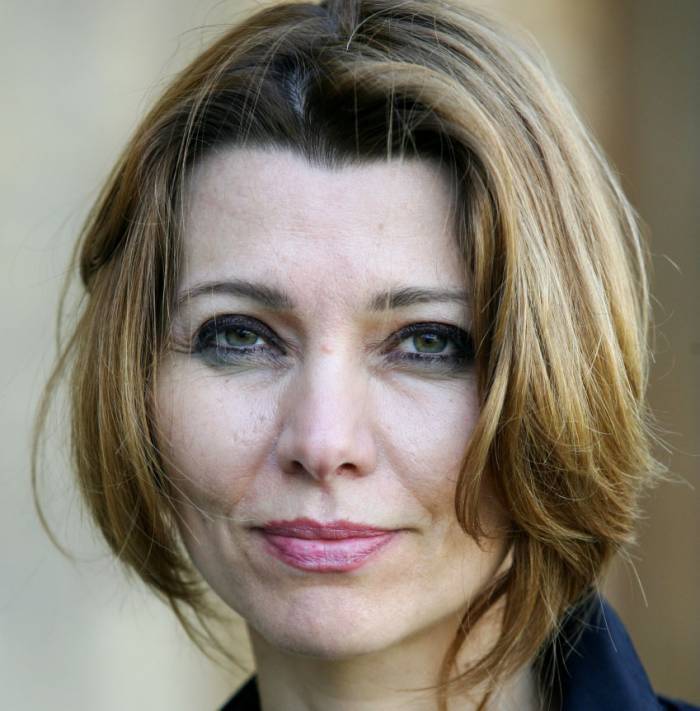
Elif Shafak is an award-winning British Turkish novelist, whose work has been translated into fifty-six languages. The author of nineteen books, twelve of which are novels, she is a bestselling author in many countries around the world. Shafak’s last novel, The Island of Missing Trees, was a top ten Sunday Times bestseller and was shortlisted for the Costa Novel Award and the Women’s Prize for Fiction. Her novel 10 Minutes 38 Seconds in This Strange World was shortlisted for the Booker Prize and the RSL Ondaatje Prize.

Connect with Elif
Website | X/Twitter | Instagram

Book Review – The Mirror & the Light by Hilary Mantel #20BooksOfSummer25

About the Book

‘If you cannot speak truth at a beheading, when can you speak it?’

England, May 1536. Anne Boleyn is dead, decapitated in the space of a heartbeat by a hired French executioner. As her remains are bundled into oblivion, Thomas Cromwell breakfasts with the victors. The blacksmith’s son from Putney emerges from the spring’s bloodbath to continue his climb to power and wealth, while his formidable master, Henry VIII, settles to short-lived happiness with his third queen, before Jane dies giving birth to the male heir he most craves.

Cromwell is a man with only his wits to rely on; he has no great family to back him, no private army. Despite rebellion at home, traitors plotting abroad and the threat of invasion testing Henry’s regime to breaking point, Cromwell’s robust imagination sees a new country in the mirror of the future. But can a nation, or a person, shed the past like a skin? Do the dead continually unbury themselves? What will you do, the Spanish ambassador asks Cromwell, when the king turns on you, as sooner or later he turns on everyone close to him?

Format: Hardcover (912 pages) Publisher: 4th Estate
Publication date: 5th March 2020 Genre: Historical Fiction

Find The Mirror & the Light on Goodreads

Purchase The Mirror & the Light from Bookshop.org [Disclosure: If you buy books linked to our site, we may earn a commission from Bookshop.org, whose fees support independent bookshops]

My Review

The Mirror & the Light is the final book in Hilary Mantel’s trilogy depicting the rise and fall of Thomas Cromwell and covering the last four years of his life from 1536 until his death by execution in 1540. It’s one of the biggest books I’ve tackled for a long time and in order to avoid wrist strain I listened to the audiobook version. Being thirty-six hours long it took me some weeks to get through it but I was helped by the superb narration of Ben Miles, who played Thomas Cromwell in the Royal Shakespeare Company’s production of the book. He somehow managed to create distinctive voices for the vast array of different characters. I think he nailed the gruff, sardonic Cromwell of the book, also bringing out his more contemplative side. After all, he’s a man who’s had his own share of pain and personal tragedy.

The Mirror & the Light follows directly on from the events of Bring up the Bodies, taking up the story only seconds after the execution of Anne Boleyn. It’s an event that Cromwell looks upon with no pleasure although he was responsible for marshalling much of the evidence that resulted in Anne’s downfall and the men accused of committing adultery with her. It’s just one of the many things he’s expected to fix for the King Henry, a man of mercurial temperament and sudden whims.

The story is told entirely from Cromwell’s point of view which means not only do we get insights into his thoughts on events but the reader gets to experience his sardonic humour, his often caustic views of other characters but also his doubts and fears. It also puts us in the same position as Cromwell in trying to anticipate the King’s desires which can change from minute to minute and hour to hour. He expects solutions to seemingly insoluble problems, punishing those who fail to achieve them. Cromwell has managed to navigate this difficult path up until now and as a result has been rewarded by the King with land, power and money.

Unfortunately such a rise brings enemies, including his nemesis Stephen Gardiner, formerly secretary to Cardinal Wolsey, Cromwell’s old mentor, but now Bishop of Westminster. (Those who’ve watched the BBC TV adaptation of The Mirror & the Light will recall Mark Gatiss’s superb performance as the scheming cleric.) Gardiner and the noble families, such as the Howards, who fell out of favour with the downfall of Anne Boleyn join together to bring down Cromwell. It’s at the point where the King has given Cromwell the inenviable task of freeing him from his marriage to Anne of Cleves, a marriage that Cromwell negotiated and at the time the King was all for. Unfortunately you don’t fail the King and it allows Cromwell’s enemies, including one unexpected one, to secure his arrest and imprisonment in the Tower. It’s a place Cromwell is familiar with but as interrogator not prisoner.

This is a book with an immense amount of historical detail but it is managed with such a light hand that you never feel you’re bogged down in facts. It’s the characters that shine through. Cromwell obviously, but also minor characters, such as Christophe, Cromwell’s loyal French servant, raining down curses on the King for his treatment of Cromwell to the very end. Or the calculating Jane Rochford, the wife of Anne Boleyn’s brother, who always seems to have access to the latest gossip from the latest occupant of Queen’s chambers.

I also loved the wry humour in the book such as Cromwell’s interrogation by his accusers during which they put one ridiculous allegation to him after another. You can almost picture his eye-rolling at their inane questions which are no more than anecdote, gossip, or downright invention. But even a false rumour can be dangerous, such as the persistent one that Cromwell wanted to marry Princess Mary and rule alongside her. In the end, though it doesn’t matter how outrageous the allegations are. Regardless of the years of service you’ve given, the seemingly impossible things you fixed, the order and wealth you brought to the realm, if the King chooses not to intervene to save you, it’s over.

Although from the outset we know the way things are going to end, I still found the concluding chapters of the book very moving. Cromwell’s overriding priority is to ensure the safety of his son Gregory and nephew Richard following his demise, commanding then to distance themselves from his actions, condemn them if necessary. His final days are spent preparing himself to make a good death and surrounded by the ghosts of the past. ‘He thinks, the dead are crowding us out.’

The Mirror & the Light was justly acclaimed on its publication, being shortlisted for the Women’s Prize for Fiction and winning the 2021 Walter Scott Prize for Historical Fiction. It is a brilliant work of historical fiction, well worth the investment of time. The Mirror & the Light is book four of my 20 Books of Summer 2025.

In three words: Epic, immersive, dramatic

About the Author

Hilary Mantel was the author of seventeen books, including A Place of Greater SafetyBeyond Black, the memoir Giving Up the Ghost and the short story collection The Assassination of Margaret Thatcher. Her novel The Mirror & the Light won the Walter Scott Prize for Historical Fiction, while Wolf Hall and Bring Up the Bodies were both awarded the Booker Prize. Hilary Mantel died in September 2022.