
 About the Book
“The first rocket will take five minutes to hit London. You have six minutes to stop the second.”
Rudi Graf used to dream of sending a rocket to the moon. Instead, he has helped create the world’s most sophisticated weapon: the V2 ballistic missile, capable of delivering a one-ton warhead at three times the speed of sound. In a desperate gamble to avoid defeat in the winter of 1944, Hitler orders ten thousand to be built. Haunted and disillusioned, Graf – who understands the volatile, deadly machine better than anyone – is tasked with firing these lethal ‘vengeance weapons’ at London.
Kay Caton-Walsh is an officer in the Women’s Auxiliary Air Force, and a survivor of a V2 strike. As the rockets devastate London, she joins a unit of WAAFs on a mission to newly liberated Belgium. Armed with little more than a slide rule and a few equations, Kay and her colleagues will attempt to locate and destroy the launch sites.
But at this stage in the war it’s hard to know who, if anyone, you can trust. As the death toll soars, Graf and Kay fight their grim, invisible war – until one final explosion of violence causes their destinies to collide.
Format: Hardcover (320 pages) Publisher: Hutchinson
Publication date: 17th September 2020 Genre: Historical fiction
Find V2 on Goodreads
Purchase links*
Amazon UK | Hive (supporting UK bookshops)
*links provided for convenience not as part of an affiliate programme
My Review
Like his novel Munich which I read recently, V2 is set over the course of just a few days. However, this time it’s 1944 at the height of the German onslaught on London with deadly V2 rockets, the devastating effects of which are vividly described. The book alternates between the stories of two main characters – German engineer, Dr. Rudi Graf, and British WAAF Officer, Kay Caton-Walsh. Despite being on different sides, their lives will intertwine in a number of ways.
The book contains many powerful scenes including the intricate and highly risky process involved in launching the V2 rockets and the resulting scenes of devastation on the streets of London caused by their impact. Most memorable for me was Graf’s recollection of his visit to witness the construction using slave labour of the vast subterranean factory at Nordhausen where the rockets are to be manufactured. “The stench of it. And the noise of it – the rumble of cement mixers, the ring of pickaxes, the muffled boom of explosions…the clank of railway trucks moving up and down the line… And the sight of it, wherever one looked in the eerie dim yellow light: the moving sea of striped uniforms, an undifferentiated mass unless one made an effort to fix one’s eyes on one of the pale, emaciated figures that were hurrying everywhere.”
The tension builds as an exciting but deadly cat-and-mouse game takes place in which Kay and her colleagues – slide rules and logarithm tables at the ready – race against time to locate the launch sites of the V2 rockets so that bombing raids can be launched by the RAF.
War is never straightforward and Kay, in particular, lets her feelings override her judgment resulting in unintended consequences for others. I found Graf an especially interesting character. He becomes increasingly appalled by the use to which the technology he helped develop is being put and the motivations of those higher up in the command chain. “He felt himself to be like one of the rockets – a human machine, launched on a fixed trajectory, impossible to recall, hurtling to a point that was preordained.” The end of the book sees him faced with a similarly difficult moral choice.
In V2 Robert Harris once again blends historical fact and fiction to produce a fascinating and utterly gripping story.
I received an advance review copy courtesy of Hutchinson via NetGalley.
In three words: Compelling, authentic, dramatic
Try something similar: Nucleus by Rory Clements
Follow this blog via Bloglovin
About the Author
Robert Harris is the author of thirteen bestselling novels: the Cicero Trilogy – Imperium, Lustrum and Dictator – Fatherland, Enigma, Archangel, Pompeii, The Ghost, The Fear Index, An Officer and a Spy, which won four prizes including the Walter Scott Prize for Historical Fiction, Conclave, Munich and The Second Sleep.
Several of his books have been filmed, including The Ghost, which was directed by Roman Polanski. His work has been translated into forty languages and he is a Fellow of the Royal Society of Literature.
He lives in West Berkshire with his wife, Gill Hornby.
Connect with Robert
Website | Facebook | Twitter

 About the Book
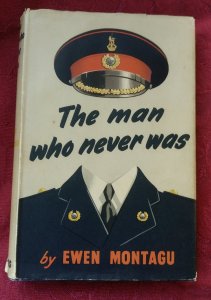 By the way, don’t be put off by the extensive character list at the beginning of the book; you won’t need to remember who everyone is. However, if you’re the sort of person who sits through the credits at the end of a film, you’ll find it interesting to see which of the characters who feature in the book (even only as passing references) existed in real life and which are invented. Personally, I was excited to come across a mention of ‘Major Martin’ as he features in one of my favourite war films, The Man Who Never Was, based on the book of the same name by Ewan Montagu.
 About the Author

