
Welcome to the final day of the blog tour for Wayward Voyage by Anna M Holmes. My thanks to Rachel at Rachel’s Random Resources for inviting me to take part in the tour and for my digital review copy.
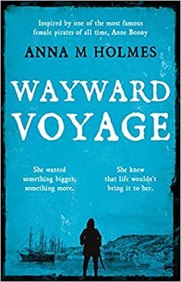 About the Book
Anne is a headstrong young girl growing up in the frontier colony of Carolina in the early eighteenth century. With the death of her mother, and others she holds dear, Anne discovers that life is uncertain, so best live it to the full. She rejects the confines of conventional society and runs away to sea, finding herself in the Bahamas, which has become a nest for pirates plaguing the West Indies.
Increasingly dissatisfied with her life, Anne meets a charismatic former pirate, John ‘Calico Jack’ Rackham, and persuades him to take up pirating again, and she won’t be left onshore.
Format: Paperback (480 pages) Publisher: Book Guild Publishing
Publication date: 29th April 2021 Genre: Historical Fiction
Find Wayward Voyage on Goodreads
Purchase links
Bookshop.org
Disclosure: If you buy a book via the above link, I may earn a commission from Bookshop.org, whose fees support independent bookshops
Hive | Amazon UK
Links provided for convenience only, not as part of an affiliate programme
My Review
Set in the so-called Golden Age of piracy, Wayward Voyage alternates between events in the lives of three individuals who became infamous for their buccaneering exploits – Anne Bonny, ‘Calico Jack’ Rackham and Mary Read.
The reader first meets Anne as a child growing up on her father’s plantation in Carolina. Deprived of a mother’s influence and guidance, Anne travels the local area on horseback or spends time learning how to hunt, shoot and wield a sword with Richard, the son of a neighbouring plantation owner. A traumatic experience combined with a rebellious nature results in Anne rejecting the conventional path in life mapped out for her. Unbelievably, she runs off with and marries James Bonny, a young seaman whom she’s met only once before and embarks on a life with him that treads the fine line between privateering and piracy that was a feature of the period. However, things don’t turn out quite as Anne expects. For one, James doesn’t exhibit the adventurous spirit she hoped for and she begins to feel trapped, still longing for the ‘bigger life’ she’s always sought and still believes is out there somewhere.
There’s no lack of adventurous spirit when it comes to ‘Calico Jack’ Rackham. A pirate through and through, he’s lured like so many others by the prospect of plunder from the merchant ships that sail the seas around Cuba, Jamaica and the Bahamas. Although he temporarily puts his pirate life behind him, the call of the roving life is too strong to resist for long.
Anne is the main focus of the book but Mary Read is also a fascinating character. Forced to fend for herself from an early age, she successfully passes herself off as a man for many years. The experience of combat and the skills in seamanship she picks up along the way enable her to sign aboard a merchant ship under the name Mark Read. Later, when the ship she is serving on is captured, she joins the crew of pirate chief, Charles Vane. There she witnesses the barbaric consequence of breaking the ship’s articles, the rules that govern everything from how booty will be shared out to what punishment any crime warrants.
An additional point of view, that of Captain Woodes Rogers, introduced part way through the book provides an insight into life in Nassau. On the one hand, it’s a place of genteel gatherings attended by society ladies, on the other it’s the location of seedy taverns and brothels frequented by pirates, or ex-pirates tempted by the prospect of a pardon by the King. Governing such a lawless place is not the end of Rogers’ troubles; an attack on the poorly defended town by the Spanish is an ever-present threat.
As the book reveals, both Anne and Mary possess an independence of spirit unusual for women of their time and a determination not to be constrained by social or gender expectations. It’s rather disappointing then to find that Anne holds distinctly less egalitarian views when it comes to those of a different race and skin colour.
At nearly 500 pages, Wayward Voyage is a chunky read but if some sections move at a rather leisurely pace there are scenes that are full of drama: an attack on ships at anchor by a fireship; the most brutal of shipboard punishments; a fierce sea battle from the deck of a ship displaying the skull and crossed cutlasses. The anticipation of how – and when – the stories of Anne, Jack and Mary will converge also helps maintain the reader’s interest. As the blurb suggests, Anne’s and Jack’s meeting has particularly explosive consequences.
The book includes detailed maps of some of the locations that feature in the story. (Unfortunately these weren’t that legible on my aged Kindle.) It also contains some distinctly piratical cursing.
Although its ambitious scope may have left me feeling adrift in the doldrums at times, there’s no denying the level of research that has gone into the book and, in its livelier moments, Wayward Voyage has all the makings of a swashbuckling historical adventure.
In three words: Well-researched, detailed, immersive
Try something similar: The Traitor of Treasure Island by John Drake
Follow this blog via Bloglovin
 About the Author
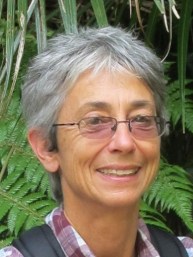
Anna is originally from New Zealand and lives in the UK with her Dutch partner. She holds a BA in Humanities, a post-graduate diploma in Journalism and an MA in Dance Studies.
Initially she worked as a radio journalist before a career in arts management working with UK Arts Councils and as an independent producer, dance history lecturer and she has run a dance development agency. A documentary about pioneers of flamenco in the UK that Anna produced and directed was screened in Marbella International Film Festival and in London. This passion project ensures a slice of cultural history has been captured. It is available on YouTube and via a portal on her website.
Anna has been fascinated by the lives of women pirates, Anne Bonny and Mary Read, for a long time. Some years ago, she visualised this story as a screenplay before exploring and building their world more deeply as a novel. Wayward Voyage made a longlist of 11 for the Virginia Prize in Women’s Fiction 2020. Blind Eye, an eco-thriller, will be published by The Book Guild in September 2021. Her screenplay, Blind Eye, is joint winner of the 2020 Green Stories screenplay competition.
Anna is a certified Iyengar Yoga teacher and enjoys practising flamenco. Writing, dance, and yoga shape her life.
Connect with Anna
Website | Facebook | Twitter

 About the Book
 About the Author


