
 About the Book
‘I had little right to live, born on a slave ship where my parents both died. But I survived, and indeed, you might say I did more…’
It’s 1746 and Georgian London is not a safe place for a young Black man, especially one who has escaped slavery. After the twinkling lights in the Fleet Street coffee shops are blown out and the great houses have closed their doors for the night, Sancho must dodge slave catchers and worse. The man he hoped would help – a kindly duke who taught him to write – is dying. Sancho is desperate and utterly alone.
So how does Charles Ignatius Sancho meet the King, write and play highly acclaimed music, become the first Black person to vote in Britain and lead the fight to end slavery?
It’s time for him to tell his story, one that begins on a tempestuous Atlantic Ocean, and ends at the very centre of London life. And through it all, he must ask: born amongst death, how much can you achieve in one short life?
Format: Hardback (432 pages) Publisher: Dialogue Books
Publication date: 6th October 2022 Genre: Historical Fiction
Find The Secret Diaries of Charles Ignatius Sancho on Goodreads
Purchase links
Bookshop.org
Disclosure: If you buy a book via the above link, I may earn a commission from Bookshop.org, whose fees support independent bookshops
Hive | Amazon UK
Links provided for convenience only, not as part of an affiliate programme
My Review
The Secret Diaries of Charles Ignatius Sancho is very much a labour of love, the fruits of the author’s 20-year obsession with Sancho’s story. First brought to life in a one-man show performed in New York, and now in this novel, Paterson Joseph has taken a real person and, in his own words, ‘performed an action of fiction on him’.
The book takes the form of extracts from Sancho’s diaries interspersed with letters to his son, Billy. The diaries document Sancho’s colourful and eventful life, from his birth aboard a slave ship to becoming a successful business man (ironically trading in sugar, cocoa and tobacco, the products of slavery), being the first Black Briton to have the vote and becoming a leading light in the early abolitionist movement. But the diaries also reveal Sancho’s regrets about things he has done or failed to do. He wonders, ‘Why burden a child with his father’s sins? Perhaps these papers are best hidden – discarded?’
Sancho is a delightfully eccentric character and the author has created a distinctive voice for him so you feel he is speaking directly to you. One newspaper review has described it as an act of ‘literary ventriloquism’. I was fortunate enough to hear Paterson reading – or I should say, performing – two excerpts from the book at Henley Literary Festival in October. It was wonderful to hear Sancho brought to life, complete with lisp and rather affected manner of speech. True, Sancho can be a little pompous at times but he is also amusingly self-deprecating about his mistakes. And in the periods when he’s in the very depths of despair your heart bleeds for him. (I guarantee you will feel the same about Tilly, the young woman who assists Sancho at a particularly perilous moment in his life.) Although Sancho experiences periods of terrible hardship and cruelty, he also rubs shoulders with luminaries of Georgian society such as William Hogarth, Samuel Johnson, David Garrick and Thomas Gainsborough, entertaining at musical soirées and even taking to the stage.
However, Sancho is a man stuck in the middle. He’s Black but his life has been spent apart from others like him. He’s experienced a lavish lifestyle but as the child of slaves has no legal status. He’s African by birth but has lived the life of an Englishman, thanks to a wealthy patron, feeling at times that being smartly turned out and slightly portly he does not correspond to the stereotype of a Black person. As he says, ‘I did not present a figure of destitution, but one of gross indulgence.’ At one point he wonders if he will always be ‘the outside man, looking in’.
This changes, in more ways than one, when Sancho meets John Clarke-Osborne. He issues Sancho an invitation: ‘Come with me one day soon, friend. Let me show you how the African entertains himself in London’. In one of the book’s memorable scenes, Sancho is taken to the Black Tar Tavern where he witnesses, pretty much for the first time, those he calls ‘my people’. It’s a lively affair with music and dancing.
In his Author’s Note, Paterson Joseph writes that ‘the reader who awaits a tale filled with whips and curses and rapes and murders of Black People by White People in every chapter […] will not find much to please you’. However we do get an insight into the evils of the slave trade in the section of the book made up of letters between Sancho and his future wife, Anne. These are full of their affection for each other and their hopes for the future. However, Anne’s letters also describe some of the horrific treatment experienced by slaves working on the plantations of Barbados and Antigua.
Charles Ignatius Sancho would be a remarkable character if he was the product of an author’s imagination. That he was a real person makes him even more remarkable. In the words of the author, Charles Ignatius Sancho is “A hero. A man. An African. An Artist. Erudite. Wise. Grand. Flawed”. The Secret Diaries of Charles Ignatius Sancho is a thoroughly entertaining historical novel and an impressive debut.
In three words: Spirited, immersive, engaging
Try something similar: The Alphabet of Heart’s Desire by Brian Keaney
 About the Author
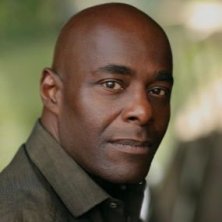
Paterson Joseph is a beloved British actor and writer. Recently seen on Vigil and Noughts and Crosses, he has also starred in Peep Show and Law & Order UK and he plays Arthur Slugworth in the forthcoming Wonka movie. The Secret Diaries of Charles Ignatius Sancho is his debut novel. (Photo: Twitter profile)
Connect with Paterson
Twitter

 About the Book
 About the Author
 What Cathy Read Next...