#BookReview Para Bellum by Simon Turney @AriesFiction @HoZ_Books @SJATurney #ParaBellum

About the Book

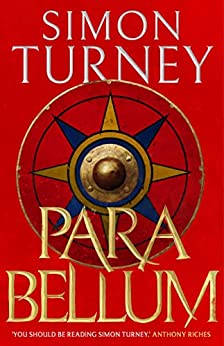
Book Cover Para Bellum by Simon Turney

AD 381. Five years have gone by since a Roman governor ordered the deaths of a Gothic king and his attendants at a feast in their honour. This disastrous act led to warfare in the Roman Empire and the death of the Emperor Valens.

Now, the Empire is calm once more, but for the eight legionaries who committed the killings, the bloodshed is only just beginning. Fritigern, brother of the murdered king, has sworn revenge on his brother’s killers. Now king of a powerful Gothic tribe, he will not rest until the men are hunted down.

Flavius Focalis is one of those legionaries. Surviving an attack at his villa, he realises the danger he and his family are in, and seeks to warn his former comrades, for he knows Fritigern will give them no quarter. So begins a deadly game of cat-and-mouse across the Empire, as, by land and sea, the former soldiers face the wrath of their implacable enemy, and return to the scene of the greatest battle of their Adrianople.

For war is coming again – and the only question is, do they die now, or die later?

Format: eARC (369 pages) Publisher: Head of Zeus
Publication date: 6th July 2023 Genre: Historical Fiction

Find Para Bellum on Goodreads

Purchase links 
Bookshop.org 
Disclosure: If you buy a book via the above link, I may earn a commission from Bookshop.org, whose fees support independent bookshops

Hive | Amazon UK 
Links provided for convenience only, not as part of an affiliate programme


My Review

The author describes Para Bellum as a story of revenge and a very compelling one it is too. Taking advantage of the fact that little is known about the fate of Fritigern following the murder of his brother, the author imagines him embarking on a single-minded mission to track down and kill the legionaries involved. It’s a scenario Flavius Focalis, along with his fellow legionaries, has been preparing for for years, fortifying his home, keeping weapons close at hand and ensuring his son Martius is trained to defend himself. And it’s just as well because when Fritigern’s men come they do so with deadly intent.

Flavius Focalis, although battle hardened, was never a cold-blooded ruthless killer, just a loyal soldier carrying out orders that he now realises were at best foolish and at worst the product of ruthess ambition. He is haunted by memories of the event and, being a Christian, wonders if he deserves to be punished for his sins. What trumps that though is his determination to honour the memory of his dead wife by keeping his son safe whatever the cost, even if that means him sacrificing his own life in the process. As it turns out, Martius has inherited a lot of his father’s fighting spirit.

Much like The Magnificent Seven, each member of the group brings different skills, whether that’s a prowess with artillery, the ability to come up with a cunning plan or expertise in creating ingenious defensive mechanisms. And, of course, there’s something to be said for sheer muscle even if it does result in some rather grisly encounters. (Those who are squeamish might want to skip some of the deadlier skirmishes.) And like The Magnificent Seven, not all of them will survive the cat-and-mouse game and be there as the final credits roll. Having said that, don’t underestimate the author’s ability to spring a surprise or two.

Para Bellum has all the full-on bone-crunching action and meticulous historical detail you’d expect from a Simon Turney novel but with the feel and pace of a thriller. As Para Bellum is a standalone novel, you don’t need to have read any of Simon’s previous books to enjoy it, although you’ll probably want to after this. And he leaves us with the prospect of another standalone to come, saying ‘there is another tale that I am twitching to tell’. If it’s as good as Para Bellum, I can’t wait.

In three words: Action-packed, gripping, dramatic

Try something similarLegionary by Gordon Doherty


About the Author

Simon Turney

Simon Turney is from Yorkshire and, having spent much of his childhood visiting historic sites, fell in love with the Roman heritage of the region. His fascination with the ancient world snowballed from there with great interest in Rome, Egypt, Greece and Byzantium. His works include the Marius’ Mules and Praetorian series, the Tales of the Empire and The Damned Emperor series, and the Rise of Emperors books with Gordon Doherty. He lives in North Yorkshire with his family.

Connect with Simon
Website | Twitter | Facebook | Instagram

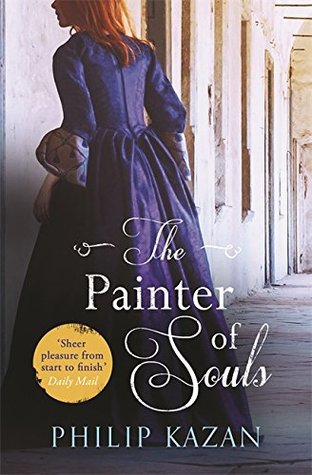
#BookReview The Painter of Souls by Philip Kazan #20BooksOfSummer23

About the Book

Beauty can be a gift…or a wicked temptation…

So it is for Filippo Lippi, growing up in Renaissance Florence. He has a talent – not only can he see the beauty in everything, he can capture it, paint it. But while beauty can seduce you, and art can transport you – it cannot always feed you or protect you.

To survive, Pippo Lippi, orphan, street urchin, budding rogue, must first become Fra Filippo Carmelite friar, man of God. His life will take him down two paths at once. He will become a gambler, a forger, a seducer of nuns; and at the same time he will be the greatest painter of his time, the teacher of Botticelli and the confidante of the Medicis.

So who is he really – lover, believer, father, teacher, artist? Which man? Which life? Is anything true except the paintings?

Format: Paperback (288 pages) Publisher: Orion
Publication date: 3rd November 2016 Genre: Historical Fiction

Find The Painter of Souls on Goodreads

Purchase links 
Bookshop.org 
Disclosure: If you buy a book via the above link, I may earn a commission from Bookshop.org, whose fees support independent bookshops

Hive | Amazon UK 
Links provided for convenience only, not as part of an affiliate programme


My Review

The Painter of Souls is the first book on my 20 Books of Summer 2023 list which tells you everything you need to know about how this reading challenge is going. On the other hand, it’s made me read a book that has been sitting on my bookshelf for five years. I came to it with high expectations as the two other books by the author I’ve read – The Black Earth and The Phoenix of Florence – were both five star reads for me. (Links from the title will take you to my review.) I wasn’t disappointed because I loved The Painter of Souls.

In his Acknowledgments, the author notes that almost nothing is really known about Filippo Lippi the person. We have some bare facts about his life and, of course, his art but that’s about it. However I recall a comment made by author Robert Harris at last year’s Henley Literary Festival that when it comes to history, there are always gaps in our knowledge but those gaps are great things because after all if we knew everything there wouldn’t be any point in writing historical fiction. In this spirit, Philip Kazan has taken the known facts and used his imagination to fill in the gaps so Pippo (the name he is often referred by in the book) comes alive on the page as we witness his journey from street urchin to Carmelite friar to acclaimed painter. The book is peopled with other real life figures, from Cosimo de’Medici to the sculptor, Donatello.

In the author’s hands, Pippo’s journey is the result of a combination of a natural talent for drawing – as a young boy he survives by selling sketches of people in the market place – and good fortune. Having been taken in by the Carmelite monastery, his talent for art is gradually recognised and he is soon assisting the Florentine artist Masaccio to paint frescoes of religious subjects commissioned by wealthy individuals. Pippo finds a kindred spirit as well as a mentor in Masaccio whose paintings are notable for featuring lifelike figures, often based on real people observed on the streets of Florence, and realistic backgrounds. Pippo is truly a ‘painter of souls’ prioritising reality over tradition and artifice, and incorporating human emotions into the figures he paints. There is one particularly poignant scene where he sketches a destitute young mother with her child.

Despite Pippo’s reputation as a painter growing, he cannot escape his past. ‘This is who he is: a mongrel, a badly cooked dish of vagabond, friar, maker of pictures.’ His early life comes back to haunt him in the most profound way when a friend of his youth, now a young man living a dissolute lifestyle, falls foul of the ruling council of Florence.

I loved the evocative descriptions of fifteenth century Florence: its streets, buildings and squares; the sights, sounds and smells of everyday life. It is definitely now a city I am keen to visit to, as it were, walk in Pippo’s footsteps.

Even if you’re not that interested in art, I think you would be swept along by Pippo’s story, and his humanity. ‘The world is beautiful. We are beautiful. [… ] The trick is to see it. No . . . No. The trick is to look. Always to look.’

Having become thoroughly immersed in the details of Pippo’s eventful life, you can imagine my disappointment when I got to the end of the book and found it was only the first in a planned series – and the author has yet to write any more! I really wanted to find out what happens to Pippo to get himself into the situation we learn about in the Prologue set in 1469, the year of his death. (And while you’re at it, Philip, please can we also have a sequel to The Phoenix of Florence.)

In three words: Emotional, evocative, engrossing

Try something similarThe Birth of Venus by Sarah Dunant


About the Author

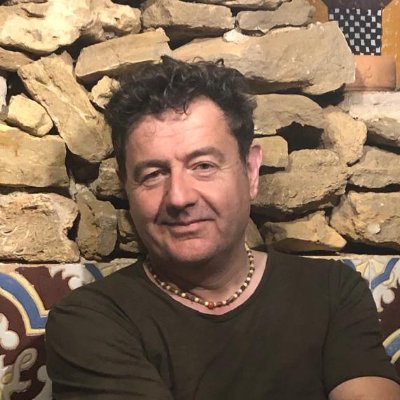
Philip Kazan was born in London and grew-up on Dartmoor. He is the author of two previous novels set in fifteenth-century Florence and the Petroc series following a thirteenth-century adventurer. After living in New York and Vermont, Philip is back on the edge of Dartmoor with his wife and three children. (Photo: Twitter profile)

Connect with Philip
Website | Twitter