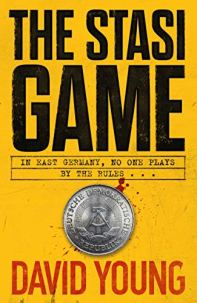
#BookReview The Stasi Game (Karin Müller #6) by David Young @ZaffreBooks

About the Book The Stasi Game

A man’s body is found buried in concrete at a building site in the new town district. When People’s Police homicide captain Karin Müller arrives at the scene, she discovers that all of the body’s identifiable features have been removed – including its fingertips.

The deeper Müller digs, the more the Stasi begin to hamper her investigations. She soon realises that this crime is just one part of a clandestine battle between two secret services – the Stasi of East Germany and Britain’s MI6 – to control the truth behind one of the deadliest events of World War II.

Format: ebook (281 pages) Publisher: Zaffre
Publication date: 12th November 2020 Genre: Historical Fiction, Crime, Thriller

Find The Stasi Game (Karin Müller #6) on Goodreads

Pre-order/Purchase links*
Amazon UK | Hive (supporting UK bookshops)
*links provided for convenience not as part of an affiliate programme


My Review

I discovered David Young’s ‘Stasi’ series back in February when I read Stasi Winter, the fifth book featuring Karin Müller of the East German People’s Police. I enjoyed it so much that I made a plan – unfortunately as yet unfulfilled – to go back and read the earlier books ready for the next book in the series. Imagine my dismay therefore to read that The Stasi Game may be the last book in the series. Luckily for those of us who’ve not yet read the whole series, The Stasi Game has been designed as a standalone although there are brief references to events in previous books.

Opening in 1982 and set largely in Dresden, The Stasi Game begins with a dramatic prologue and then transports the reader back to events in the months leading up to it. There are occasional forays further back in time, to the period of the Second World War and a friendship between two young people the full relevance of which will only gradually be revealed. Central to these sections of the book is the still controversial firebombing of Dresden by the Allies in February 1945 which killed thousands and destroyed much of the city. The vivid first-hand account of the raids is one of the standout parts of the book.

From the very start of their investigation into the death of the man they refer to as ‘Concrete Man’, Karin Müller and her team find themselves playing a cat and mouse game with the Ministry of State Security, better known as the Stasi. No prizes for guessing which is the cat and which the mouse. In addition, Müller finds herself coming face to face with an old adversary and begins to wonder if, in fact, she has been set up to fail from the beginning.

As the case progresses, amongst all the twists and turns, some very dirty wartime secrets – as well as more recent ones – are unearthed. The book’s final climatic scenes continue where the prologue left off, leaving the reader to wonder what the future holds for Müller and her colleagues. If this is indeed the end of the series, then The Stasi Game is a lesson in how to go out on a high and leave the reader wanting more.

I received an advance review copy courtesy of Zaffre via NetGalley.

In three words: Gripping, compelling, assured

Try something similar: Hitler’s Secret by Rory Clements

Follow this blog via Bloglovin


David YoungAbout the Author

David Young was born near Hull and, after dropping out of a Bristol University science degree, studied Humanities at Bristol Polytechnic. Temporary jobs cleaning ferry toilets and driving a butcher’s van were followed by a career in journalism on provincial newspapers, a London news agency, and international radio and TV newsrooms. He now divides his time between Twickenham and a writing base on Syros in Greece, and in his spare time supports Hull City AFC. (Photo bio/ credit: author website)

Connect with David
Website | Twitter

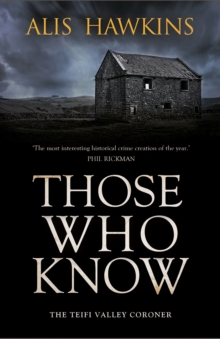
#BookReview Those Who Know (The Teifi Valley Coroner #3) by Alis Hawkins @DomePress

Those Who Know Alis Hawkins

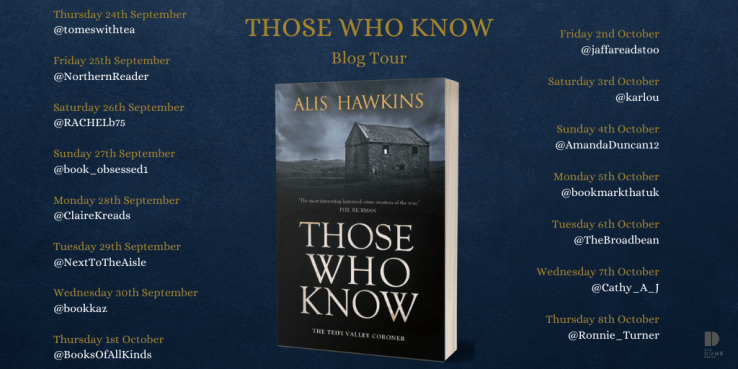
Welcome to today’s stop on the blog tour for Those Who Know by Alis Hawkins, the third in The Teifi Valley Coroner series. My thanks to Emily at The Dome Press for inviting me to take part in the tour and for my review copy.

About the Book

Harry Probert-Lloyd has inherited the estate of Glanteifi and appointed his assistant John as under-steward. But his true vocation, to be coroner, is under threat. Against his natural instincts, Harry must campaign if he is to be voted as coroner permanently by the local people and politicking is not his strength.

On the hustings, Harry and John are called to examine the body of Nicholas Rowland, a radical and pioneering schoolteacher whose death may not be the accident it first appeared. What was Rowland’s real relationship with his eccentric patron, Miss Gwatkyn? And why does Harry’s rival for the post of coroner deny knowing him? Harry’s determination to uncover the truth threatens to undermine both his campaign and his future.

Format: Paperback (348 pages) Publisher: The Dome Press
Publication date: 28th September 2020 Genre: Historical Fiction, Mystery, Crime

Find Those Who Know (Teifi Valley Coroner #3) on Goodreads

Purchase links*
Publisher | Amazon UK | Hive (supporting UK bookshops)
*links provided for convenience not as part of an affiliate programme

My Review

I really enjoyed None So Blind, the first book in Alis Hawkins’ Teifi Valley Coroner series, and I’m kicking myself that I’ve not yet made time to read the second in the series, In Two Minds. However, it does mean I can reassure readers who haven’t read the previous books that Those Who Know can easily be enjoyed as a standalone. That’s not to say there aren’t a few references to events in the earlier books but these are subtly done. In fact, the appearance of characters who were new to me, such as Doctor Reckitt and Lydia Howell, made me even more eager to go back and read In Two Minds.

It was a delight to catch up with Harry and John again. As before, they narrate alternate chapters giving a sense of pace to the book and providing the reader with different views of events, an insight into their perspective on each other, and on what has become an unique working relationship. I was touched once more by John’s anticipation of Harry’s needs, not just the help Harry requires to overcome his visual impairment but his desire to be independent and not the subject of people’s curiosity or pity. Equally touching is Harry’s faith in John and his appreciation for his abilities despite John’s humble birth and troubled upbringing.

Although the book sees them occasionally pursuing their enquiries independently, they’re at their most formidable when working as a team, such as during interviews of witnesses when they adopt a “good cop, bad cop” approach. Or when John acts as Harry’s eyes, as he does during the inquest into Nicholas Rowland’s death, signalling by his posture whether Harry should press ahead with a line of questioning or desist.

The inquest is just one of the great set pieces in the book. Others include the dramatic night-time scene when the cefyll pren or wooden horse (a traditional form of folk justice that also made a memorable appearance in None So Blind) is taken to the house of someone the villagers believe may have been involved in Rowland’s death. “Daylight restraints are loosened after dark, anger rises in the blood and darkness releases animal instincts.

Skilfully woven into the main storyline are nuggets of information about Welsh history. Okay, the 1847 Report of the Commission of Inquiry into the State of Education in Wales may not sound that interesting but, believe me, you may be surprised at its relevance to the plot.

The author is a Welsh speaker and I particularly enjoyed the part the Welsh language plays in the book. As John explains, the aforementioned 1847 report branded the speaking of Welsh as not only “holding the whole nation back” but of “encouraging backward thinking and immorality”. At the time the book is set, Welsh is considered the language of the ordinary people not of the “gentry” who speak English. Therefore, the people Harry comes across in the course of his investigation are often surprised that he, a member of the gentry, is able to converse with them in their native tongue. During the inquest, the difficulty of translating the evidence of some witnesses from English to Welsh for the jury is revealed. As John observes, “Welsh isn’t a scientific language. English is good as absolutes. Science. Welsh is better at poetry and metaphor and a different kind of truth. Not one that’s clear cut and neat…but messy and bloody and confusing. Like life.

Those Who Know has all the elements you look for in a mystery: a perplexing crime scene, an unknown motive, a victim with secrets in his past and an array of possible suspects. Before long, links also begin to emerge between Harry’s campaign for election as Coroner and the investigation into Rowland’s death. But do the electors want a Coroner who, as one character puts it, “sees doubt where everybody else sees death”? Not everyone, least of all the local magistrates, approves of Harry’s dogged pursuit of the truth, hammering away at “the stone of unexplained death” with question after question until the “unyielding stone finally gives way and the truth is uncovered”.

I can highly recommend The Teifi Valley Coroner series to fans of historical crime fiction. Like its predecessors, Those Who Know combines an intriguing mystery, engaging leading characters and convincing period detail. I’m keeping my fingers crossed for another book in the series before too long.

In three words: Assured, intriguing, atmospheric

Try something similar: The Figure in the Photograph by Kevin Sullivan

Follow this blog via Bloglovin

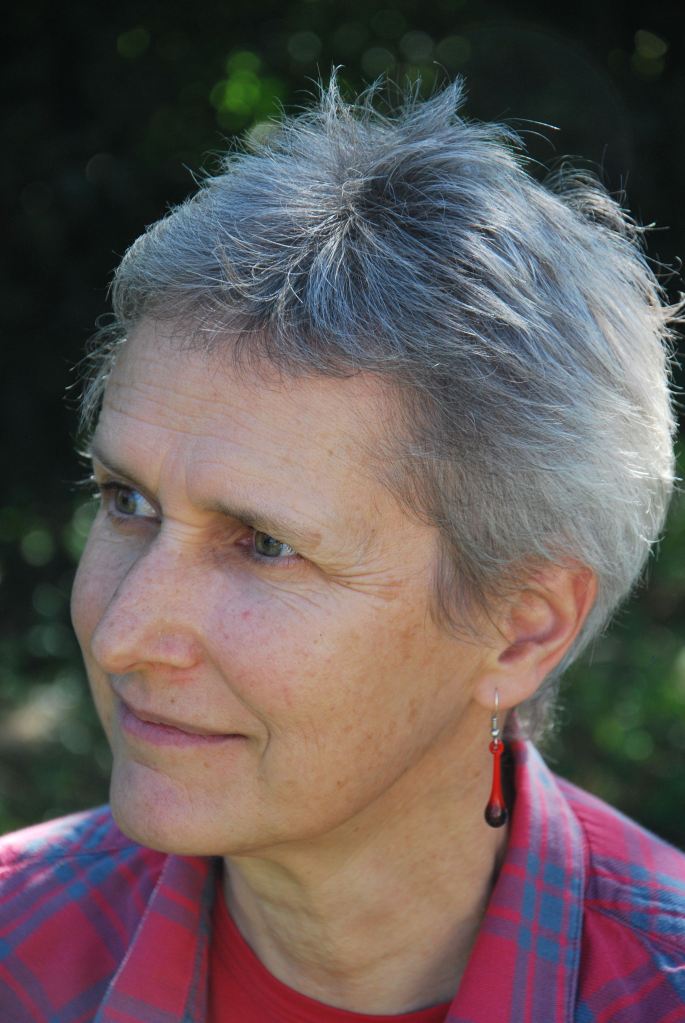
About the Author

Alis Hawkins grew up on a dairy farm in Cardiganshire. After attending the local village primary school and Cardigan County Secondary School, she left West Wales to read English at Oxford. Subsequently, she has done various things with her life, including becoming a speech and language therapist, bringing up two sons, selling burgers, working with homeless people, and helping families to understand their autistic children.

And writing. Always. Non-fiction (autism related), plays (commissioned by heritage projects) and, of course, novels. Alis’ first novel, Testament, was published in 2008 by Macmillan and was translated into several languages. Her current historical crime series featuring visually impaired investigator, Harry Probert-Lloyd, and his chippy assistant, John Davies, is set in Cardiganshire in the period directly after the Rebecca Riots. As a side-effect of setting her series there, instead of making research trips to sunny climes like more foresighted writers, she drives up the M4 to see her family.

Now living with her partner on the wrong side of the Welsh/English border (though she sneaks back over to work for the National Autistic Society in Monmouthshire), Alis speaks Welsh, collects rucksacks and can’t resist an interesting fact.

Connect with Alis
Website | Twitter | Facebook