#BookReview The Art of the Assassin by Kevin Sullivan @AllisonandBusby

The Art of the AssassinAbout the Book

1899, Glasgow. A man is stabbed to death in a tenement courtyard, and Juan Camarón, photographer-cum-sleuth, is enlisted to assist the police investigation. Perhaps his innovative photographic method can bring to light what the eye may have overlooked.

Yet Juan has problems of his own. His late father’s legacy, a monumental photographic record of the architecture of colonial Cuba, is threatened by a charge of plagiarism from a mysterious señora. Meanwhile, Juan’s hoped-for happiness with his fiancée, Jane, might be over before it’s begun, and even more so when a visiting professor is murdered and Jane is witnessed fleeing the scene. Juan is torn between finding the killer and finding Jane, but are they one and the same? The truth may be hidden in the photographs.

Format: Hardcover (325 pages)           Publisher: Allison & Busby
Publication date: 18th February 2021 Genre: Historical Fiction, Mystery, Crime

Find The Art of the Assassin on Goodreads

Purchase links
Bookshop.org
Disclosure: If you buy a book via the above link, I may earn a commission from Bookshop.org, whose fees support independent bookshops

Hive | Amazon UK
Links provided for convenience only, not as part of an affiliate programme


My Review

As in The Figure in the Photograph, Juan’s skill as a photographer and his keen eye for detail play an important role in the unfolding of the story. As he notes, the camera sees more than the naked eye since it records everything. “The camera does not distinguish; does not judge, it does not jump to conclusions. Details missed by the brain are preserved by the machine.” Whereas in The Figure in the Photograph Juan’s application of his serial photography technique – the taking of multiple images of the same scene over a long time period – was the key to solving the mystery, this time it’s his careful and systematic analysis of photographs taken at the crime scene that provide the first clues.

Even when not directly engaged in crime solving, I liked the way Juan responds to people, objects and places with the instincts of a photographer. For instance, noticing how the light falls on a surface or how he might compose a portrait so as to soften the lines on a woman’s face. And he reacts with annoyance when shown a photograph of a scene because he feels the person wielding the camera has created an image open to misinterpretation, dismissing it as “a photograph that recorded an event without conveying its unique meaning”.

The book is set in a period of technological development such as the first moving pictures (although Juan doubts whether these will catch on) and the emergence of the science of psychology, innovative theories about the personality and the first use of talking therapies.

Although the book sees Juan and Jane once again working together to investigate a murder and a possible abduction, there are strains apparent in their relationship. Whereas Juan should admire Jane’s independence of spirit, at times he almost seems to resent her willingness to take the lead, displaying a rather disappointing touch of chauvinism. At one point he reflects, “I should have been proud of her investigative acumen, her keen intelligence. Instead, I felt that my position was being undermined.” As it turns out, Jane’s resourcefulness is sorely needed.

At one point, it seems possible that Jane may have a rival for Juan’s affections when a glamorous figure from the world of the theatre makes an entrance into the story. I loved how the author described the atmosphere of a 19th century theatre before a performance: the spell cast by a full auditorium, the smell of tobacco smoke in the air, the patrons in evening dress and the ‘rising, falling hum of human voices’.

With a plot that encompasses murder, abduction, fortuitous escapes from captivity, agents of a foreign power and industrial espionage, the book has many of the ingredients of a John Buchan adventure novel. As regular followers of this blog will know, there’s no higher praise in my eyes! Indeed, the dramatic events at the Theatre Royal towards the end of The Art of the Assassin recalled for me the music hall scene at the conclusion of Alfred Hitchcock’s film adaptation of John Buchan’s The Thirty-Nine Steps.

Like its predecessor, The Art of the Assassin is an absorbing historical crime mystery with plenty of twists and turns, great period detail and many colourful characters. My thanks to Christina at Allison & Busby for my advance review copy. If my review has made you keen to read the first book in the series, The Figure in the Photograph, it’s now available in paperback.

In three words: Engaging, suspenseful, atmospheric

Try something similar: Castle Gay by John Buchan

Follow this blog via Bloglovin


sullivan-kevin-wbAbout the Author

Kevin Sullivan was born in Glasgow. His career in journalism has placed him on the frontline of defining historical moments, from documenting events at Tiananmen Square to driving over a landmine while reporting in Sarajevo. His work has taken him to Singapore, Japan and Spain, and his experiences influence his writing. Kevin currently lives in Bosnia. (Photo credit: Publisher author page)

Connect with Kevin
Website | Twitter

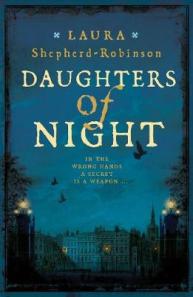
#BookReview Daughters of Night by Laura Shepherd-Robinson @MantleBooks

Daughters of NightAbout the Book

Lucia’s fingers found her own. She gazed at Caro as if from a distance. Her lips parted, her words a whisper: ‘He knows.’

London, 1782. Desperate for her politician husband to return home from France, Caroline ‘Caro’ Corsham is already in a state of anxiety when she finds a well-dressed woman mortally wounded in the bowers of the Vauxhall Pleasure Gardens. The Bow Street constables are swift to act, until they discover that the deceased woman was a highly-paid prostitute, at which point they cease to care entirely. But Caro has motives of her own for wanting to see justice done, and so sets out to solve the crime herself. Enlisting the help of thief-taker, Peregrine Child, their inquiry delves into the hidden corners of Georgian society, a world of artifice, deception and secret lives.

But with many gentlemen refusing to speak about their dealings with the dead woman, and Caro’s own reputation under threat, finding the killer will be harder, and more treacherous than she can know . . .

Format: Hardcovere (592 pages)         Publisher: Mantle
Publication date: 18th February 2021 Genre: Historical Fiction, Crime, Mystery

Find Daughters of Night on Goodreads

Purchase links
Bookshop.org
Disclosure: If you buy a book via the above link, I may earn a commission from Bookshop.org, whose fees support independent bookshops

Hive | Amazon UK
Links provided for convenience only, not as part of an affiliate programme


My Review

In my review of Laura Shepherd-Robinson’s first book, Blood & Sugar, I recall mentioning how good it would have been for Caroline, wife of the novel’s protagonist Harry Corsham, to have had a bigger role. And do you know what, in Daughters of Night I got my wish!

Teaming up with thief-taker, Peregrine Child, Caroline – known as ‘Caro’ – sets out to investigate the death of the woman she believed to be an Italian Countess but whose real identity was somewhat different.  They make a great partnership with Peregrine especially admiring of Caro’s questioning skills, likening it to ‘having Torquemada on your team’. What their enquiries reveal is that firstly, no-one in authority particularly cares about solving the murder and secondly, there are those who definitely do not want any light shone on their activities.  Despite the risks to their reputations (such as remain), to their lives and those of their loved ones, Peregrine and Caro press on with their investigation, uncovering some very sordid secrets in the process. Despite pressure from her family, Caro remains defiant to the end, managing to bring about her revenge on the culprits in her own way.

Daughters of Night positively oozes period atmosphere, transporting the reader from the bowers and pathways of the Vauxhall Pleasure Gardens to the taverns, coffee-houses and “fleshpots” of Covent Garden.  It was fascinating to discover the existence of things such as ‘Puss and Mew’ shops (illegal gin shops) and mixed doubles boxing matches.  Equally fascinating, but rather more distasteful, was learning about the varieties of brothels that existed in Georgian London including ‘posture houses’ where girls posed naked and ‘tableaux houses’ where young girls acted out classical scenes before audiences of men, often in order to solicit bids for their virginity.   The book reveals there existed a hierarchy of prostitutes with those at the top of their ‘profession’ becoming celebrities of their day.

Daughters of Night is another hugely impressive historical crime novel from the pen of Laura Shepherd-Robinson. Its intricate plot, with its twists and turns, kept me glued to the book until the final page. And was it my imagination or were Caro’s closing thoughts a nod to those of another famous literary heroine, Scarlett O’Hara? “There will be a plan, she told herself. I just haven’t thought of it yet. Let tomorrow bring what it will bring.” I’m sure I’m not the only reader keen to find out what tomorrow does bring for Caro.  Although Laura has revealed her next novel will be a standalone historical mystery, she also hasn’t ruled out a return for Harry and Caro at some point.  Fingers crossed from this reader.

I received a digital review copy courtesy of Mantle Books via NetGalley, although having seen the gorgeous hardcover with its fabulous endpapers, I may have to treat myself when my first post-lockdown trip to a bookshop finally comes about.

In three words: Gripping, atmospheric, immersive

Try something similar: To The Dark (Simon Westow #3) by Chris Nickson

Follow this blog via Bloglovin


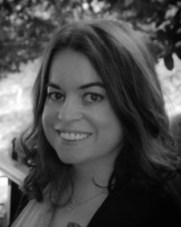
Laura Shepherd-RobinsonAbout the Author

Laura Shepherd-Robinson was born in Bristol in 1976. She has a BSc in Politics from the University of Bristol and an MSc in Political Theory from the London School of Economics. Laura worked in politics for nearly twenty years before re-entering normal life to complete an MA in Creative Writing at City University. She lives in London with her husband, Adrian.

Blood & Sugar, her first novel, won the Historical Writers’ Association Debut Crown, was a Waterstones Thriller of the Month, and a Guardian and Telegraph novel of the year. It was also shortlisted for the Crime Writers’ Association John Creasey (New Blood) Dagger and the Sapere Historical Dagger; and the Amazon Publishing/Capital Crime Best Debut Novel. (Photo/bio credit: Author website)

Connect with Laura
Website | Twitter | Facebook | Instagram