Book Review – His Bloody Project by Graeme Macrae Burnet @SarabandBooks

About the Book

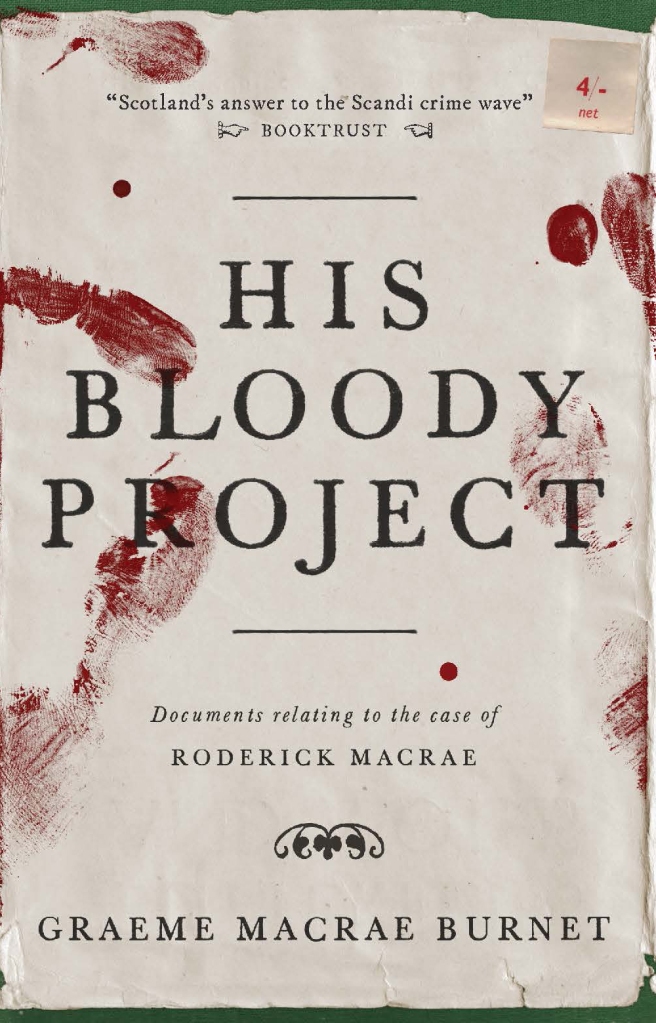
Book cover of His Bloody Project by Graeme Macrae Burnet

The year is 1869. A brutal triple murder in a remote community in the Scottish Highlands leads to the arrest of a young man by the name of Roderick Macrae.

A memoir written by the accused makes it clear that he is guilty, but it falls to the country’s finest legal and psychiatric minds to uncover what drove him to commit such merciless acts of violence.

Was he mad? Only the persuasive powers of his advocate stand between Macrae and the gallows.

Format: Paperback (282 pages) Publisher: Saraband
Publication date: 5th November 2015 Genre: Historical Fiction

Find His Bloody Project on Goodreads

Purchase His Bloody Project from Bookshop.org [Disclosure: If you buy books linked to our site, we may earn a commission from Bookshop.org, whose fees support independent bookshops]


My Review

His Bloody Project was the book chosen for February’s Radio 4 Bookclub, although it had been on my wishlist ever since it was shortlisted for the Man Booker Prize in 2016. I was fortunate enough to attend the recording of the programme at BBC Broadcasting House and listen to author, Graeme Macrae Burnet, talk about the book with its host, James Naughtie, and answer questions from the audience of fellow readers. If you’re in the UK, you can listen to the programme on BBC Sounds.

The book is made up of a series of documents including medical reports, witness statements and a court transcript. They give a remarkable feeling of authenticity, so much so that you could be forgiven for believing you’re reading about an actual crime, not a fictional one. It’s something that seems particularly relevant in an era of ‘fake news’. In fact, a few real historical figures appear in the book although, like me, you might well assume – until you read the Historical Notes – these are fictional too.

The central document, which constitutes the majority of the book, is the memoir of Roderick Macrae, the young man accused of the murder – a murder he admits to carrying out – written from his jail cell as he awaits trial. He describes his life growing up on a croft in a state of poverty and the increasing malevolence shown towards his family, especially his father, by the local Constable Lachlan Mackenzie, one of the three individuals murdered by Roddy. Roddy is unusually articulate and educated, something which marks him out in the small community of Culduie. He’s also withdrawn, something of a loner and quite sensitive which makes his subsequent actions all the more surprising.

But can we believe everything Roddy describes in his memoir? Small details that emerge from other documents, but which are omitted from his account, suggest perhaps we can’t. He doesn’t dispute he committed the murders, the brutal nature of which he describes in a chillingly dispassionate way, but what was his motive? Was it revenge for the suffering inflicted on his family or an act of insanity? What’s brilliant about the book is that the author lets us, the reader, come to our own conclusions.

The story also touches on topics such as inequality of power. A scene which illustrates this is when Roddy’s father, John, is told by Lachlan Mackenzie that he can no longer collect seaweed to fertilise his crops because it belongs to the laird. This is just one example of the personal malevolence directed at him by Lachlan Mackenzie. John Macrae is a piteable figure, subjected to just about every misfortune you can think of, including the threat of eviction from the land he cultivates. His inarticulacy and poor grasp of English means he is unable to stand up for himself, especially when he appears as a witness at Roddy’s trial. The one person who believes in Roddy’s innocence, albeit on grounds of insanity, is his advocate, Mr Sinclair. Are his efforts on Roddy’s behalf in vain? You’ll have to read the book to find out.

His Bloody Project will immerse you in the life of Culduie and its inhabitants whilst demanding your close attention to the evidence presented to you. It’s a fascinating experience and one I very much enjoyed.

In three words: Ingenious, compelling, authentic
Try something similar: The Confessions of Frannie Langton by Sara Collins


About the Author
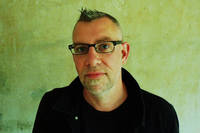
Author Graeme Macrae Burnet

Graeme Macrae Burnet was born in Kilmarnock in 1967. He studied English Literature at Glasgow University before spending some years teaching in France, the Czech Republic and Portugal. He then took an M.Litt in International Security Studies at St Andrews University and fell into a series of jobs in television. These days he lives in Glasgow.

He has been writing since he was a teenager. His first book, The Disappearance of Adèle Bedeau (2014), is a literary crime novel set in a small town in France. His second novel, His Bloody Project (2015), revolves around the murder of a village birleyman in nineteenth century Wester Ross. He likes Georges Simenon, the films of Michael Haneke and black pudding. (Photo/bio: Goodreads author page)

Connect with Graeme
Website | X | Facebook

Book Review – Other Worlds Were Possible by Joss Sheldon @josssheldon

About the Book

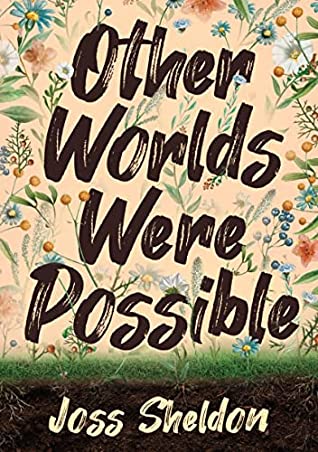
Book cover of Other Worlds Were Possible by Joss Sheldon

Sunny and his kinfolk were content with their way of life. During the dry season, their clan lived alone. They hunted whenever they chose, gathered an array of plants, told stories, and took part in debates. In the rainy season, they united with the rest of their tribe. They formed a temporary city, feasted, held dances and played games. They could have lived like this forever. But a strange and foreign people had ideas of their own…

Appearing out of nowhere, these aliens looked completely different. They smelled different. They even dressed differently. And they had the most peculiar set of habits.

These people did not live with the earth. They exploited the earth; imposing monocultures and intensive farming. They were not content with their lot. They were possessed by an insatiable desire to consume. And they had no sense of freedom. They were beholden to a never-ending list of outlandish concepts; things such as “Hierarchy”, “Patriarchy”, “Monarchy”, “Monogamy”, “God”, “Punishments”, “Ownership”, “Inequality”, “Money”, “Work” and “Tax”.

Sunny and his kinfolk faced the toughest decision in their history… They could wage war on these imposters. But their enemies were strong. They had already killed hundreds-of-thousands of indigenous people. They could flee. But these imperialists would surely follow. They would push them into the sea, the mountains or the desert. Their clan needed another solution. But what could it be? Could they negotiate with this violent foe? Could they form a pact? Could they create a kind of alliance?

Sunny had no idea. But he was compelled by a duty to find out. This was his time. And he was willing to risk his life, to save the people he loved…

Format: ebook (285 pages) Publisher: Rebel Books
Publication date: 30th January 2023 Genre: Historical Fiction, Political Fiction

Find Other Worlds Were Possible on Goodreads

Purchase Other Worlds Were Possible from Amazon UK (link provided for convenience not as part of an affiliate programme)


My Review

Joss Sheldon has a history of addressing important social issues in his fiction. His novel, Little Voice, explored society’s expectations of normality and the pressure to conform. His next book Money, Power, Love tackled the ‘nature versus nurture’ debate and exposed the excesses of capitalism. Individutopia presented a dystopian vision of a world in which there really is no such thing as society; in which people don’t collaborate, they only compete.

In this latest book, he dramatises the adverse effects of European imperialism on the lives of one clan living in an undisclosed location, possibly Africa (although the events that unfold could equally apply to the experiences of Aboriginal people or Native Americans). Although the time period is not specified, it’s probably the nineteenth century because of the ‘innovations’ the imperialists bring. The book has a strong enviromental message.

The Eagle Clan, of which Sunny is a member, follow a communal way of life, cooking and eating together each evening. Decisions are reached collectively following debate by all members of the clan. There is sexual freedom; monogamy is neither required nor even encouraged. Each member contributes what they can according to their skillset. Children have no formal education but learn and acquire skills through observation and experience, such as which plants are safe to eat and which are not. Although elders are respected for their wisdom, there is no hierarchy. Humility is lauded, so much so that anyone displaying pride in their own achievements is vilified. They have no concept of ownership of property and live off the land, never taking more than they need. They have no need to measure time, living from event to event and following the changing seasons.

When white imperialists (referred to by the clan as ‘Wogies’) arrive intent on colonising the land and exploiting its natural resources, the traditional lifestyle – and freedom – of Sunny’s clan is threatened, along with the environment in which they live. Initially the clan feel sorry for the Wogies who seem so ill-suited to their new surroundings. But as time goes on, Sunny and his kinfolk are shocked at seeing people chained together working vast fields of crops. They witness ancient forests, whose varied species have supported different flora and fauna, chopped down and replanted with a single species, forests which were also the clan’s sacred spaces. Their lives are threatened too with the arrival of diseases to which they have no natural immunity.

Alongside the imperialists come missionaries eager to convert the ‘pagan’ tribes to Christianity so that they might enter paradise. But, as one of the clan replies, ‘We’re already in paradise. Look around you! We’re surrounded by the people we love. We have a wonderful community, all the food we can eat, and all the time in the world. We have art, walks, conversations, stories, sport, music and sex.’

If the author does rather hammer home the anti-colonialism message, the story is leavened with humour. We witness the absurdity of the imperialists’ attempts to explain – and justify – concepts such as ownership, taxation and profit to people who have never had any need of those things. Sunny makes an engaging protagonist, initially tempted by the things offered by the Wogies but gradually realising the threat they pose and bravely attempting to do something about it. Unfortunately, history tells us he is doomed to failure.

Like all the author’s books, Other Worlds Were Possible is full of interesting ideas and definitely challenges the notion of what constitutes ‘progress’, portraying in stark terms the destructive impact of human activity on the environment. ‘Money this, money that. Only when they’ve cut down the last tree, poisoned the last river, and caught the last fish, will they realise they cannot eat their money.’

I received a digital review copy courtesy of the author.

Joss Sheldon’s latest book, Freedom: The Case For Open Borders, will be published on 29th February 2024 and is available for pre-order now. Addressing the very current issue of migration, it makes the historical, scientific, economic, cultural, political and philosophical cases for free movement.

In three words: Thought-provoking, imaginative, didactic
Try something similar: Things Fall Apart by Chinua Achebe


About the Author

Author Joss Sheldon

Joss Sheldon is a scruffy nomad, unchained free-thinker, and post-modernist radical. Born in 1982, he was brought up in one of the anonymous suburbs which wrap themselves around London’s beating heart. Then he escaped!

With a degree from the London School of Economics to his name, Sheldon had spells selling falafel at music festivals, being a ski-bum, and failing to turn the English Midlands into a haven of rugby league.

Then, in 2013, he stumbled upon McLeod Ganj; an Indian village which plays home to thousands of angry monkeys, hundreds of Tibetan refugees, and the Dalai Lama himself. It was there that Sheldon wrote his debut novel, Involution & Evolution.

Eleven years down the line, he’s penned eight titles in total, including two works of non-fiction: Democracy: A User’s Guide, and his latest release, Freedom: The Case For Open Borders. (Photo: Goodreads author page)

Connect with Joss
Website | Twitter/X | Facebook