Book Review – The Book of Days by Francesca Kay

About the Book

Things change; we have to recognise that; the world will not stay still. What we must hope is that the new is better and stronger than the old.

ANNO DOMINI 1546. In a manor house in England a young woman feels the walls are closing around her, while her dying husband is obsessed by his vision of a chapel where prayers will be said for his immortal soul.

As the days go by and the chapel takes shape, the outside world starts to intrude. But as the old ways are replaced by the new, the people of the village sense a dangerous freedom …

Format: audiobook (7 hours 20 mins) Publisher: Swift Press
Publication date: 1st February 2025 Genre: Historical Fiction

Find The Book of Days on Goodreads

Purchase The Book of Days from Bookshop.org [Disclosure: If you buy books linked to our site, we may earn a commission from Bookshop.org, whose fees support independent bookshops]

My Review

The Book of Days is one of the books on the shortlist for the Walter Scott Prize for Historical Fiction 2025. The winner will be announced on Thursday 12th June at the Borders Book Festival (and I will be there!).

There’s a hypnotic quality in the way Alice’s life plays out day by day, governed by the rhythm of the changing seasons and the rituals of religious devotion. ‘All our days are measured in our prayers, our years in the feasts and the seasons.’ 

There’s a claustrophobic feeling to much of the book with the household dominated by the gradual decline of Alice’s husband, the Lord of the Manor, who is suffering from an unknown condition. The prospect of imminent death has caused him to focus on his immortal soul, employing the most highly skilled craftsmen to construct a chapel and create an elaborately carved tomb where he can be laid to rest alongside his first wife (and eventually Alice).

Alice is still grieving the loss of a daughter and is conscious that her position is precarious given her husband has a daughter by his first wife who will inherit the estate. Alice takes things into her own hands in a way that seems impossible to outside observers, opening her up to accusations of adultery and implicating a new arrival in the community. It will provide ammunition for those who support the Reformation.

This is not a book that moves at pace. It’s only in the final chapters when events in the outside world – the death of Henry VII and the accession to the throne by Edward VI – impose themselves on the lives and religious practices of the village that the pace picks up. Suddenly all the familiar things that have been central to their religious beliefs – the Latin Mass, religious images, sacred relics – are prohibited.

There is a brilliant passage in which Alice rails against the impact the changes will have on people who cannot read and who learn the Scriptures from pictures on church walls or in stained glass, and who find hope for worldly troubles in making offerings to images of saints. ‘You who take so much for granted, with your sound walls, rich food and fine jewels – and books, especially books – do you truly begrudge the people of this or any other lowly parish their little scraps of coloured glass, their painted saints, their confidence in prayer? 

The conflicting doctrines divide families and communities, whipped up by the incendiary rhetoric of visiting preachers. For Alice and others, things will never be the same again.

The Book of Days has an authentic sense of time and place, and there are some wonderful descriptions of nature and the changing seasons. However, it was just too unevenly paced for me, with a lot of dramatic events happening in the very final part of the book. Although beautifully written and an admirable work of historical fiction, it’s not my favourite of the books on the shortlist which, on past experience, means it will probably win.

I listened to the audiobook read by Lucy Scott who captured perfectly the contemplative tone of the book.

In three words: Intimate, introspective, meditative
Try something similar: For Thy Great Pain Have Mercy On My Little Pain by Victoria Mackenzie

About the Author
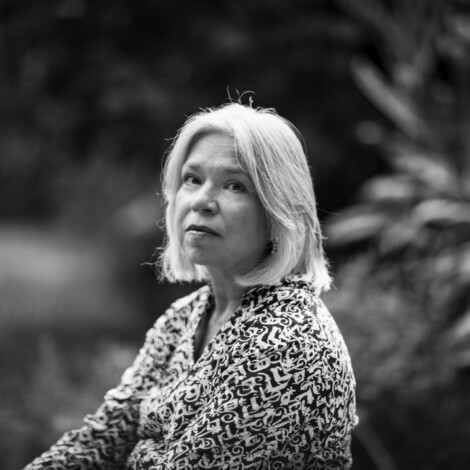
Francesca Kay grew up in Southeast Asia and India, and has subsequently lived in Jamaica, the United States, Germany and now lives in Oxford. Her first novel, An Equal Stillness, won the 2009 Orange Award for New Writers, and her second novel, The Translation of the Bones, was longlisted for the 2012 Women’s Prize for Fiction. Her third novel, The Long Room, was published in 2016; The Book of Days is her fourth. (Photo/bio: Publisher website)

Book Review – Traitor’s Legacy by S. J. Parris

About the Book

England, 1598. Queen Elizabeth’s successor remains unnamed. The country teeters on a knife edge.

When a young heiress is found murdered at the theatre, the Queen’s spymaster Robert Cecil calls upon former agent Sophia de Wolfe to investigate.

A cryptic note found on the dead girl’s body connects to Sophia’s previous life as a spy, and her quest soon takes her into dangerous waters. Powerful enemies emerge, among them the Earl of Essex: the Queen’s favourite courtier and a man of ruthless ambition.

This is a murder that reaches directly into the heart of the court. And Sophia is concealing a deep-buried secret of her own. She must uncover the truth before her past threatens to destroy her.

Format: Hardcover (384 pages) Publisher: Hemlock Press
Publication date: 8th May 2025 Genre: Historical Fiction, Crime

Find Traitor’s Legacy on Goodreads

Purchase Traitor’s Legacy from Bookshop.org [Disclosure: If you buy books linked to our site, we may earn a commission from Bookshop.org, whose fees support independent bookshops]

My Review

Traitor’s Legacy is the first in a new series featuring Sophia de Wolfe, former agent of Queen Elizabeth’s spymaster, Sir Francis Walsingham. We discover pretty quickly that Sophia has had an eventful life including a previous marriage, an illegitimate son given up for adoption and coming under suspicion of murder. In fact, so detailed is her back story I found myself checking that I hadn’t missed an earlier book in the series. That is until I realised she had featured (then going by the name Sophia Underhill) in some of the books in the author’s Giordano Bruno series which I read years ago. However, although new readers might find them wishing for more detail about her colourful past, it does mean you don’t need to have read the Giordano Bruno books to enjoy this one.

Sophia is now a widow with a stepson who resents the fact she has inherited her late husband’s wealth. Her stepson is a drunkard, a gambler and a spendthrift with a potential for violence. Although Sophia’s was a marriage of convenience arranged by Walsingham to ensure her safety, she developed a real affection for her late husband Humphrey, often recalling his wise and supportive advice. Having said that, widowhood has given Sophia a certain freedom. ‘One of the great advantages of being a widow with her own money is that, for the first time in her life, she doesn’t have to submit to any man telling her what she can and can’t do.’

Our first encounter with Sophia is during a duel with her fencing master, so we know from the off she’s someone to be reckoned with. She’s resourceful, intrepid and resolute. ‘Here you are, like some kind of truffle-hound, determined to sniff out the truth and dig it up.’ Sophia has faced many obstacles in her life but has never given up trying to overcome them. ‘She has been raging all her life, for as long as she can remember, at one thing or another (usually the actions of men.’

Following the discovery of the dead girl’s body, Sophia is reunited with Anthony Munday, now a playwright for Richard Burbage’s theatre company, but formerly a pursuivant hunting Catholic priests smuggled into the country. This involved him working for Richard Topcliffe, notorious for his brutal interrogations. Munday now has a wife and children but his attachment to Sophia means that when her connection to the death of the girl becomes very personal he can’t help but get involved. I enjoyed the tease of the relationship between Sophia and Anthony. They’re certainly comrades but could they become something more to each other?

The plot revolves around the question of what was the motive for the murder? Was it an act of jealous rage by a spurned lover? Was it for financial gain given the dead girl was a wealthy heiress? Or was there a political angle to the murder? Answering those questions means taking on the rich and powerful, and Sophia and Anthony both find themselves in risky situations as a result. As she says at one point, ‘I feel with every step we’re tangling ourselves deeper in something that can’t end well’.

The book is set in 1598 towards the end of Elizabeth’s reign when the question of the succession was in a lot of minds and there was turmoil in Ireland where Catholics were suspected of supporting the enemies of England, notably Spain. Alongside the fictional characters, there are real historical figures including the Queen’s favourite, the Earl of Essex, his wife Frances, daughter of Sir Francis Walsingham, and Thomas Phelippes, Walsingham’s cryptographer who deciphered the coded letters of the Babington Plot conspirators. There’s even a walk-on part for William Shakespeare.

Traitor’s Legacy has everything I look for in a historical mystery: a deliciously complex plot, an engaging main character, a varied supporting cast and lots of period detail. It moves along at pace and, most importantly as far as I’m concerned, the ending is all nicely set up for the next book in the series. If you loved the Giordano Bruno series or you’re a fan of historical mysteries I think you’ll enjoy this as much as I did.

I received an advance reader copy courtesy of HarperCollins via NetGalley.

In three words: Compelling, intricate, fast-moving
Try something similar: Viper in the Nest by Georgina Clarke

About the Author

S. J. Parris is the pseudonym of Stephanie Merritt. It was as a student at Cambridge that Stephanie first became fascinated by the rich history of Tudor England and Renaissance Europe. Since then, her interest has grown and led her to create her series of historical thrillers featuring Giordano Bruno.

Stephanie has worked for a variety of newspapers and magazines as well as radio and television. She currently writes for the Observer and the Guardian and lives in Surrey with her son.

Connect with Stephanie
Website | Facebook