
 About the Book
Eleven days after the death of Anne Boleyn, Jane is dressing for her wedding to the King. She has witnessed at first hand how courtly play can quickly turn to danger and knows she must bear a son…or face ruin. This new Queen must therefore step out from the shadows cast by Katherine and Anne. In doing so, can she expose a gentler side to the brutal King?
Acclaimed, bestselling historian Alison Weir draws on new research for her captivating novel, which paints a compelling portrait of Jane and casts fresh light on both traditional and modern perceptions of her. Jane was driven by the strength of her faith and a belief that she might do some good in a wicked world.
History tells us how she died. This spellbinding novel explores the life she lived.
Format: Hardcover, ebook (544 pp.) Publisher: Headline
Published: 3rd May 2018 Genre: Historical Fiction
Purchase Links*
Amazon.co.uk ǀ Amazon.com ǀ Hive.co.uk (supporting UK bookshops)
*links provided for convenience, not as part of any affiliate programme
Find Jane Seymour: The Haunted Queen on Goodreads
My Review
For someone who lived a relatively short life, this is quite a long book. The author takes us in detail through events of the three years that the author describes as ‘the most tumultuous…in England’s history’. Since the lives of Katherine of Aragon, Anne Boleyn and Jane Seymour overlapped, readers of the previous two books in the series will find themselves reliving the events of the ‘King’s Great Matter’ over again, albeit from a different perspective.
I enjoyed the sections covering Jane’s childhood and the home life of the Seymour family at Wulfhall. It provides an interesting insight into the working of a Tudor household and here, as throughout the book, there is wonderful detail about clothing, food and the routines of daily life that provides a real sense of authenticity. ‘Mother had excelled herself: among the dishes there were baked meats, raised pies, savoury tarts, salmon in sauce, capons in wine, blancmanges and berries is season.’ Events also take place that arguably have a lasting impact on Jane’s view of marriage.
Jane’s appointment as maid-in-waiting to first Queen Katherine and then Anne Boleyn demonstrates how women of the nobility were frequently pawns in a power game for preferment and position, either through being placed in prestigious roles at Court or through making advantageous marriages. At times, this presents Jane with difficult moral choices: should she be true to her beliefs and risk her family’s advancement or obey her family’s wishes? As one of her fellow maids observes, “Oh, Jane – who are we to question? Our families make our moral choices for us.” The book provides a compelling picture of the Royal Court as a place of intrigue, conspiracy, secret allegiances, false flattery and dissembling with imprisonment, exile or worse the price for opposing the King’s will. Particularly, since the King’s will can change like the wind.
When Jane finally accepts Henry’s attentions, it is partly because she believes it may be God’s way of enabling her to end the attack on the Church initiated by the followers of Anne Boleyn and save the King from eternal damnation. However, she is merely a pawn once again and the nearer to the King, the more danger lurks behind every door. ‘It was a terrifying world she inhabited….Nowhere, least of all this glittering, teeming court seething with intrigue, was safe.’
The author paints a picture of Jane as devout, with a strong moral compass, intelligent, perceptive and, surprising even herself perhaps at times, willing to express her opinions boldly. Jane’s devotion to Henry is depicted as sincere and accompanied by a physical attraction. This is relevant to a development in the story which the author talks about the evidence for in her Author’s Note. Following Anne Boleyn’s fall from grace, putting aside her doubts and misgivings, Jane agrees to marry the King. However, as most of us know from school history lessons, happiness did not await. The King, however, did get that for which he had disposed of two wives.
 In her fascinating Author’s Note at the end of the book, the author freely admits that documentary evidence about the life of Jane Seymour is scant – ‘She left barely a letter…Her recorded utterances are few.’ Alison Weir goes on to say, ‘Had she [Jane] left behind letters giving insights into her views on these events, we would know much more about the role she played in them – but she didn’t, and therefore she remains an enigma.’ However, the role of the author of historical fiction is to populate the gaps in the historical records using their imagination. This, the author does in a way this reader certainly found plausible, credible and, importantly, entertaining. I look forward to reading the next book in the series.
I received a review copy courtesy of publishers, Headline, and NetGalley in return for an honest and unbiased review.
In three words: Detailed, intimate, well-researched
Try something similar…Innocent Traitor by Alison Weir
 About the Author
Alison Weir is a British writer of history books for the general public, mostly in the form of biographies about British kings and queens. She currently lives in Surrey, England, with her two children. Before becoming an author, Weir worked as a teacher of children with special needs. She received her formal training in history at teacher training college.
Connect with Alison
Website ǀ Facebook ǀ Twitter ǀ Goodreads

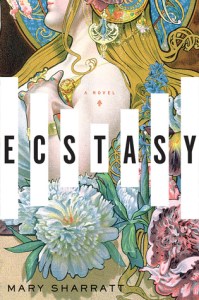
 For US residents only, there’s a chance to win a paperback copy of Ecstasy.
 About the Book
 About the Author

 What Cathy Read Next...