#BookReview The Push by Ashley Audrain @MichaelJBooks

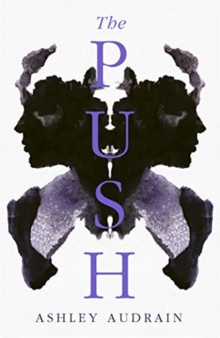
The Push Ashley AudrainAbout the Book

What if your experience of motherhood was nothing like what you hoped for – but everything you always feared?

‘The women in this family, we’re different…’

The arrival of baby Violet was meant to be the happiest day of my life. It was meant to be a fresh start. But as soon as I held her in my arms I knew something wasn’t right. I have always known that the women in my family aren’t meant to be mothers.

My husband Fox says I’m imagining it. He tells me I’m nothing like my own mother, and that Violet is the sweetest child. But she’s different with me. Something feels very wrong. Is it her? Or is it me? Is she the monster? Or am I?

Format: Hardcover (320 pages)         Publisher: Michael Joseph
Publication date: 7th January 2021 Genre: Contemporary Fiction

Find The Push on Goodreads

Pre-order/Purchase links
Bookshop.org
Disclosure: If you buy a book via the above link, I may earn a commission from Bookshop.org, whose fees support independent bookshops

Hive | Amazon UK
Links provided for convenience only, not as part of an affiliate programme


My Review

I first heard about The Push when it was one of the debut novels featured at the Michael Joseph Proof Party at Henley Literary Festival in 2020. Under normal circumstances, I might have expected to be aboard the Hibernia cruising along the Thames, sipping a glass of fizz while listening to Ashley talk about her book. Since 2020 was definitely not normal, instead I had to make do with the online event, which included an uncorrected proof copy of the book in the ticket price.

The compelling and intriguing prologue of The Push sees a woman (whom we will shortly know as Blythe) observing her daughter through the windows of the house of her former husband, Fox, and his new wife. The story that follows is her account of events, addressed to her ex-husband. The narrative style takes a little getting used to but comes to make absolute sense because the book is her side of the story and, to a certain extent, a self-justification of her response to the events that led up to this point.

Interspersed with Blythe’s first person narrative are occasional flashbacks to the troubled childhood of her mother, Cecilia. Cecilia’s experiences at the hands of her own mother, Etta, leads her to warn her daughter, “One day you’ll understand, Blythe. The women in this family, we’re different…”. It’s a statement that will colour Blythe’s view of herself and influence some of the events that follow.

Despite her understandable reservations about becoming a mother, Blythe is persuaded by Fox that they should start a family. I have never given birth but the author’s vivid description of Blythe’s experience of the birth of her daughter, Violet, brought me as close as I’m ever likely to get – or would want to get, frankly – to the reality of it. The book also conveys the rollercoaster of emotions Blythe experiences after giving birth – from the highs of the wonder and astonishment at the new life she has created to the lows of lack of sleep and the unrelenting nature of caring for a young baby. It brings Blythe close to breaking point. “I felt like the only mother in the world who wouldn’t survive it.”

Blythe worries she can’t live up to Fox’s expectations of what a ‘good mother’ should be however hard she tries. And she really does try.  In fact, society’s expectations of motherhood is one of the themes explored in the book and the extent to which it involves an element of performance, of ‘playing the part’ expected, of hiding the private reality behind the public face.

To make things worse, Blythe struggles to bond with Violet in the way her daughter seems to do naturally with Fox. She confides, “I felt like I would never have with her what you had.” I’m sure I’m not the only reader moved by the rare occasions on which Violet responds to Blythe’s loving gestures. It’s a pattern that continues as Violet grows up, leading Blythe to wonder if is it something about her, or something about Violet that’s not quite right?

The author cleverly sows seeds of doubt in the reader’s mind. Are Blythe’s concerns about Violet’s behaviour merely delusions fuelled by Blythe’s own childhood experiences or a recognition of something within Violet that others fail to see? And are Violet’s questions merely a sign of precocious intelligence or evidence of a manipulative mind at work? As Blythe admits, “there weren’t many places my mind wouldn’t go. My imagination could tiptoe slowly into the unthinkable before I realized where I was headed”.

A shocking event part way through the book brings about a sudden change of tone. From that point on the author skillfully ramps up the tension, creating a chilling sense of foreboding that doesn’t let up until the final page.

From its clever title to its heart-stopping conclusion, The Push is an impressive debut about grief, obsession and betrayal.

In three words: Chilling, intense, suspenseful

Try something similar: The Recovery of Rose Gold by Stephanie Wrobel

Follow this blog via Bloglovin


About the Author

Ashley Audrain previously worked as the publicity director of Penguin Books Canada. Prior to Penguin, she worked in public relations. She lives in Toronto, where she and her partner are raising their two young children. The Push is her first novel.

Connect with Ashley
Twitter

#BookReview The Salt Path by Raynor Winn @MichaelJBooks


About the Book

Just days after Raynor learns that Moth, her husband of 32 years, is terminally ill, their home and livelihood is taken away. With nothing left and little time, they make the brave and impulsive decision to walk the 630 miles of the sea-swept South West Coast Path, from Somerset to Dorset, via Devon and Cornwall.

They have almost no money for food or shelter and must carry only the essentials for survival on their backs as they live wild in the ancient, weathered landscape of cliffs, sea and sky. Yet through every step, every encounter, and every test along the way, their walk becomes a remarkable journey.

The Salt Path is an honest and life-affirming true story of coming to terms with grief and the healing power of the natural world. Ultimately, it is a portrayal of home, and how it can be lost, rebuilt, and rediscovered in the most unexpected ways.

Format: Paperback (288 pages) Publisher: Penguin
Publication date: 22nd March 2018 Genre: Nonfiction, Memoir

Find The Salt Path on Goodreads

Purchase links*
Amazon UK | Hive (supporting UK bookshops)
*links provided for convenience not as part of an affiliate programme

My Review

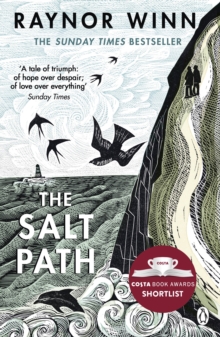
The Salt Path recounts the author’s experience of walking the South West Coast Path alongside her husband, Moth. The circumstances which lead them to embark on this journey only added to my appreciation of the immensity of their undertaking. As the author notes, walking the entire South West Coast Path is “the equivalent of climbing Mount Everest nearly four times, walking 630 miles on a path often no more than a foot wide, sleeping wild, living wild“.

As someone not keen on heights and for whom camping, let alone wild camping, holds no attraction whatsoever, I cannot imagine taking on such a challenge. And doing it with virtually no money, limited food (and that mostly noodles), equipped with only what could be fitted in a rucksack and without any creature comforts. Yet at one point, Raynor writes that they were “Homeless, dying, but strangely, in that sweaty, dehydrated moment, shyly, reluctantly happy”. Which just goes to show that you have to choose your attitude.

At times the pair are surprised by the reaction of others they meet. Some react negatively once they learn they are homeless. Others admire their spirit or envy their freedom to undertake such a journey. And along the way, Raynor and Moth meet a number of ‘Good Samaritans’ ranging from the pink-haired girl who gives them free food to the people who buy them tickets for the Minack Theatre.

Alongside the account of their journey are occasional sections devoted to information about homelessness, dolphin protection or the geology of the areas they pass through. And of course, the flora and fauna. Raynor’s connection with the land and the natural world, forged in childhood and passed on to her own children, really comes across. “The wild was never something to fear or hide from. It was my safe place; the thing I ran to. Our land gave that to our children. Growing like saplings in the storm, bent by it, but strengthened at the core, rooted but flexible and strong, running free in the wind, but guided by it.”

Having visited the south coast of Cornwall on a number of occasions, I was particularly drawn to the sections of the book where Raynor and Moth travel through places I’ve been to such as Mousehole, Fowey, Polruan, Falmouth and St. Mawes. One section that caught my eye was when they arrive in Morwenstow and visit the cliff top hut built by Robert Hawker, the smallest property owned by the National Trust. The same Parson Hawker features in the historical crime novel, The Mermaid’s Call by Katherine Stansfield.

More than anything, I found myself moved by Raynor’s and Moth’s enduring devotion to each other. Recalling their time together, Raynor writes, “Years passed with our legs entwined, in endless chatter and laughter. And all the time we lived with a passion that didn’t die…

The author writes with unflinching honesty about the low points they experience on their journey, such as when they reach Bude and find less than they were expecting in their bank account. Raynor blames herself for the events that caused them to lose their home and, as always, Moth’s welfare is at the forefront of her mind. “We’re lost. No money, no food, no home. You need to eat; you’re ill… Now I’ve dragged you out here when you should be somewhere safe, resting, not hauling a bag round the edgeland of life”. To counteract this, there are moments of humour such as their bafflement when Moth is repeatedly mistaken for a well-known poet (although not well-known to them clearly).

I recently had the pleasure of hearing Raynor talk about The Salt Path, and its follow-up, The Wild Silence, at this year’s online Henley Literary Festival. As well as telling the fascinating story of how The Salt Path came to be written and published, and the original title she came up with (it got used as a chapter title instead), Raynor revealed she and Moth are planning another “long walk” (location undisclosed). So readers can look forward to another book in future.

For me, the abiding message of The Salt Path is, in the author’s words, “Life is now, this minute, it’s all we have. It’s all we need.”

In three words: Honest, intimate, inspiring

Try something similar: The Outrun by Amy Liptrot

Follow this blog via Bloglovin

About the Author

Since completing the South West Coastal Path, Raynor Winn has become a regular long-distance walker and writes about nature, homelessness and wild camping. She now lives in Cornwall with her husband Moth and their dog, Monty.

Connect with Raynor
Twitter