
Welcome to today’s stop on the blog tour for The Ends of the Earth by Abbie Greaves. My thanks to Najma Finlay at Cornerstone for inviting me to take part in the tour. Described as ‘a love story and a mystery, as well as a reflection on how to navigate a life in suspension’, The Ends of the Earth was published on 29th April 2021. I’m delighted to share with you a guest post by Abbie in which she reveals how the idea for the book came about. Personally, an author’s inspiration for a book is always something I find fascinating and I hope you do too.
 About the Book
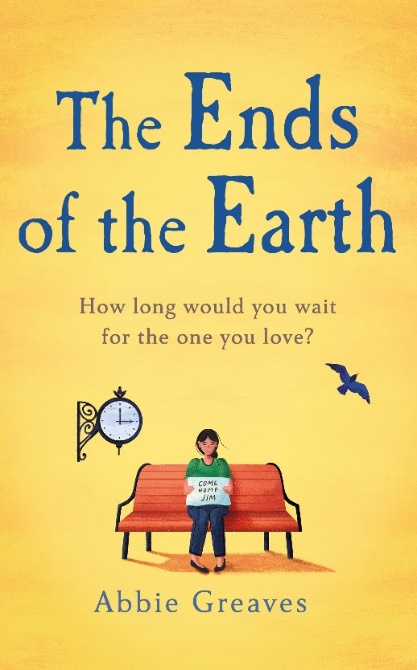
Mary O’Connor has been keeping a vigil for her first love for the past seven years.
Every evening without fail, Mary arrives at Ealing Broadway station and sets herself up among the commuters. In her hands Mary holds a sign which bears the words: ‘Come Home Jim.’
Call her mad, call her a nuisance, call her a drain on society – Mary isn’t going anywhere. That is, until an unexpected call turns her world on its head. In spite of all her efforts, Mary can no longer find the strength to hold herself together. She must finally face what happened all those years ago, and answer the question – where on earth is Jim?
Format: Hardcover (416 pages) Publisher: Century
Publication date: 29th April 2021 Genre: Contemporary Fiction
Find The Ends of the Earth on Goodreads
Purchase links
Bookshop.org
Disclosure: If you buy a book via the above link, I may earn a commission from Bookshop.org, whose fees support independent bookshops
Hive | Amazon UK
Links provided for convenience only, not as part of an affiliate programme
Follow this blog via Bloglovin
Guest Post by Abbie Greaves, author of The Ends of the Earth
“I had the first seeds of the idea that would later become The Ends of the Earth while commuting. As any commuter knows, it’s hardly the most glamourous of times or tasks, but for me, it was certainly fruitful from a creative standpoint! Every day, as I flew through the ticket barriers, elbow to elbow with other passengers, I couldn’t help thinking what it would be like to come to a complete standstill in the midst of this.
What it would be like to stop moving and just wait.
What sort of person would have the fortitude to go against the grain? Why would they be stationary in a place of such motion? And most importantly – who were they waiting for and why?
From there, I began to sketch the character of Mary O’Connor, a forty-year-old woman who has been waiting outside Ealing Broadway station every evening for the last seven years with a sign that reads simply: COME HOME JIM. I knew from the outset that her patience would seem superhuman to most (I say this as a deeply impatient person myself!) so one of my main challenges in writing the novel was to find ways to help readers relate to her unique predicament. The more I wrote, the more I came to believe that her fierce loyalty and resilience is something that we all share, when it comes to the ones we love.
My second big challenge with Mary’s character was how I would go about unpicking it, especially given that privacy is paramount to her. Her family are in Belfast, unaware of her station vigil, and in terms of her friends, as she herself says they are all very much circumstantial – her boss at the supermarket where she stacks shelves and the handful of volunteers at the charity where she spends her long nights of insomnia. It isn’t a case that Mary doesn’t want to be close to these people, more that she feels she isn’t worthy and that she has other more pressing concerns.
But from the first chapter onwards, I was determined to see this attitude crumble away. When Mary receives a phone call from a man she believes is Jim, it’s the catalyst for her walls to begin to break down. It isn’t an easy process for her, letting others in, and in showing Mary’s struggles to open up, I hope I’ve done justice to the reality of that process for so many of us. It’s one thing to say we should accept help from others, quite another to actually do so.
I don’t want to give much away, but it’s not a spoiler to say that Mary’s journey from those first few pages to the last is a testament to both her tenacity and the value of having reinforcements at the ready. It isn’t a case of either/or – self-sufficiency or dependence. Mary has all the tools to construct a brighter future within herself, but she’s been reminded of them by the people who have seen that at close-range.
Mary has a place very close to my heart and I can’t wait to hear what readers make of her – do let me know.”
 About the Author
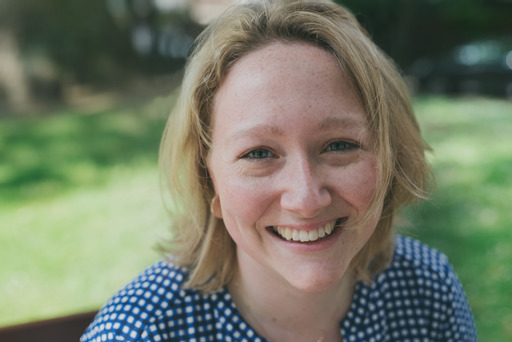
Abbie Greaves studied at Cambridge University before working in a literary agency for a number of years. She was inspired to write her first novel, The Silent Treatment, after reading a newspaper article about a boy in Japan who had never seen his parents speak to one another before. Abbie lives in Brighton.
Connect with Abbie
Website | Twitter | Instagram

 About the Book
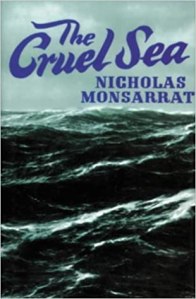 It was also the only theatre where the whole war could be won or lost, and both sides knew it. About 3,500 Allied ships were sunk, almost two for each day of the war, and over thirty thousand merchant sailors were killed. The German navy lost 783 U-boats and twenty-seven thousand crew, which was three-quarters of the men who served. This rate of fatalities was the greatest of any service in any armed force in the Second World War. Yet it is a campaign that has been largely ignored by historical fiction, with the honourable exception of Nicholas Monserrat’s The Cruel Sea and C.S. Forrester’s The Good Shepherd (both published over sixty years ago). A fresh novel was long overdue, I concluded.
 About the Author
 What Cathy Read Next...