From Page to Screen: The Light Between Oceans

oceansfrom-page-to-screenoceans-film

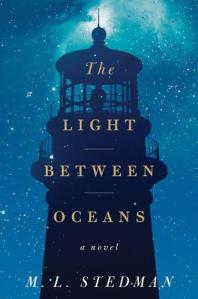
About the Book – The Light Between Oceans by M.L. Stedman

Tom Sherbourne takes up a post as lighthouse keeper on the remote Janus Rock, half a day’s boat ride from the mainland of Australia. During his first shore leave, he meets and falls in love with Isabel. They marry and return to Janus together but their attempts to start a family end in miscarriage and still birth, plunging Isabel into profound grief. One April morning, a small boat washes up on Janus; its occupants are a dead man and a baby girl. Against Tom’s better judgment, he acquiesces to Isabel’s plea to claim the baby as their own. This decision will have devastating consequences for all involved.

Read my review of the book here.

About the Film – The Light Between Oceans (2016)

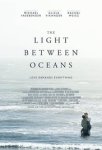
The Light Between Oceans was adapted and directed by Derek Cianfrance and stars Michael Fassbender and Alicia Vikander as Tom and Isabel. More information about the film can be found here.

Book vs. Film (Some spoilers)

The film follows the book closely but, naturally, has to omit or amend some events and minor characters. Fassbender and Vikander are well cast as Tom and Isabel, although to my mind Fassbender’s Tom appears slightly older than I’d imagined him from the book. The scenes in which Isabel loses her babies are heartrending and Vikander’s depiction of Isabel’s grief at her loss is convincing. The main difference in characterisation I noted was that of the baby’s true mother (played by Rachel Weitz). She is depicted as grief-stricken rather than fixated, almost to the point of madness, with the idea her husband and baby are still alive, as in the book. A great cast of supporting actors bring to life the inhabitants of Point Parteguese.

The cinematography is wonderful, particularly the rendering of the views of sea and sky from Janus Rock.  The wind and waves are an ever-present feature of the soundtrack in the scenes set on the island. Janus Rock in the film is larger than I had imagined from the book but the location captures perfectly the remoteness and raw beauty of the place. Naturally, you learn a lot less about the mechanics of lighthouse keeping from the film than from the book (almost none in fact!).

The Verdict

The film is a lush cinematic experience that dramatizes many of the events in the novel but omits or changes others. Crucially, a lot of Tom’s back story is missing which I think makes it harder to understand and completely accept his actions. The book makes clear his actions are driven by an overwhelming sense of guilt at having survived the First World War when so many of his comrades did not and the legacy of his difficult family background. The reservations I had about the book – whether I could believe in Isabel’s ultimate choice and the sentimental ending – are present in the film as well. However, it is beautiful to look at, it tells the main story well and the acting is excellent. On balance, though, I think book wins out.


What do you think?  If you’ve read the book and seen the film, which did you prefer?


Review: The Light Between Oceans by M. L. Stedman

oceans

An emotional tale of love and loss that asks can it ever be justifiable to do the wrong thing for the right reasons?

About the Book

Publisher’s Description: The year is 1926. After four harrowing years on the Western Front, Tom Sherbourne takes up the post of lighthouse keeper on remote Janus Rock. In the small coastal town on his way to Janus, Tom meets the headstrong, vibrant Isabel. They fall in love, and on his first shore leave they marry, then return to Janus together—both eager to begin their life, cocooned from the rest of the world with just each other, the gulls, and the stars for company. Years later, after two miscarriages and one still birth, Isabel’s grief is all consuming. But one fateful, April morning she hears the sound of cries carried in on the wind: a small boat has washed ashore, its occupants a dead man and a squalling baby girl. Tom wants to report the boat immediately, but Isabel resists, pleading with him to put it off for just one day. Against Tom’s judgment, they claim the girl as their own and name her Lucy—a devastating, resounding choice that forever changes two worlds.

My Review

This best-selling, multi-award winning novel – made into a film in 2016 – forms part of my From Page to Screen Reading Challenge. I will be comparing the book and the film in a separate post.

I found the story of Tom and Isabel emotionally engaging, even harrowing at times as their longing to have a child is tragically denied.  The dilemma for the author is to make the reader understand and empathise with their decision to claim the rescued baby as their own. Isabel’s profound grief at her failed pregnancies, culminating in a kind of madness, is convincingly portrayed and it seems understandable that she should view the miracle of the baby as a sort of divine compensation for and acknowledgement of her loss.   From the reader’s first introduction to Tom, it is apparent he feels an immense sense of guilt that he should have survived the war unscathed when so many of his comrades did not. This overwhelming sense of guilt is the key to his decision to acquiesce to Isabel’s plea not to report the boat, his actions when he learns the truth about the baby’s origins and, ultimately, his desire to protect Isabel from the consequences of their actions.

For me, the standout aspect of the book was the depiction of Janus in all its raw beauty and the guardian role of the lighthouse ‘slicing the darkness like a sword’. There is much imaginative and lyrical writing:

‘The water sloshed like white paint, milky-thick, the foam occasionally scraped off long enough to reveal a deep blue undercoat.’  

‘The wind continued its ancient vendetta against the windows, accompanied by the liquid thunder of waves.’

I have to admit that, once Janus was left behind, I found the story less compelling and Isabel’s ultimate choice didn’t completely convince me given all that had gone before.  I am rather averse to excessively schmaltzy endings and to me the final chapter read like it was designed to provide a suitably “Hollywood” finale (as indeed it now has).

Book facts: 356 pages, publication date July 2012

My rating: 4 (out of 5)

In three words: Emotional, lyrical, thought-provoking

Try something similar…Sarah Thornhill by Kate Grenville

About the Author

M.L. Stedman was born and raised in Western Australia and now lives in London. The Light Between Oceans is her first novel.