From Page to Screen: Indignation


About the Book: Indignation

It is 1951 in America, the second year of the Korean War. Marcus Messner, a studious, law-abiding, intense young man from Newark, New Jersey is beginning his sophomore year on the pastoral, conservative campus of Ohio’s Winesburg College. And why is he there and not at the local college in Newark where he originally enrolled? Because his father, the sturdy, hard-working neighbourhood butcher, seems to have gone mad – mad with fear and apprehension of the dangers of adult life, the dangers of the world, the dangers he sees in every corner for his beloved boy.  However, life is full of unimagined chances and their potential consequences.

Read my review of the book here.

About the Film: Indignation (2016)

Indignation is adapted and directed by James Schamus from the book by Philip Roth.  It stars Logan Lerman as Marcus Messner, Sarah Gadon as Olivia Hutton and Tracy Letts as Dean Caudwell.  More information about the film can be found here.

Book v Film

The film adheres to the book pretty closely but has additional opening and closing sequences that reference events that will take place later in the film.  It omits the curved ball delivered part way into the novel that provides the reader with a fair (but pretty depressing) idea how the book will end.   Logan Lerman is well-cast as Marcus Messner and gives a very effective performance that captures his studiousness and naivety.  Marcus’ college room-mates get less focus than in the book instead central place is given to Marcus’ relationship with the troubled Olivia.  Thankfully, the director retains the standout scene from the novel – Marcus’ interview with Dean Caudwell – and gives it almost 15 minutes screen time, preserving much of Roth’s dialogue and Marcus’ unconventional exit.  Marcus’s sexual encounters are dramatised in the film but not in a graphic way; they are communicated rather by his facial expressions.   Like the book, the film ends quite suddenly and in a particularly dark manner.

The Verdict

I think the director does a good job of adapting Roth’s novel but obviously the process of adaptation means emphasising some aspects and diminishing others (no “War of the White Panties” in the film!).  James Schumas chooses to place Marcus’ relationship with Olivia at the centre of the film, thereby losing some of the minor characters from the book.  From the novel, it is quite clear that Marcus must graduate from college to avoid the draft and that expulsion for breaching any of its rules will have dire consequences.  I’m not sure this comes across as clearly in the film and, had I not read the book, I might have missed the significance of what happens at the end and why we suddenly find Marcus in an altogether different setting.  So, on balance, although I very much enjoyed the film, which is a well-crafted piece of cinema with excellent performances, I think the book wins out (as it so often does).   

From Page to Screen: The Light Between Oceans

oceansfrom-page-to-screenoceans-film

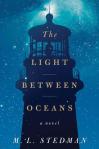
About the Book – The Light Between Oceans by M.L. Stedman

Tom Sherbourne takes up a post as lighthouse keeper on the remote Janus Rock, half a day’s boat ride from the mainland of Australia. During his first shore leave, he meets and falls in love with Isabel. They marry and return to Janus together but their attempts to start a family end in miscarriage and still birth, plunging Isabel into profound grief. One April morning, a small boat washes up on Janus; its occupants are a dead man and a baby girl. Against Tom’s better judgment, he acquiesces to Isabel’s plea to claim the baby as their own. This decision will have devastating consequences for all involved.

Read my review of the book here.

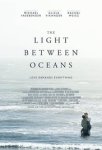
About the Film – The Light Between Oceans (2016)

The Light Between Oceans was adapted and directed by Derek Cianfrance and stars Michael Fassbender and Alicia Vikander as Tom and Isabel. More information about the film can be found here.

Book vs. Film (Some spoilers)

The film follows the book closely but, naturally, has to omit or amend some events and minor characters. Fassbender and Vikander are well cast as Tom and Isabel, although to my mind Fassbender’s Tom appears slightly older than I’d imagined him from the book. The scenes in which Isabel loses her babies are heartrending and Vikander’s depiction of Isabel’s grief at her loss is convincing. The main difference in characterisation I noted was that of the baby’s true mother (played by Rachel Weitz). She is depicted as grief-stricken rather than fixated, almost to the point of madness, with the idea her husband and baby are still alive, as in the book. A great cast of supporting actors bring to life the inhabitants of Point Parteguese.

The cinematography is wonderful, particularly the rendering of the views of sea and sky from Janus Rock.  The wind and waves are an ever-present feature of the soundtrack in the scenes set on the island. Janus Rock in the film is larger than I had imagined from the book but the location captures perfectly the remoteness and raw beauty of the place. Naturally, you learn a lot less about the mechanics of lighthouse keeping from the film than from the book (almost none in fact!).

The Verdict

The film is a lush cinematic experience that dramatizes many of the events in the novel but omits or changes others. Crucially, a lot of Tom’s back story is missing which I think makes it harder to understand and completely accept his actions. The book makes clear his actions are driven by an overwhelming sense of guilt at having survived the First World War when so many of his comrades did not and the legacy of his difficult family background. The reservations I had about the book – whether I could believe in Isabel’s ultimate choice and the sentimental ending – are present in the film as well. However, it is beautiful to look at, it tells the main story well and the acting is excellent. On balance, though, I think book wins out.


What do you think?  If you’ve read the book and seen the film, which did you prefer?