
My guest today on What Cathy Read Next is author David Looby. David’s debut novel A Billion Sharp Pieces was published in paperback by Ybernia on 22nd December 2025.
David describes A Billion Sharp Pieces as ‘a work of psychosexual fiction’, ‘an hypnotic thriller’ and ‘a heartbreaking coming-of-age story set against a backdrop of hedonism, humour and the surface history shared by two young Irishmen whose lives overlap in an intoxicating city of beauty.’
A Billion Sharp Pieces is available to purchase now direct from Ybernia or from Bookshop.org. [Disclosure: If you buy books linked to our site, we may earn a commission from Bookshop.org, whose fees support independent bookshops]
To get a flavour of the book, you can read an excerpt from A Billion Sharp Pieces below.
About the Book
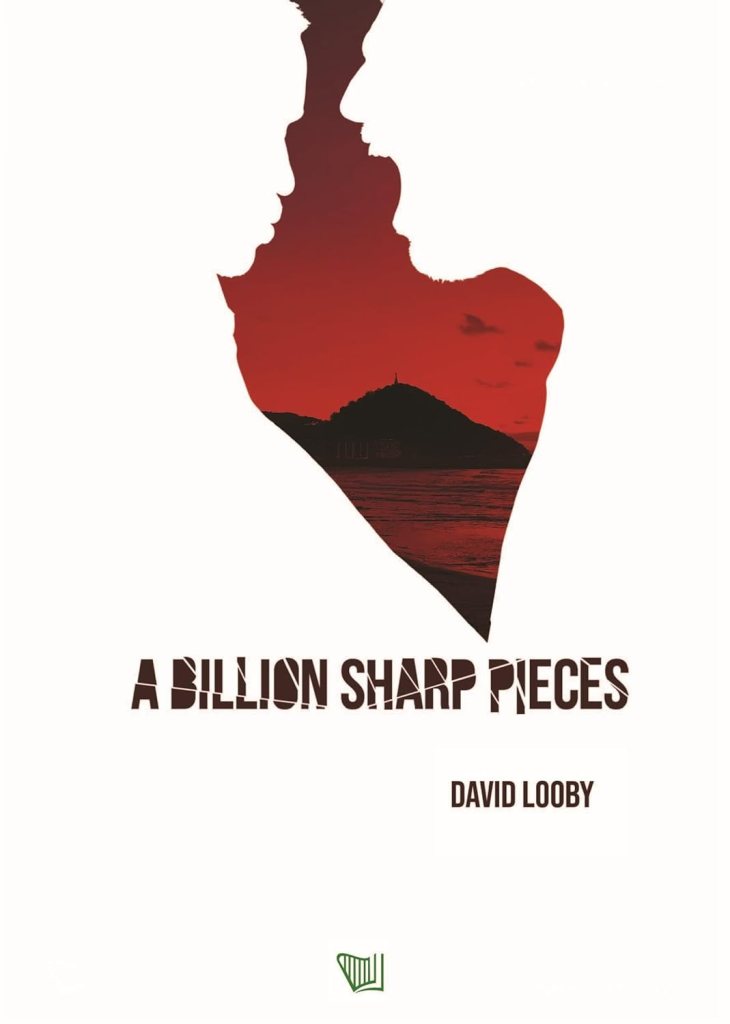
On a sun-drenched beach in northern Spain, Todd McCarthy sees an old college friend – a friend with whom he shares a troubled past.
The life he has forged for himself – with his partner Jade – is suddenly upended as their paths cross once more.
A Billion Sharp Pieces asks how far someone can be pushed before they crack and what does it take for Todd to realise there are only two choices: living or dying.
Find A Billion Sharp Pieces on Goodreads
Excerpt from A Billion Sharp Pieces by David Looby
After a short flight and train journey, with a stop at the border, they arrived in a paradisial wonderland.
That first night, as Todd swayed catching on to Jade’s fingers, the magic of the old town, of this paradise by the ocean, took hold. She watched him walk ahead of her, buzzing to be in a new place, left hand in his pocket, his right hand skimming invisible stones in excitement as he spoke about his dreams of emigrating to Canada with her.
Church bells told them it was 7 o’clock. The narrow streets, with their filigreed balconies complete with pink flowers, were bursting with tourists and life.
With his jangly walk made worse by his flip flops Todd tripped on the cobblestones of the old town square, stubbing his big toe – he let out a girlish scream, before straightening himself up and coughing manly. Jade snorted a laugh, and they linked fingers again and walked into a bar through a smart, red brick arch.
The pub smelled of oily fish, bread and beer; its counters heaving with pintxos and overhung with meaty legs of jamón. Neatly framed black and white pictures of local fishermen lined the walls.
Nudging his way to the bar, Todd pointed to a selection of crusty toasted bread temptations topped with a variety of meats and cheeses. He ordered two ciders, which were poured from a height by a smiling, rotund barman.
‘You English?’
‘No, Irish, from Dublin, you know Dublin?’ Todd said amid the noise, feeling stupid.
Pivoting on the spot, he handed Jade a plate overburdened with food and elbowed forward as he extricated himself from the scrum surrounding him at the bar counter. They tucked into the pintxos: salty anchovies, battered salted cod, green peppers, jamón, and cheese. They filled a space at the corner of an archway leading to a large dining area out the back.
Afterwards Jade flicked her eyes, indicating she needed a smoke.
They stepped outside into the saline-rich seaside night air and wandered the streets. ‘It all feels so cinematic, like George Clooney and his wife, what’s her name, can’t believe he has a wife, how didn’t he pick me,’ Jade said, distractedly.
They came upon a square, with steps leading up to a viewing area beside a church in the heart of the old part of town.
Brilliant sunset rays fell upon it.
The Basílica de Santa María del Coro stood like a vision; its golden sandstone reflecting the sunlight. Built with a very large, vaulted niche, it rose up from a narrow street of shuttered windows and hanging flower baskets. Its tortured figure of San Sebastián and the papal symbols, as well as the shield of the city which crowns this glorious building, were all striking.
Rubbing his eyes, Todd felt giddy, grateful and elated all at once. Some surfers in garish shorts and tank tops walked past with their sun blonde locks blowing in the breeze, and he suddenly felt better about how he was dressed.
They walked in the opposite direction down to the wide, half-mile long promenade that backs Zurriola beach, and the coastline bookended by the Urgull and Igeldo hills.
Todd and Jade took a deep breath simultaneously, before breaking into laughter.
They walked past the church and turned up a side street, which led to a hill with several bars.
‘Pub crawl!’ Todd declared, with a wildness in his voice, letting Jade know they were in for a blow-out. She exhaled and rolled her eyes, knowing she could keep up with him, though she was hoping for more romance than that.
They stepped into a pub with a semi-circular bar counter stretching the length of the room. The barman served them two glasses of beer, thinner glasses than they were used to, and the holiday feels kicked in again. They moved from bar to bar, as if in a dream, before reaching the top of the hill, where a classy café with white curtains and red and black decor, all burnished wood and booths, drew them in for a coffee and churros.
Sitting in one of the leather-backed booths side by side, Todd and Jade kissed their first holiday kiss and laughed at the unselfconscious joy of the moment; Jade tilted her hat over her eyes in embarrassment as a Spanish man looked over, smiling.
After their strong coffee, they flopped down the hilly street, passed some expensive-looking boutiques and a jeweller’s and arrived at their hostel.
They barely made a sound as they walked past the common room, with its colourful bean bags, pool table and bar, tables set up for the morning’s continental breakfast.
Todd opened the door, extravagantly waving Jade in, before giving her a gentle pat on the buttocks to signal his intentions.
Afterwards, in the dark of the bedroom, Todd heard a drunk muttering something angrily under the balcony. He should be happy, should feel whole, with his girlfriend, best friend, lying naked beside him under the bed cover, but there was something in the way. Lying on the pillow, his hands behind his head, he stared up at the fan as Jade snored gently beside him. Tears blurred his vision. He had never felt so alone, so lost.
Then, the image came to him; the night in the toilet, that drunken night in Limerick, when – while at the urinal – Jack had pressed his cock up against his ass, before pissing on him. He had then laughed and fallen backwards, struggling with his pants.
The warm, strange sensation on his leg; the laugh; the whiskey and coke breath; the shove forward against the urinal; more piss; deeper shame. The shock of helplessness.
Todd’s eyes narrowed, his pupils flared. He thought of what he’d do to Jack if he tried doing that shit again. It was a feeling of pure hatred he couldn’t fight, couldn’t expunge from his soul. Each time it floored him. Everything about him was pooled in one spot, shattered into a billion sharp pieces. A blackness came over the room. Everything was wrong, every future light extinguished.
The past – like a physical presence in the room – weighed upon him.
About the Author
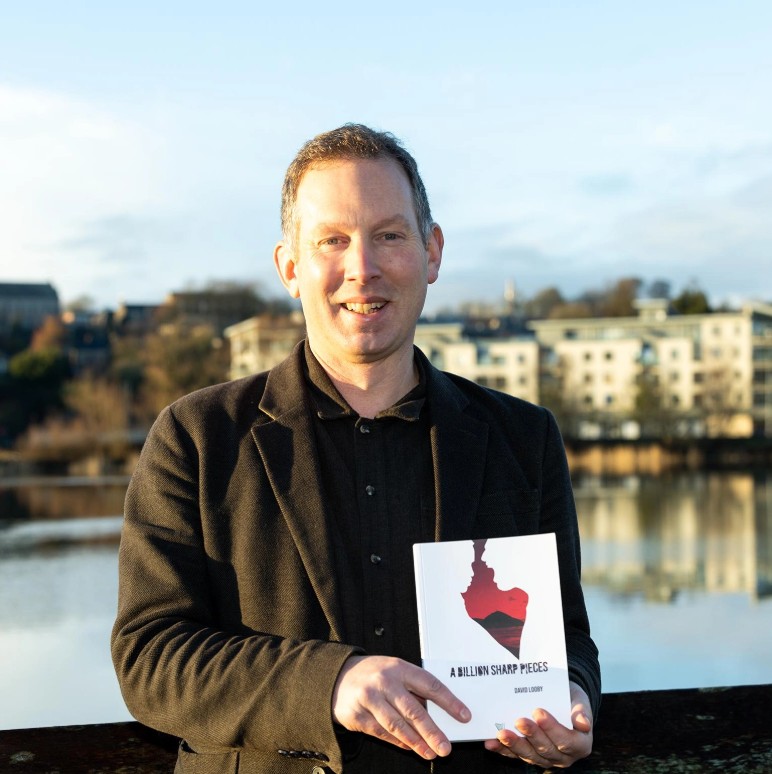
David Looby is a debut author with a passion for telling compelling, emotionally powerful stories which challenge, entertain and enlighten. With a background in journalism and communications, David studied English at University College Cork and Creative Writing at LeMoyne College, Syracuse, New York. He worked in journalism for 22 years – earning awards for his court and news reporting – prior to moving to a role in communications.
In A Billion Sharp Pieces he brings a fresh perspective to the contemporary psychological thriller genre, capturing the emotionally fraught ‘wilderness years’ of college life and young adulthood for a troubled man growing up in Ireland. His debut novel takes readers on an unforgettable journey, while exploring the complexity of human emotions and relationships in this heartbreaking, comical and lyrical novel.
Connect with David
Instagram | X


 What Cathy Read Next...