
Revenants: The Odyssey Home by Scott Kauffman

Today I am delighted to bring you an excerpt from Scott Kauffman’s compelling novel, Revenants: The Odyssey Home.  
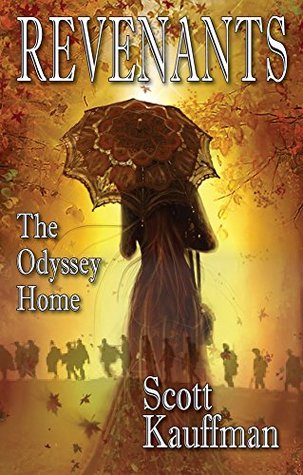
RevenantsAbout the Book

Only Betsy can get him home in time; only he can bring her back before it’s too late.

A grief-stricken candy-striper serving in a VA hospital following her brother’s death in Vietnam struggles to return home an anonymous veteran of the Great War against the skulduggery of a congressman who not only controls the hospital as part of his small-town fiefdom but knows the name of her veteran. The name, if revealed, would end his political ambitions and his fifty-year marriage. In its retelling of Odysseus’ journey, Revenants casts a flickering candle upon the Charon toll exacted not only from the families of those who fail to return home but of those who do.

Revenant: A dead person believed to have come back as a ghost
Charon: In Greek mythology, a ferryman who took the souls of the dead across the River Styx to Hades
Odysseus: Mythical king of Ithaca, the main character in Homer’s epic poem, The Odyssey.

Purchase links*
Amazon.com
Barnes & Noble
Amazon.co.uk

*links provided for convenience not as part of any affiliate programme


Excerpt from Revenants: The Odyssey Home

Nathan was the best. A grownup who hadn’t quite gotten the hang of growing up. When he came home we cruised the neighborhood in his cherry-bomb Barracuda convertible with Tavo his poodle who he never once duded up at the groomers but let his fur grow and grow until Tavo looked like this disembodied Afro waddling about on four legs. If Nathan needed to be somewhere, he’d pay me five dollars to watch him. I would’ve watched him for free, but I didn’t turn down the cash either because when you’re a kid you’ve never sufficient operating capital for necessities like hot chocolate when ice-skating and you can only hustle so much babysitting. Then me and Nathan would go to the Dairy Queen, sometimes twice in the same day, and afterwards, when I was smaller, he’d drive us over to Hanna Park where he’d carry me to the playground shrieking on his shoulders or when I got older if it was summer and sometimes even in winter he’d drop the top down and crank up the radio and we’d belt out the lyrics, getting these weird looks from other drivers.

Be-be-be-Bennie and the Jets.

Nathan’s boxes, like him, were the best. They didn’t arrive with little-girl stuff anymore but for the woman he saw me becoming. Like the year before his box had this gold watch that Mom said I couldn’t wear every day but only for weddings and the spring prom and stuff. With it came this dozen-drawer jewelry box hand crafted out of ebony, and inside one of its tiny drawers was a pair of half-carat diamond earrings, but Mom said I still had to wait until I was seventeen – what was it with her about me turning seventeen – before getting my ears pierced?

Nathan’s boxes were just so boss, but I always worried they might not make it. No need for me to have worried that Christmas. The one holding his Distinguished Service Cross came with a commendation telling us that on December 13, 1973, his helicopter, part of the Joint Casualty Resolution Centre and identified by three orange stripes, took off before dawn from its base in Thailand to search for MIAs at a crash site in Bin Chanh, twelve miles southwest of what was then Saigon. Nathan and his men, all Special Forces veterans, wore fatigues emblazoned with orange pockets and insignia identifying them as members of the Four-Party Joint Military Team. There was this sort-of-ceasefire in place, and an American delegate to the Paris Peace talks informed the North of the mission a week before. They’d no more than touched down when a Chinese B-40 rocket exploded inside the cockpit, and he and the handful of survivors came under intense machine gun and small arms rifle fire from the thirty-some Viet Cong concealed in a row of palm trees. Though pinned down, Nathan stood up, hands raised.

Không có v ũ khí. Unarmed. Không có v ũ khí

Three days after the American delegate to the Paris Peace talks threw Nathan’s bloodstained jacket across the negotiation table and the day after the honor guard lowered his casket into the frozen earth at the cemetery overlooking Hanna Park, his Christmas box came. The doorbell rang, and I ran stocking-footed downstairs where Mom slumped against the front door, crumple-faced and still dressed in her flannel nightgown because she slept a lot now, the night’s snow wisping over her pale legs, Nathan’s white-dusted box on the porch behind the postman who knelt beside her.

Ma’am? What is it? Ma’am?


Praise for Revenants: The Odyssey Home

‘Revenants will not fade quickly as less substantial novels do but will resonate in the reader’s heart and mind for years to come.’ (Mark Spencer, Dean, School of Arts and Humanities, University of Arkansas)

“Kauffman writes with a divinely inspired descriptive power that draws you in and leaves an image in the reader’s mind to muse upon long afterwards.” (John H. Byk, Writers Alive)

‘The true damage of war is…the damage done to the survivors and their families…we see this damage portrayed movingly in his characters. This is a book you must read to see the truth of war.’ (Robert Mustin, Sam’s Place: Stories)

‘…beautifully written…an intriguing story which will linger in the reader’s mind far after the final page has been turned.’ (Florentine, Readiculously Peachy Blog)

‘…compelling… skillful character development…makes us see just exactly what it is like to be wounded, in soul and spirit.’ (Brian Francis Heffron, author of award winning novel Colorado Mandala)
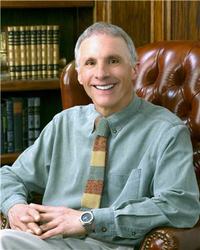

ScottKauffmanAbout the Author

Scott claims his fiction career began with an in-class book report written in Mrs. Baer’s eighth-grade English class when, due to a conflict of priorities, he failed to read the book. An exercise of imagination was required. Scott snagged a B, better than the C he received on his last report when he actually read the book. Thus began his life-long apprenticeship as a teller of tales and, some would snidely suggest, as a lawyer as well, (but they would be cynics; a race Oscar Wilde warned us knew the price of everything and the value of nothing).

Scott is the author of the legal-suspense novel, In Deepest Consequences, and a recipient of the 2011 Mighty River Short Story Contest and the 2010 Hackney Literary Award. His short fiction has been appeared in Big Muddy, Adelaide Magazine, and Lascaux Review. He is now at work on two novel manuscripts and a collection of short stories.

Scott is an attorney in Irvine, California, where his practice focuses upon white-collar crime and tax litigation with his clients providing him endless story fodder.

Connect with Scott:
Website
Twitter
Facebook
Goodreads

Excerpt: Letting Go by Maria Thompson Corley

Today I am delighted to bring you an excerpt from Maria Thompson Corley’s long-distance love story, Letting Go. As well as being an author, Maria is a gifted pianist. So enjoy the excerpt and then click on the link to listen to a sample of the CD Maria has recorded to accompany the book.

LettingGoAbout the Book

Even though she lives hundreds of miles away, when Langston, who dreams of being a chef, meets Cecile, a Juilliard-trained pianist, he is sure that his history of being a sidekick, instead of a love interest, is finally over. Their connection is real and full of potential for a deeper bond but the obstacles between them turn out to be greater than distance. Can these busy, complicated people be ready for each other at the same time? Does it even matter? Before they can answer these questions, each must do battle with the ultimate demon – fear.

Told in a witty combination of standard prose, letters, emails and diary entries, Letting Go, in the tradition of Chimamanda Ngozi Adichie’s Americanah, is a long-distance love story that also examines race, religion and the difficult choices we make following our passions. From the Great White North to the streets of New York City, to the beaches of Bermuda, Letting Go is a journey of longing, betrayal, self-discovery and hope you will never forget.

Purchase links*:
Amazon.com
Amazon.co.uk
Barnes & Noble
Createspace

*links provided for convenience not as part of any affiliate programme


Excerpt from Letting Go

Cecile followed him into the lobby, empty except for the night clerk, who didn’t look up. Langston sat on one of the russet leather couches and Cecile sat in a matching chair at a right angle to him. He watched her gaze intently at the coffee table, or maybe the Edmonton Journal someone had left on top of it, her graceful hands folded on her lap. He let his eyes travel up her slender arms and rest on her face, wishing they hadn’t come out of the club, because wherever her mind had gone, he was clearly not invited.

Finally, Langston asked, “How long have you been in New York?”

She startled, then focused on him. “Four years.”

“Do you like it?

“Most of the time. The homeless people are kind of disturbing.”

“You get tired of the begging?”

“Well…yes, but mainly I just feel bad. I mean, I can’t give money to everybody, and some of them must really need it. I guess they all do, even if they’re addicts, because even addicts need to eat.”

Her response surprised him so much that he couldn’t think of anything to say. After an awkward pause, something came to him: “I guess helping even one person makes a difference.”

“Allegedly.” She smiled with her lips again.

“Why are you so sad?” Liquid courage.

Cecile turned her head, her eyes darting away. “Homelessness is depressing.”

“It’s more personal than that, isn’t it?”

She bit the inside of her lip. “Maybe.”

Langston cleared his throat. “Sorry,” he said. “New topic.”

“It’s okay.”

He groped for something innocuous. “So you’re here to see the family?”

Cecile chuckled. “Sort of.”

“What’s so funny?”

She sighed, gazing into the distance for a while. Then her eyes found Langston’s face, and stayed there. “I’m here because I was supposed to get married next weekend.”

The couch squeaked as he fell back against it. “Wow.”

“It’s for the best,” she said softly.

“What happened? You don’t have to answer, of course.”

She looked at her hands, then rested her eyes on him again. Her face relaxed. “It’s okay.”

She told him, speaking hesitantly at first and then more freely, about what had happened. When Langston offered his heartfelt condolences, she brightened a bit. Then they talked about her being a musician, life in New York and Toronto, and their mutual study of French, and the more they talked, the more natural her smiles became. By the time Teresa and Betsy emerged from Darling’s, they were leaning towards each other, laughing like two old friends.

Betsy yawned. “You coming, Cecile?” she said.

Cecile glanced at Langston. “Is it closed already?”

“Yeah, it’s closed already. And I’m not going anywhere else but home, so don’t bother to suggest it.”

“Yes, Queen Elizabeth,” Cecile replied, remaining seated.

Teresa grabbed Langston’s hands and leaned back.

“Okay, okay!” he protested, allowing himself to be pulled to his feet. He glanced at Cecile, who was looking at him and smiling. I’m leaving in a few hours, he thought, this time with dismay.

As the four of them ascended in the parking garage elevator, Langston became aware that his chest was touching Cecile’s back. She turned in surprise, her mouth so irresistibly close to his that he couldn’t stop himself from kissing her.

For a moment, he felt oxygen reaching places he hadn’t known were there. Then she pulled away, blushing, and whispered, “Stop, okay?”

But when he followed her off the elevator, instead of getting off at the floor where Teresa had parked, she smiled and glanced at her sister, who rolled her eyes.

Cecile was leaving town in two days, and he in less than that—four and a half hours, not even enough time for a decent night’s sleep.

“I really like your poems,” she deadpanned, with a twinkle in her eye. “I hear American kids study your stuff in high school.”

“Will you write a song for one of them?”

She laughed. “Maybe.”

“Then I need your address.”

No one had a pen.

“There’s a pen in the car,” Cecile remembered, and the three of them walked towards a decade-old red Corolla. There wasn’t any paper, though, so she wrote her address and phone number very carefully on a tissue, and he did the same.

Betsy sang, “Goodbye, Langston,” climbing into the driver’s side.

He held up his hand and waved self-consciously. Had he really kissed a woman he barely knew in front of her younger sister, who looked like her attendance at the club could only have been due to a fake ID? Part of him didn’t want to look at Cecile, still standing in front of him. He’d had a few drinks, but he wasn’t drunk. Why had he done it?

He made himself meet her eyes, and he immediately understood why, not in a way that could be put into words, but in terms his body grasped perfectly.

MariaCorley2Click here to listen to Maria performing some of the beautiful music she has chosen to accompany Letting Go:

To purchase the CD, which also includes Maria reading passages from the book, click here


MariaCorleyAbout the Author

Award-winning Jamaican-born Canadian pianist, Maria Thompson Corley, gave her first public performance at the age of eight. Since then, she has appeared on radio, television and concert stages in Canada, the United States, Central America, the Caribbean, Bermuda and Europe, both as a solo and as a collaborative artist.

Maria Corley received both Master’s and Doctorate degrees in piano performance from the Juilliard School, where she was a student of renowned Hungarian pianist Gyorgy Sandor. Dr. Corley was the only pianist admitted into Juilliard’s doctoral program for the period of two years. She was also chosen to represent her alma mater in a tour of Central America, where she gave performances and master classes.

Aside from being an accomplished pianist, Maria Corley is an author. She contributes regularly to Broad Street Review, an online arts magazine, and her first novel, Choices, was published by Kensington.  Letting Go is her second novel.

Author links:

Website: http://www.mariacorley.com/
Facebook: https://www.facebook.com/mariathompsoncorleywriter/
Twitter: https://twitter.com/MariaCorley
Goodreads: https://www.goodreads.com/author/show/15470439.Maria_Thompson_Corley