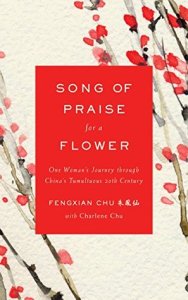
Whippoorwill by R. L. Bartram

When an author contacts you about reviewing their book, it’s disappointing to have to decline the opportunity because of your already huge review pile.  Such is the case when R. L. Bartram contacted me about his new historical romance, Whippoorwill.    However, just because my review pile is approaching mountainous proportions, doesn’t mean I should hide interesting sounding books from followers of my blog.

You can read an excerpt from Whippoorwill further down this post and, if it sparks your interest, you can find the relevant purchase links below.  For those unfamiliar with the word (like me), the whip-poor-will is a North American bird whose singing, according to some folklore, is believed to be an omen of death.
Follow my blog with Bloglovin


WhippoorwillAbout the Book

Barely fourteen, Ceci Prejean is a tomboy running wild in the hot Louisiana summer. After breaking the nose of a local boy, her father decides to enlist the aid of Hecubah, a beautiful Creole woman, with a secret past, who takes Ceci in hand and turns her into a lady.

Now, eighteen-year-old Ceci meets and falls passionately in love with a handsome young northerner, Trent Sinclaire. Trent is a cadet at the West Point military academy. He acts as if he knows Ceci. They begin a torrid affair, even as the southern states begin to secede from the Union. Only weeks before their wedding, the Confederate army attacks Fort Sumter and the civil war begins. Trent is called to active service in the north, leaving Ceci heartbroken in the south. Swearing vengeance on the union, after the untimely death of her family at the fall of New Orleans, Ceci meets with infamous spy master, Henry Doucet. He initiates her into the shadowy world of espionage. After her failure to avert the catastrophe at Gettysburg, Ceci infiltrates the White House.

There, she comes face to face with Abraham Lincoln, a man she’s sworn to kill. Forming a reckless alliance with the actor, John Wilkes Booth, she is drawn deeper into the plot to assassinate the President of the United States. A Confederate spy in love with a Union officer, her next decision will determine whether she lives or dies…

Format: eBook, paperback (310 pp.)     Publisher: Troubador Publishing
Published: 28th November 2017            Genre: Historical Romance

Purchase Links*
Amazon.co.uk ǀ  Barnes and Noble
*links provided for convenience, not as part of any affiliate programme

Find Whippoorwill on Goodreads


Extract from Whippoorwill by R. L. Bartram

Trent was lucky. The Confederate musket ball that was intended to kill him merely grazed his brow. He lurched violently back in his saddle. His horse reared wildly, throwing him, unconscious to the ground, directly into the path of his own cavalry advancing only yards behind him.

At the far end of the field, Sergeant Nathanial Pike and his men, engaged in the hasty formation of a skirmish line, watched helplessly as the scene unfolded. As Trent hit the ground, a Confederate soldier appeared out of the shadows. Small and slight, little more than a boy, he lunged forwards, grabbed the officer by the lapels of his coat and dragged him out of the path of the galloping horses. Throwing himself across the man’s prone body, he shielded him from the pounding hooves. The cavalry thundered past oblivious, in the half-light, to the fate of their captain.

As the danger passed, the rebel rose to his knees and appeared to search the unconscious man.

“God damn thieving rebs,” Pike snatched his pistol from its holster, his thumb wrenching back the hammer. Before he could take aim, the rebel stopped searching. He leaned forwards and, cradling the officer’s face in his hands, bent down and kissed him, full on the lips, long and hard. Pike’s pistol, arm and jaw dropped simultaneously.

Something, some noise, some movement, made the rebel look up and glance furtively around. He jumped to his feet and, with a final backwards glance at the fallen man, melted into the shadows, like a wraith.

It was some moments before Pike’s jaw snapped shut, his teeth meeting with an audible click. He rounded on his men. “Did you see what I just saw?” he demanded.

His question was answered with shrugs and scowls. Not one man there could swear he hadn’t dreamed it. Then suddenly, they heard it, far off, plaintive and eerie, the cry of a whippoorwill.


R L BartramAbout the Author

With historical romance as his preferred genre, Robert has continued to write for several years. Many of his short stories have appeared in various national periodicals and magazines.

His debut novel, Dance the Moon Down, a story of love against adversity during the First World War, gained him considerable critical praise, being voted book of the month by “Wall to Wall books”.

His second novel, Whippoorwill, tells of a passionate affair between a young southern woman and a northern man at the beginning of the American Civil War.

He is single and lives and works in Hertfordshire.

Connect with Robert

Website   ǀ  Goodreads


Song of Praise for a Flower by Fengxian Chu and Charlene Chu

When an author or publicist contacts you about reviewing a book and the description sounds enticing, it’s frustrating to know it’s going to be several months before you’ll be able to get around to reading and reviewing the book.  Such is the case when Penny at Author Marketing Experts contacted me about Song of Praise for A Flower by Fengxian Chu and Charlene Chu.  I remember loving Wild Swans by Jung Chang when I read it some years ago and I have recently read The Good Earth by Pearl S. Buck.  Therefore, I was interested in reading more about the history of China, especially testimony that focuses on women’s experiences.

However, although it’s going to be a while until I get to read Song of Praise for a Flower, that doesn’t mean I should hide it away from followers of my blog who may not have such large review piles as me.   I’m pleased to say I have an extract from the book below.  If the sound of it excites you as much as it did me, you can find purchase links below.

Follow my blog with Bloglovin


Song of Praise for a FlowerAbout the Book

For nearly two decades, this manuscript lay hidden in a Chinese bank vault until a long-lost cousin from America inspired 92-year-old author Fengxian Chu to unearth it.

Song of Praise for a Flower traces a century of Chinese history through the experiences of one woman and her family, from the dark years of World War II and China’s civil war to the tragic Great Leap Forward, Cultural Revolution, and beyond. It is a window into a faraway world, a sweeping epic about China’s tumultuous transformation and a harrowing yet ultimately uplifting story of a remarkable woman who survives it all and finally finds peace and tranquillity.

Chu’s story begins in the 1920s in an idyllic home in the heart of China’s rice country. Her life is a struggle from the start. At a young age, she defies foot-binding and an arranged marriage and sneaks away from home to attend school. Her young adulthood is thrown into turmoil when the Japanese invade and ransack her village. Later her family is driven to starvation when Mao Zedong’s Communist Party seizes power and her husband is branded a ‘bad element.’  After Mao’s death in the 1970s, as China picks up the pieces and moves in a new direction, Chu eventually finds herself in a glittering city on the sea adjacent to Hong Kong, worlds away in both culture and time from the place she came from.

Praise for Song of Praise for a Flower

“Fengxian Chu’s first-person account of growing up female in feudal rural China is ultimately as uplifting as it is heart wrenching. Beautiful and bravely written. Bravo.” [Michael J. Totten, author of Where the West Ends]

Format: eBook, paperback (488 pp.)                    Publisher:
Published: 21st November 2017                            Genre: Memoir, History, Non-Fiction

Purchase Links*
Amazon.co.uk  ǀ  Amazon.com
*links provided for convenience, not as part of any affiliate programme

Find Song of Praise for a Flower on Goodreads


Extract from Song of Praise for a Flower by Fengxian Chu and Charlene Chu

PART ONE

The Xiang River

For millennia, the mighty Xiang (Syŏng) River has pulsed through the lush, rolling hills of Hunan Province in southern China. The region’s famous rice paddies derive their rich, green hue from the Xiang, and it is on the banks of this river that generations of Hunanese families have flourished. In Chinese, “Xiang (湘)” is the abbreviated name for Hunan, which I think makes perfect sense because, whenever we natives think of home, often the first thing that comes to mind is this beloved river. Several decades ago, when I was a young woman, I bade farewell to the Xiang and have had the opportunity to return only twice. Yet the river continues to run through my veins as vigorously today as it did when I was just a little girl.

Nestled amid the long and winding current of the Xiang River rests the small, graceful village of my youth: Huaguo, or Flower and Fruit, in eastern Hunan Province. Huaguo embraces miles of fertile land and luxuriant forest, crisscrossed with green willows and tall bamboo. Small homes dot the hillsides. Men cultivate the fields while women weave in the courtyards, each working diligently every day. Grey-haired seniors play with lively children, bringing abundant smiles and harmony to the village.

Huaguo is surrounded by numerous hills to the north, east, and south and the Xiang River to the west. Deep within the hills are ancient caves and dozens of narrow, winding paths leading to small valleys. In this openness lie numerous small brooks, gurgling and glistening in the sun, and grass and wild flowers that emit a beautiful, delicate fragrance. Huaguo is the kind of place the soul never forgets.

At the entrance of Huaguo stands Fengmen Railway Station. Although not large, the station used to serve as a key stop for trains passing through Hunan because of its proximity to the water. Day and night, trains stopped at Fengmen Station to add water to the steam engines, bringing business and swarms of passengers to the village.

The passenger cars, platform, and waiting hall would become over-run with villagers hawking food and other goods, their cries sonorous and rhythmic. Many of the hawkers were young and as agile as monkeys, leaping across the tracks and climbing into passenger cars. Sometimes these boys would remain on the train selling goods even after it took off, jumping down fearlessly only after the train reached full speed.

Not far from Fengmen Station was a narrow street that used to form the center of town and was filled with small restaurants, stores, tea houses, gambling parlors, and the local fortune teller. The street terminated at the Xiang River, where several small ferry boats sat waiting to transport passengers across the water to the town of Fengmen, another village bustling with activity.

When I was growing up as a young girl, one of the liveliest times of year was the annual Dragon Boat Festival, when teams from Huaguo and Fengmen would compete in a race on the Xiang River. The festival, held on the fifth day of the fifth month of the lunar calendar, commemorates the famous Chinese poet Qu Yuan, who, according to legend, drowned himself in a river for his motherland in 278 B.C. To distract the fish from eating the poet’s corpse, the legend says that villagers threw rice and other food into the river. In honor of Qu Yuan’s patriotism, Chinese people re-enact this event every year by tossing pyramid-shaped dumplings into water.

The day of the festival, villagers from Huaguo and Fengmen would don their best clothes and flock to the river to toss dumplings and watch the race. On both sides of the river, the streets and banks would be packed with a sea of horse carts and spectators. At the crack of a drum, a dozen colorfully decorated dragon boats would charge ahead, splashing spectators with water as they sped down the river to the beat of the drum. The cheers of the villagers would mingle with the roars of the drums and reverberate through the sky, awakening the God of Heaven and Dragon King of the Ocean. After the race, colorful pennants would be handed to each member of the triumphant team, and the audience would linger for hours, basking in the joy of the moment.

The province of Hunan is said to be a land flowing with milk and honey, with picturesque scenery and a soothing climate of four distinct seasons. In spring, plants sprout, flowers blossom, and birds sing in joy. In summer, trees become lush and verdant. In autumn, ripening fruits tug at tree limbs, and red and yellow leaves fall to the ground signaling the approach of winter, when leaves wither and die, and a thin layer of white blankets the land.

Women of Hunan are known for their gentleness, courtesy, and passion. They love the young and respect the old and are virtuous wives and mothers. Hunan’s women are the shining pearl of the province. It is no wonder so many ancient emperors and leaders, including Chairman Mao, came from this magical environment.


About the Author – Fengxian Chu

Raised in Hunan Province, China, Fengxian Chu spent most of her life living and working on a farm. She attended college briefly, but her education was interrupted when the Japanese army invaded her village in the 1940s. A writer and poet from a young age, she is unique among her generation of rural Chinese women, the majority of whom never attended school and are illiterate. Song of Praise for a Flower is Fengxian’s first work to be published, and among the only known first-person accounts from a woman of her generation about life during China’s turbulent past century. Now in her 90s, she enjoys gardening and spending time with her children, grandchildren, and great grandchildren. She resides in Shenzhen, China.

Charlene ChuAbout the Author – Charlene Chu

Co-author Charlene Chu, Fengxian’s first cousin, grew up in the United States and wrote the English rendering of Song of Praise for a Flower. A financial analyst well-known for her work on China’s economy and financial sector, she is quoted widely in the Wall Street Journal, Financial Times, Bloomberg, Business Insider and other media outlets. She holds an MBA and MA in International Relations from Yale University. Song of Praise for a Flower is her first book. Charlene splits her time between Washington, DC and Hong Kong.

Connect with Charlene

Facebook  ǀ  Goodreads