Blog Tour/Book Review: A River in the Trees by Jacqueline O’Mahony

I’m delighted to be hosting today’s stop on the social media tour for A River in the Trees by Jacqueline O’Mahony alongside my tour buddies, Laura Patricia Rose, somewhereinabook and tome.raiders.  Thanks to Ana at Quercus Books for inviting me to take part in the tour and for approving my request for the book on NetGalley. You can read my review of this captivating dual-time historical novel below.


A River in the TreesAbout the Book

Two women. Two stories. One hundred years of secrets.

1919 – Hannah is nineteen years old and living on her family’s farm in West Cork. Her peaceful world is shattered forever by the eruption of the War of Independence. Hannah’s family hide rebel soldiers in their attic, putting themselves in grave danger from the Black and Tans roaming the countryside. An immediate connection between and O’Riada, the leader of the rebel band, will change her life and that of her family forever.

2019 – Ellen is at a crossroads in her life: her marriage is in trouble, her career is over and she’s grieving the loss of a baby. After years in London, she decides to come home to Ireland to face the past she has always tried to escape. Her journey centres on an old house in the countryside, a house that used to belong to her family. Reaching into the past, she feels a connection to her ancestor, the mysterious Hannah O’Donovan. But why won’t anyone in her family talk about Hannah? And how can this journey help Ellen put her life back together?

Praise for A River in the Trees

“A fierce, beautifully told story, which keeps the reader gripped until the very last page. Jacqueline O’ Mahony is one to watch.” [Louise O’Neill]

“Compassionate yet unsentimental, sharply insightful yet steeped in story, this debut is a thrill to discover.” [Belinda McKeon, author of Tender]

Format: Hardcover, ebook (336 pp.)    Publisher: riverrun
Published: 10th January 2019        Genre: Historical Fiction

Purchase Links*
Amazon.co.uk  ǀ  Amazon.com  ǀ Hive.co.uk (supporting UK bookshops)
*links provided for convenience, not as part of any affiliate programme

Find A River in the Trees on Goodreads


My Review

Told from alternating points of view, the stories and experiences of the two women – Hannah in 1919 and Ellen in the present day – subtly mirror each other in some respects and provide contrasts in others.  The author leaves it to the reader to make the connections or note the differences between how the two women respond to the events that unfold in their lives and the choices they make.

Ellen is a troubled, lost soul, seemingly suffering from a form of post-natal depression, who has turned to alcohol as an emotional crutch and reached a crisis point in her life. ‘I’m in a tunnel now, she thought – my life is narrowing down and down and behind me is every wrong decision I’ve ever made and ahead of me if only fear, and I can’t move forwards, and I can’t move back.’  The loss of their baby has exposed the pre-existing fissures in the relationship between Ellen and her husband, Simon.  Their instincts, choices and responses to events seem so fundamentally different it is no surprise that their marriage is in trouble.  (What is a surprise is that they married in the first place). ‘There was so much of Simon and he was so sure of himself and so unshakeable; he moved through his days like a ship moving through an icy sea, breaking through the ice before him, unaffected, untouchable.’  In a way, Ellen’s interest in Hannah’s story is a distraction from having to think about her own future.  She has spent her whole life running away from things. ‘It is easier to leave, to disappear, she thought sadly.  The harder thing is to stay and face yourself.’

The sections written from Ellen’s point of view, especially as she struggles to control her anxiety, evoked feelings of sympathy in this reader but she is a character it is difficult to really like.  I felt more personally engaged in Hannah’s story and concern for how the unfolding events would affect her, especially as I was drawn to the historical aspects of her story.  From fairly early on, the reader knows there is some mystery about what happened to Hannah – but will the answers be revealed by Hannah herself or by Ellen’s discovery of details about past events?

I found myself thinking as I was reading the sections from Hannah’s point of view that I wished I knew more (or perhaps should know more) about the history of Ireland in the early part of the 20th century.  The reader gets a strong sense of Ireland and Irish identity from the way in which the author writes about its landscape, culture and history and the narrative and dialogue is gently permeated with the rhythm and vernacular of the Irish language.  Through Hannah’s deeply felt connection with her family home and lands, and Ellen’s desire to own something that connects her to her ancestral roots, I was left with a sense of Ireland as a place that inhabits those who are born there, even if they move away.

The book is full of clever, skilful writing, imaginative language and evocative descriptions: ‘The ditches on either side were too high to see over.  It was like descending into a sea of green water: the air was green, the sky overhead was green; the car was swimming through the greenness.’

A River in the Trees is an assured and impressive debut. From the dramatic opening scene, I found myself transfixed by the story it tells and I look forward to reading more from Jacqueline O’Mahony in future.

I received a review copy courtesy of publishers, riverrun, and NetGalley.

Follow my blog with Bloglovin

In three words: Lyrical, emotional, compelling

Try something similar…The Concubine’s Child by Carol Jones (read my review here)


jacqueline o'mahony - use this oneAbout the Author

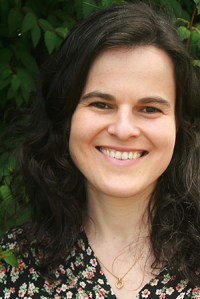
Jacqueline O’Mahony is from Cork, Ireland. She did her BA in Ireland, her MA at the University of Bologna, and her PhD in History as a Fulbright Scholar at Duke University and at Boston College. She has worked as a writer, editor and stylist at Tatler, Vogue and the Irish Independent. She lives in Notting Hill with her husband and three young children.

Connect with Jacqueline

Website  ǀ  Twitter  ǀ  Goodreads

a river in the trees blog tour poster jpeg

Blog Tour/Book Review: Call of the Curlew by Elizabeth Brooks

Along with my tour buddy, Novels and NonFiction, I’m delighted to be hosting today’s stop on the blog tour for Call of the Curlew by Elizabeth Brooks.  Many thanks to Anne at Random Things Tours for inviting me to join the tour and for Hannah Bright at Doubleday for my review copy.  You can read my review of this haunting and atmospheric book below.

Do check out the tour banner at the bottom of this post to see the other great book bloggers taking part in the tour.


Call of the CurlewAbout the Book

Virginia Wrathmell has always known she will meet her death on the marsh.

It’s New Year’s Eve 2015 and eighty-six year old Virginia Wrathmell feels like the end is upon her. As she looks out on the dark and desolate marshes that surround the house she’s lived in since she was young, Virginia is overcome with the memories of one winter that have stayed with her since childhood.

It’s New Year’s Eve 1939 and Virginia is eleven, an orphan arriving to meet her new parents at their mysterious house, Salt Winds, on the edge of a vast marsh. War feels far away out here amongst the birds and shifting sands – until the day a German fighter plane crashes into the marsh. The people at Salt Winds are the only ones to see it.

When her adopted father goes missing, and a mysterious stranger arrives in his place, Salt Winds becomes a very dangerous place to be. Virginia’s failure to protect the house’s secrets will leave her spending a lifetime dealing with the aftermath.

“The wind has dropped, but every now and then a gust will shiver in from the sea, carrying some fragment – a feather, a straw, a grain of sand, the scent of snow, the dainty bone of a bird – by way of an offering to the house.”

From the author:

“The location, Tollbury Marsh, came to me first, the story second. The marsh is a place on the edge of normal life, which seems flat and accessible to the uninitiated, but is actually full of dangers. I wanted to capture the strong and pervasive sense of place that I felt when reading The Woman in Black and Great Expectations.”

Format: Hardcover, ebook (320 pp.)    Publisher: Doubleday
Published: 28th June 2018                      Genre: Historical Fiction

Purchase Links*
Amazon.co.uk  ǀ  Amazon.com  ǀ Hive.co.uk (supporting UK bookshops)
*links provided for convenience, not as part of any affiliate programme

Find Call of the Curlew on Goodreads


My Review

Somehow it doesn’t seem quite right that I’ve been reading Call of the Curlew sitting in my garden in the bright sunshine.  The atmosphere of the book is such that it seems more suited to misty autumn nights, with the rain lashing down outside and the wind rattling the window panes.  Throw in some creaking floorboards, some footsteps in the attic and your reading experience would be complete.

Told in chapters that alternate between 2015 and the early years of the Second World War, Call of the Curlew has a haunting, mysterious quality.  Salt Winds, the old house at which orphan Virginia arrives in 1939 to join her adoptive parents, Lorna and Clem, occupies an isolated position on the marshes at the end of a long lane.

The author really gets inside the mind of ten-year old Virginia.  Initially, she’s concerned that she might be a disappointment to Lorna and Clem and be sent back to the orphanage (although she doesn’t think they do sale and return).  Virginia doesn’t understand everything she sees and hears in the house but she’s sensitive to the tension she detects between Lorna and Clem.  ‘Virginia liked it when they discussed everyday things: pots of tea and food prices and what needed doing in the garden.  It made them sound peaceful and close.  Anything bigger or more personal and they were on edge, like a couple of cats.’  Underlying everything, there’s an air of mystery, of secrets and things that can’t be spoken about.

Virginia also has a child’s literal interpretation of Clem’s warnings about the perils of setting foot on the marsh and the dangers that wait because of the shifting tides.  Virginia forms a touching relationship with Clem who seems better able to communicate with a child than Lorna.  Virginia’s relationship with Lorna is strained; Lorna always remains slightly distant and less openly affectionate.  Virginia has also acquired an acute sense of how to deal with certain situations: ‘Shutting up was almost always a clever move, she’d discovered, not just with Clem but with everyone.  People rarely object to a quiet child.’

From the very first time, Max Deering, a childhood friend of Clem, visits Salt Winds, ten-year old Virginia takes an instinctive dislike to him, sensing something unsettling about him she can’t put into words.  Her view of Max can’t help but affect the reader’s view of him, especially as the manner of his arrivals at the house conjured up thoughts for me of Mrs Danvers gliding in and out of shot in Hitchcock’s film version of Rebecca.  Virginia muses: ‘It was difficult to explain the car’s pull on her imagination – not without sounding silly – but there was something about its predatory grace that made it seem like a living thing.  The lane from Tollbury Point to Salt Winds was pitted with holes and bumps, but Mr Deering’s Austin 12 never seemed to mind. It just glided forwards, silent and slow, the way a shark glides over the ocean floor.’ 

I loved the author’s evocative, imaginative descriptions and eye for the smallest details when depicting a scene.   For example, as Virginia makes meticulous plans in response to what she believes is the sign she’s been waiting for, ‘She pictures the house, room by room, and plots the route of her farewell tour, mentally circling certain parts and crossing others out.’    Don’t you just love the idea of the ‘farewell tour’.  Or this description of the kitchen table: ‘The old tabletop rolled between them like a parchment map, grainy with longitude lines and knotty islands and uncharted territories.’  I can almost feel that under my fingers.

As the book progresses, it becomes apparent that some sort of tragedy occurred at Salt Winds which has haunted Virginia for the rest of her life and for which she feels, justifiably or not, responsible and for which she is convinced she will someday be called to make amends.  The enjoyment for the reader is finding out exactly the nature of the tragic event and the consequences that follow.

I thought the book was fabulous.  To my mind, in Call of the Curlew, Elizabeth Brooks gives Susan Hill (think The Woman in Black) and Sarah Waters (think The Little Stranger) a run for their money when it comes to creating a creepy, unsettling atmosphere.  I was also reminded at times of Daphne du Maurier’s Rebecca, and there is no higher praise in my book (pardon the pun).

I received a review copy courtesy of publishers, Doubleday, and Random Things Tours, in return for an honest and unbiased review.  Call of the Curlew is one of my 20 Books of Summer.

Follow my blog with Bloglovin

In three words: Spooky, atmospheric, haunting

Try something similar…The Vanishing of Audrey Wilde by Eve Chase (read my review here)


Elizabeth BrooksAbout the Author

ELIZABETH BROOKS grew up in Chester, and read Classics at Cambridge. She lives on the Isle of Man with her husband and children.

Elizabeth describes herself as a “Brontë nerd”.  Call of the Curlew is her homage to the immersive and evocative writing of Charlotte Brontë.

Connect with Elizabeth

Website  ǀ Twitter  ǀ Goodreads

Call of the Curlew Blog Tour Poster