 About the Book
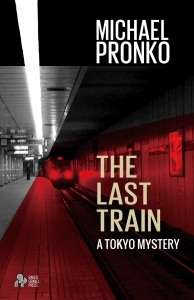
Detective Hiroshi Shimizu investigates white collar crime in Tokyo. He’s lost his girlfriend and still dreams of his time studying in America, but with a stable job, his own office and a half-empty apartment, he’s settled in. When an American businessman turns up dead, his mentor Takamatsu calls him out to the site of a grisly murder. A glimpse from a security camera video suggests the killer was a woman, but in Japan, that seems unlikely. Hiroshi quickly learns how close homicide and suicide can appear in a city full of high-speed trains just a step – or a push – away. Takamatsu drags Hiroshi out to the hostess clubs and skyscraper offices of Tokyo in search of the killer. To find her, Hiroshi goes deeper and deeper into Tokyo’s intricate, ominous market for buying and selling the most expensive land in the world. Hiroshi’s determined to cut through Japan’s ambiguities – and dangers – to find the murdering ex-hostess before she extracts her final revenge – which just might be him.
Format: ebook, Paperback (348 pp.) Publisher: Raked Gravel Press
Published: 5th May 2017 Genre: Crime, Thriller
Purchase Links*
Amazon.co.uk ǀ Amazon.com
*links provided for convenience, not as part of any affiliate programme
Find The Last Train on Goodreads
My Review
When I interviewed Michael on my blog last year (click here to read the full interview), he described The Last Train as ‘more whydunit than whodunit’ and having now read the book I can certainly understood why he said that. Much of the excitement of the book comes from following detective Hiroshi Shimizu in his attempts to identify and track down the mysterious woman who committed the murder. The trail leads Hiroshi from the flashy malls and smart high-rise buildings to the decidedly seedier world of hostess clubs and bars. As the author explains, “…in the novel, I wanted to look beneath the surface. The giant skyscrapers and constant construction are amazing, but there’s a lot going on behind the go-go big-city bright-lights, and a lot of it not so good.”
As the investigation progresses, Hiroshi begins to understand the threat he faces from vested interests who may be involved in the shady dealings he starts to uncover. He also starts to realise just what a clever and ruthless opponent he is up against and to get an inkling of the motivation that drives her. When the full facts are revealed you may find yourself questioning where true justice lies.
What really sets The Last Train apart from other run-of-the-mill crime thrillers for me was its Tokyo setting. I loved learning all about Japanese culture and customs. Take this scene in which Hiroshi and his boss, Takamatsu, drink sake together in the traditional manner.
‘The master pulled back a brown curtain over a glass-sided refrigerator filled with sake bottles. He pulled out two small chilled glasses from the top shelf and set these on the upper counter inside small, square, cedar wood boxes. The master shuffled the dozen or so bottles inside the fridge until he found the ones he wanted. Carrying these to the counter, he hoisted the large bottle of cold sake and, cradling it in the crook of his arm, poured out the clear, clean liquid. The sake flowed gently over the top of the lip of the glass into the box, arousing the aroma of cedar and fresh rice. He poured out sake from a different bottle for Hiroshi and placed both bottles on the counter so that each displayed the artful calligraphy of their labels.
They bowed down like penitents to take the first sip without spilling. Then they plucked up the small, thumb-sized glasses for a silent toast before downing the second gulp. Finally, they poured the spill-over from the cedar box into the glass, took another sip, and set their half-full glasses back inside the wet cedar boxes.’
The book cleverly brings to life the intriguing juxtaposition of ancient and modern that exists in Japan. So you have temples and prayer rituals, the elaborate customs for greeting and for drinking tea. But at the same time you have the modern malls full of shops selling up-to-the-minute designer goods and the latest technology, and the packed subways and neon-lit sidewalks of Roppongi.
‘People streamed out of subway exits, slid out of taxis, and stepped off bus after bus. Hordes of office workers in dull gray pants and dark skirts blocked corners, shouting directions into their cell phones to those yet to arrive. Fashion-conscious hipsters, mini-skirted amateurs, and yakuza wannabes walked to their favourite places to play, eat, drink, or work.’
The work culture with its emphasis on drinking with colleagues after work, to my eyes at least, seems particularly alien and the position of women quite regressive with real antipathy in some quarters towards women whose behaviour is considered ‘un-Japanese’.
I really enjoyed The Last Train for both its compelling storyline and its use of Tokyo as a location. Luckily for me – and I suspect, other readers – the author is working on two further books in the series: Japan Hand, which explores the relationship between Japan and the American military bases; and Thai Girl in Tokyo, which has two great female characters navigating the dangers of Shibuya’s underground nightlife. Both books are due for publication in 2018.
In three words: Atmospheric, compelling, mystery
Try something similar… Wolves in the Dark by Gunnar Staalesen (click here to read my review)
Follow my blog with Bloglovin
 About the Author
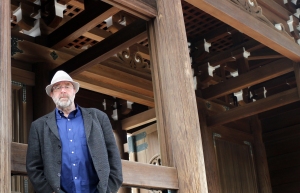
Michael Pronko is a professor of American Literature and Culture at Meiji Gakuin University in Tokyo and writes about Japanese culture, art, jazz, and politics for Newsweek Japan, The Japan Times, Artscape Japan and other publications. He has appeared on NHK Public TV, Tokyo MXTV and Nippon Television. His website, Jazz in Japan can be found at http://www.jazzinjapan.com/. His award-winning collections of essays about life in Tokyo are: Beauty and Chaos: Slices and Morsels of Tokyo Life (2014), Tokyo’s Mystery Deepens: Essays on Tokyo (2014), and Motions and Moments: More Essays on Tokyo (2015). He has also published three essay collections in Japanese. When not teaching or writing, he wanders Tokyo contemplating its intensity and waiting for the stories to come.
Connect with Michael
Website ǀ Facebook ǀ Twitter ǀ Goodreads


 One reviewer described it as ‘a gripping as well as a chilling story with a plot that keeps its promises’. Another commented ‘there are a couple of “gotcha” moments that gave me a chill’ – and we all love “gotcha” moments in a crime thriller, don’t we? – concluding that ‘for an initial outing, it’s pretty darned good’.
  About the Book
 About the Author