
‘Ideal for fans of Broadchurch’…how enticing is that? I’m delighted to be hosting today’s stop on the blog tour for The Lost Children by Theresa Talbot. The book is the first in a new thriller series featuring investigative journalist, Oonagh O’Neil. I have a wonderful guest post by Theresa for you all about her journey to becoming someone who can call themselves a ‘writer’.
Do check out the tour schedule at the bottom of this post to see the other great book bloggers taking part in the tour. Visit them for reviews, interviews and book extracts.
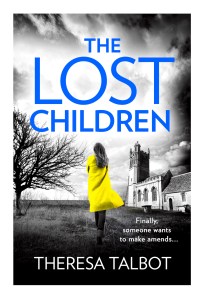 About the Book
TV journalist and media darling, Oonagh O’Neil, can sense a sinister cover-up from the moment an elderly priest dies on the altar of his Glasgow church. His death comes as she is about to expose the shocking truth behind the closure of a Magdalene Institution. The Church has already tried to suppress the story. Is someone also covering their tracks?
DI Alec Davies is appointed to investigate the priest’s death. He and Oonagh go way back. Oonagh now faces the biggest decision of her life. But will it be hers to make? What secrets lie behind the derelict Institution’s doors? What sparked the infamous three-day riot that closed it? And what happened to the three Maggies who vowed to stay friends forever?
From Ireland to Scotland. From life to death.
(The book was previously published under the title Penance.)
Format: ebook, paperback (466 pp.) Publisher: Aria Fiction
Published: 1st April 2018 Genre: Crime, Mystery
Purchase Links*
Amazon.co.uk ǀ Amazon.com ǀ Kobo ǀ Google Play ǀ iBooks
*links provided for convenience, not as part of any affiliate programme
Find The Lost Children on Goodreads
Guest Post: ‘Hi, I’m Theresa Talbot – and I’m a writer’ by Theresa Talbot
I feel as though I should be standing up at a support group to utter that phrase as it’s taken me so long to say it out loud.
My day job is ‘broadcast journalist’. It sounds slightly grander than it is; basically it’s talking out loud on the wireless. I present the traffic & travel on BBC Radio Scotland and sometimes read the news. Several years ago, I also presented the weekly gardening programme but that was taken off-air and replaced with a programme about men hitting balls with sticks, or men kicking balls, or men swerving out of the way of balls…I can’t really remember which, but there were a lot of men and a lot of balls.
My writing journey has been as long and meandering as the road to Ballacheulish. It would be lovely to say I always had a burning ambition to write, that it’s part of my DNA and as a child I would sit for hours on my own scribbling furiously then pass my stories on to the other kids on the street in exchange for popularity. But in truth I was a listener rather than a teller. For me there was nothing more delicious than being told a story from a grown-up. One of those fabulously illicit tales of gore, ghost and ghouls that seemingly had no part in childhood. Scratch the surface of any fairy tale and there lies the most appalling horror of savage wolves, lost children in the woods and wicked witches on a killing frenzy armed with no more than a basket of poisoned apples.
I can’t remember when I decided I would like to become a writer, certainly not as a child, as to me being ‘a writer’ was something only posh people did. I never even considered it could be a job, and certainly not my job. I remember my sister having one of those portable typewriters – Petite I think was the brand name – it had its own blue carrying case and I was in awe as she battered out ‘the quick brown dog jumps over the lazy fox’ time and time again with lightening speed.
I fell into journalism after a range of jobs as diverse as Library Assistant, Pepsi Challenge Girl and Medical Rep, but somewhere along the line a seed must have been sown that compelled me to write. I went to a few writers’ groups, toyed with short stories, but they were never my thing and I never took myself seriously as a writer, which was fine as neither did anyone else.
Looking back I’ve actually written every day of my professional life for the past twenty two years as a radio journalist – and because I write for the spoken word, this helps enormously when it comes to writing dialogue. I was a freelance comedy writer too. I was listening to a show on BBC Radio Scotland and noticed that there was what seemed like a ton of writers at the end credits. I phoned up the production company that made the weekly programme and asked them where they got their material from. Basically writers just submitted jokes and that was that. Seemed simple enough, then the following week I was in the hairdressers and a chap sat next to me was chatting away and told me he was a comedy writer for the very same programme. I sent him a joke and he told me to ‘try it, nothing to lose’. So I did and they used it. I did the same the following week, they used that joke too. Armed with my two jokes I went to a BBC producer and nagged her into reading a few other things, and before I knew it I had a weekly slot on another sketch show. I have to say writing a two minute sketch was the hardest thing I’ve ever done. It took me almost the whole week to get it right. Like short stories, short sketches just weren’t my thing. But, I’d started on road to becoming a writer and by this time had the bit between my teeth.
When I decided to actually write a book I confess I didn’t have a clue. The main thing that prompted me to get started was that I had a P.C. No longer would I succumb to the noxious fumes of tipex – as typing was not, and still isn’t, my strong point. I had no plan, no structure, just an idea which I started writing. I was inspired by two things – an early ghost story my Dad had told of a priest dying on the altar, and Glasgow’s Magdalene Institution which closed down after a three day riot in 1958.
That story eventually became The Lost Children and I’m thrilled to bits that Team Aria love it as much as I do. So with a book under my belt, can I now call myself a writer? Probably, but it’ll be years before I’m brave enough to utter the phrase…’I’m Theresa Talbot, and I’m an Author’. © Theresa Talbot
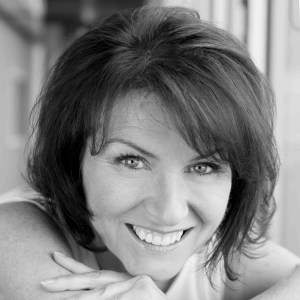 About the Author
Theresa Talbot is a BBC broadcaster and freelance producer. A former radio news editor, she also hosted The Beechgrove Potting Shed on BBC Radio Scotland, but for many she will be most familiar as the voice of the station’s Traffic & Travel. Late 2014 saw the publication of her first book, This Is What I Look Like, a humorous memoir covering everything from working with Andy Williams to rescuing chickens and discovering nuns hidden in gardens. She’s much in demand at book festivals, both as an author and as a chairperson.
Connect with Theresa
Website ǀ Facebook ǀ Twitter ǀ Goodreads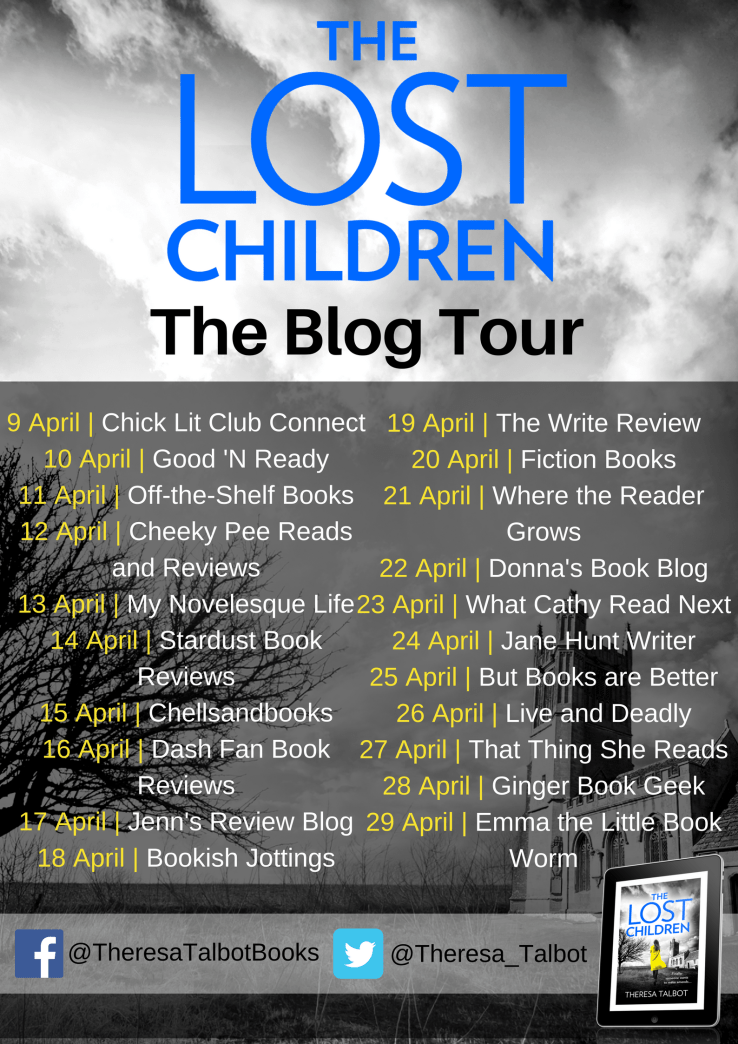


 About the Book
 About the Author
 What Cathy Read Next...