

I’m delighted to be hosting today’s stop on the blog tour for The Hidden Bones by Nicola Ford. It’s the first in a new crime mystery series featuring archaeologist Clare Hills. You can read my review of The Hidden Bones below plus I also have a wonderful guest post from Nicola, entitled ‘Wiltshire Noire’.
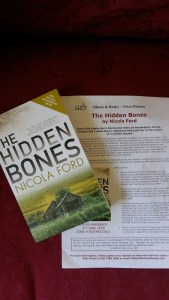 About the Book
Following the recent death of her husband, Clare Hills is listless and unsure of her place in the world. When her former university friend Dr David Barbrook asks her to help him sift through the effects of deceased archaeologist Gerald Hart, she sees this as a useful distraction from her grief. During her search, Clare stumbles across the unpublished journals detailing Gerald’s most glittering dig. Hidden from view for decades and supposedly destroyed in an arson attack, she cannot believe her luck. Finding the Hungerbourne Barrows archive is every archaeologist’s dream. Determined to document Gerald’s career-defining find for the public, Clare and David delve into his meticulously kept records of the excavation.
But the dream suddenly becomes a nightmare as the pair unearth a disturbing discovery, putting them at the centre of a murder inquiry and in the path of a dangerous killer determined to bury the truth for ever.
Format: Hardcover, ebook (352 pp.) Publisher: Allison and Busby Published: 21st June 2018 Genre: Crime, Mystery
Purchase Links*
Amazon.co.uk ǀ Publisher ǀ Hive.co.uk (supporting UK bookshops)
*links provided for convenience, not as part of any affiliate programme
Find The Hidden Bones on Goodreads
Guest Post: ‘Wiltshire Noire’ by Nicola Ford, author of The Hidden Bones
People make landscapes and landscapes make people. Whether it’s the urban inner city landscape of London, New York or Paris or the bleakly beautiful uplands of the High Peak. Both are to a large extent man made and where we live and spend our lives shapes not only our views and opinions but also how we live our lives and the choices we make. And sometimes those decisions can lead us to very dark places.
For many years now I’ve had the privilege of living and working in Wiltshire. It’s a county that encompasses some of the most magical landscape in the country. But it’s also one of the most frequently overlooked. Every year thousands of holiday makers make their way through Wiltshire on their way to the delights of Devon and Cornwall, most of them giving little more than a passing glance at this ancient county. But it’s a county that holds many secrets. It’s littered with more ancient sites per square mile than virtually any other place on the planet.
Those places include the two extraordinary landscapes that I’m privileged to spend my days working in as the National Trust Archaeologist for the Stonehenge and Avebury World Heritage Site. But the deep past that suffuses Wiltshire stretches well beyond the boundaries of these two landscapes. Bronze Age burial mounds, Roman Villas, Saxon cemeteries, Norman castles, Gothic cathedrals and Iron Age hill forts jockey for space alongside the great megalithic monuments of our Neolithic ancestors.
For those of us who live in this ancient shire the past is ever present. And it affects our daily lives in ways that we’re often not even wholly aware of. It’s that ever present effect of both the deep past and the more recent past on how people think about the place they call home and how they act as a consequence that I wanted to explore in The Hidden Bones.
There is folklore and legends aplenty here but there’s sometimes something darker too. Making a life on or from the land has many pleasures but the rural life isn’t always a bucolic idyll. Life in a small village on the uplands of the Marlborough Downs or Salisbury Plain can be every bit as tough as the inner city. The challenges are just different.
As an archaeologist I’ve worked in many landscapes across many countries. I’ve seen the effects of how people have carved out their lives on the bones of the land, and their choices always leave their trace for the next generation. They bequeath us a many layered inheritance that shapes the future in ways that they couldn’t possibly have imagined. In The Hidden Bones, when archaeologists Clare Hills and David Barbrook start to strip away those layers, they reveal a past that none of them had expected and within which lies the darkest of secrets. A secret that someone will go to any lengths to protect. © Nicola Ford, 2018
My Review
Recently widowed, Clare is feeling rather lost at having to cope on her own after years of happy marriage. The death of her husband was both sudden and unexpected. When her old university friend, David, contacts her about getting involved in his research project, it seems like the perfect distraction from her grief and also an opportunity to rekindle her love of archaeology.
Initially, I wasn’t sure I shared Clare and David’s excitement at the discovery of a missing artefact as they comb through the papers of deceased archaeologist, Gerald Hart, famed for his work on the Hungerbourne Barrow. However, that all changed when the pair make a startling discovery about one of the finds in the collection. It brings to light revelations from the past that although historic definitely do not relate to the Bronze Age. I was now hooked.
History starts to repeat itself in other ways as the excavation team led by David and Clare are plagued by graffiti warning messages and accidents on site, just as occurred at the time of the original excavation. But are they actually just accidents or are they manifestations of an ancient curse or something more sinister but distinctly earthbound? When events turn darker and more dangerous still, it becomes clear that there is someone who will stop at nothing to prevent the excavation continuing.
The author certainly kept me guessing about who the culprit was. One minute I was sure I knew who was responsible, the next minute I was convinced it was someone else. Eventually the perpetrator and their motive is revealed but not before lucky escapes for some members of the team and just the opposite for others.
It turns out archaeology has much in common with the investigation of a crime. They both involve gathering and piecing together evidence, investigating available source information, testing assumptions and coming to conclusions. A crime scene must be preserved in the same way as an archaeological excavation site. Because of the author’s background, the details about the excavation and the archaeological procedures felt completely authentic. I also got the same sense about David’s tussles with his university head of department over the need to deliver research funding that appears to be such a feature of modern day academia.
What I particularly enjoyed about the book was the strong cast of female characters – Clare, obviously, but also Margaret and Jo. Along with David, the author has lined up an interesting team for future books in the series. The Hidden Bones is an engrossing murder mystery with engaging characters that will appeal to lovers of crime fiction, fans of TV’s Time Team or those with an interest in history or archaeology.
I received an uncorrected proof copy courtesy of publishers, Allison and Busby, in return for an honest and unbiased review.
In three words: Suspenseful, engrossing, mystery
Try something similar…The Dark Angel by Elly Griffiths
 About the Author
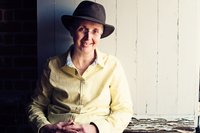
Nicola Ford is the pen-name for archaeologist Dr Nick Snashall, National Trust Archaeologist for the Stonehenge and Avebury World Heritage Site. Through her day-job and now her writing, she’s spent more than most people thinking about the dead. Her writing brings together the worlds of archaeology and crime, unravelling the tangled threads left behind by murder to reveal the stories of those who can no longer speak for themselves.
Connect with Nicola
Website ǀ Facebook ǀ Twitter ǀ Instagram ǀ Goodreads

 About the Book
 About the Author

