
I read The Great Darkness by Jim Kelly a few weeks ago and absolutely loved it. Set in Cambridge in 1939, The Great Darkness is the first in a new historical crime series. You can read my full review here but, if you need a little enticement, I commented that the book would be perfect for fans of TV’s Foyles War. Since I loved the book so much, I’m thrilled to welcome Jim Kelly to What Cathy Read Next today. Below you can read a fabulous guest post from Jim all about his research for the book.
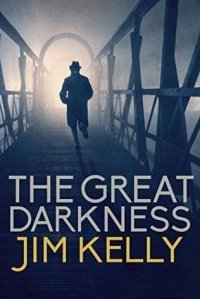 About the Book
1939, Cambridge: The opening weeks of the Second World War, and the first blackout – The Great Darkness – covers southern England, enveloping the city. Detective Inspector Eden Brooke, a wounded hero of the Great War, takes his nightly dip in the cool waters of the Cam. The night is full of alarms but, in this Phoney War, the enemy never comes.
Daylight reveals a corpse on the riverside, the body torn apart by some unspeakable force. Brooke investigates, calling on the expertise and inspiration of a faithful group of fellow ‘nighthawks’ across the city, all condemned, like him, to a life lived away from the light. Within hours The Great Darkness has claimed a second victim.
War, it seems, has many victims, but what links these crimes of the night?
Format: ebook, hardcover (352 pp.) Publisher: Allison & Busby
Published: 19th April 2018 Genre: Historical Fiction, Historical Mystery, Crime
Purchase Links*
Publisher | Amazon.co.uk ǀ Amazon.com ǀ Hive.co.uk (supporting UK bookshops)
*links provided for convenience, not as part of any affiliate programme
Find The Great Darkness on Goodreads
Guest Post: ‘Researching The Great Darkness’ by Jim Kelly
Writing a novel set in a historical period is daunting. I always swore I would never do it. Ever. And in a strange way I’ve kept my promise, because The Great Darkness, set in the opening months of the Second World War in Cambridge, isn’t a historical novel in my mind. Let me explain.
Someone wise once said that history is what happened before your parents were born. If that definition stands the so-called test of time – which I think it does – then The Great Darkness is just a crime novel.
My father was a commando in the Second World War, my mum worked in the City of London during the blitz, my brother was born in the war. I came along twelve years after it ended in victory. So it’s just the world I was born into to, the big event I just missed, and heard talked about, for most of my early life. So when people ask how I prepared to write the book my first reaction is simple: “I didn’t prepare. It’s in my head already.”
But that’s not the whole truth. Writing about the past is like writing about anything else, you need detail, an insight into the ways things looked, smelt, tasted, and felt. It’s no good reading history books for this sort of detail. Such books – and I have read many on the period because I love history – will give me the big facts; for example, that meat rationing began with bacon, butter and sugar on January 8, 1940. But what did sausages taste like? Did butchers give more to their friends? Which shops had queues outside? How could you spot the Black Market? This kind of detail is much more difficult to find.
One good source is newspapers, especially local ones. I was very lucky because a historian in Cambridge has produced an online resource in which he summarised all the interesting stories in the Cambridge News for the whole war. These priceless abstracts give you the real minutiae of daily life. Another good way to ‘dig down’ into the past is diaries. Again, I was fortunate; I found an excellent war time diary by a conscientious objector called Jack Overton. He told me what it felt like to be in Cambridge when the air raid siren sounded, what the bombs falling sounded like when they struck. This kind of background gives you a depth of information which feels like knowledge to the reader, not research. Any reader can tell the difference.
Lastly, my third major source was old photographs. These show you all the detail you’d never get in the printed word. A huge wall of sandbags outside the local police station, white lines on the curbs to help in the black out, the stained glass windows of a church removed to safety and replaced by boards. The central library in Cambridge has a first-class collection of such material, The Cambridgeshire Collection, and they produced boxes of pictures for me to see – and – another excellent resource – a map of the city in 1940.
There was a final twist in my preparation for writing the book. Someone – Napoleon I think – said that to understand a man (or a woman, I think we could add) you have to understand the world when he was twenty years of age. This is a good approach to building a character. What were the events which formed him – or her? My hero – Detective Inspector Eden Brooke – is about forty years old when the book starts. So he’d have been twenty in 1920 – so old enough to serve in the First World War.
Again, I knew a little, from books and films. But the great thing is to avoid cliché. So not the trenches, not the Western Front, but something unusual which I could research in a more traditional way. I think it is a good rule to narrow research down, and don’t try to understand too much. So I chose the desert war, which led me to Lawrence of Arabia, and the march from Cairo to Jerusalem. A forgotten war then, but not now, because it was this campaign which led to the formation of the Middle East as we know it today. I read as much as I could, looked at photographs, and focused on a single event: the Second Battle of Gaza. It was here Eden Brooke’s story really began, because he was captured, and tortured, and this is the man we meet twenty years later.
The book’s out now and people have been very kind. I don’t mind readers spotting errors. I keep a list so that we can put them right when we get to later editions. So far there’s only two, which I am very proud are minor. I have a Lancaster bomber flying overhead – but they didn’t fly until 1941. And I have a character saying, “Same old, same old” – apparently a phrase which came out of the Korean War.
If that’s the final tally, I’ll be very happy. © Jim Kelly
 About the Author
Jim Kelly was born in 1957 and is the son of a Scotland Yard detective. He went to university in Sheffield, later training as a journalist and worked on the Bedfordshire Times, Yorkshire Evening Press and was education correspondent for the Financial Times. His first book, The Water Clock, was shortlisted for the John Creasey Award and he has since won a CWA Dagger in the Library and the New Angle Prize for Literature. He lives in Ely, Cambridgeshire.
Connect with Jim


 About the Book
 About the Author
 What Cathy Read Next...