Book Review: Louis & Louise by Julie Cohen

louis & louiseAbout the Book

ONE LIFE. LIVED TWICE.

Louis and Louise are the same person born in two different lives. They are separated only by the sex announced by the doctor and a final ‘e’.

They have the same best friends, the same red hair, the same dream of being a writer, the same excellent whistle. They both suffer one catastrophic night, with life-changing consequences.

Thirteen years later, they are both coming home.

A tender, insightful and timely novel about the things that bring us together – and those which separate us, from the author of Richard & Judy recommended book Together

Format: Hardcover, ebook, (304 pp.)    Publisher: Orion
Published: 24th January 2019                Genre: Contemporary Fiction

Purchase Links*
Amazon.co.uk  ǀ  Amazon.com  ǀ Hive.co.uk (supporting UK bookshops)
*links provided for convenience, not as part of any affiliate programme

Find Louis & Louise on Goodreads


My Review

Despite its clever concept, questions about gender identity came less to the fore than I was expecting. I found myself wondering how much of what happens to Louis/Louise in the book is actually a product of their gender and social stereotyping and how much (aside from things that have obvious biological limitations) might have happened to either of them anyway? Some key events, such as bereavement, happen to both of them, others to only one. It seemed to me that this determined what followed as much perhaps as the fact of their gender.

The author juxtaposes Louis and Louise who are two iterations of the same person with Allie and Benny, non-identical twins who nevertheless look alike. At times, I felt the story became more about Allie and Benny as it is they who propel many of the events.  Also, I did find it a little difficult at times to remember what happened in each life (especially as both characters are often referred to as ‘Lou’) and had to resort to drawing myself a chart.

In Casablanca, Maine, the reader gets an evocative portrait of small-town America. A place that has become slightly rundown over the years due to the impact of economic decline but where everyone knows everyone else and life is built around community events and small acts of neighbourliness. There were some clever touches such as the fact the book Louis writes is about a woman who posed as a man. I also really liked the depiction of the relationship between Louis’s mother and father. Even when separated there was a touching love and understanding between them.  And there were unexpected elements of melodrama between the subtle character studies that exemplify Julie Cohen’s writing.

I received an advance review copy courtesy of publishers, Orion, and NetGalley.

Follow my blog with Bloglovin

In three words: Intimate, character-driven, well-observed

Try something similar… Oliver Loving by Stefan Merrill Block (read my review here)

Julie CohenAbout the Author

Julie Cohen grew up in the western mountains of Maine. Her house was just up the hill from the library and she spent many hours walking back and forth, her nose in a book. She studied English Literature at Brown University and Cambridge University and is a popular speaker and teacher of creative writing, including classes for The Guardian and Literature Wales. Her books have been translated into fifteen languages and have sold nearly a million copies; Dear Thing was a Richard and Judy Book Club pick. Julie lives in Berkshire with her husband, son and a terrier of dubious origin. (Photo credit: Goodreads author page)

Connect with Julie

Website  ǀ  Facebook  ǀ  Twitter  ǀ Goodreads

Blog Tour/Book Review: The Things We Cannot Say by Kelly Rimmer

kr_blog_tour

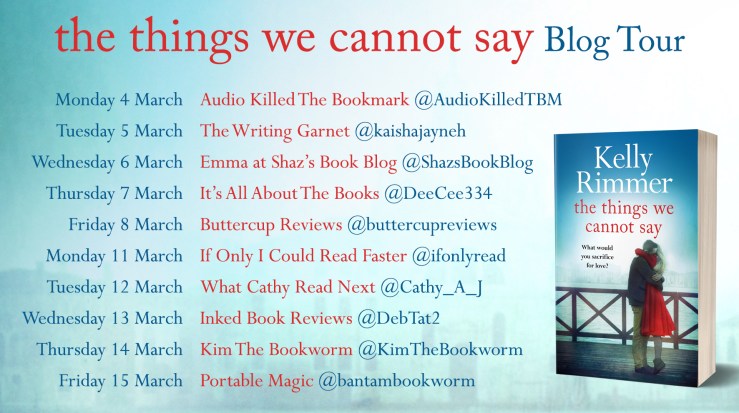
I’m delighted to be hosting today’s stop on the blog tour for The Things We Cannot Say by Kelly Rimmer.  Thanks to Anne Cater at Random Things Tours for my invitation to join the tour.

Do check out the posts by the other great book bloggers taking part in the tour who have been giving the book rave reviews. For example:

Berit at Audio Killed The Bookmark called it ‘a beautifully crafted story’
Kaisha at The Writing Garnet described it as a ‘beautiful, beautiful book’
Emma at Shaz’s Book Blog confessed the book left her ‘an emotional wreck’


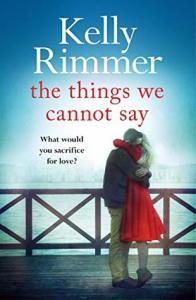
The Things We Cannot SayAbout the Book

Inspired by the author’s family history, a searing page-turner of war, family secrets and a love to defy all odds, from the Top Ten Australian bestselling author of Before I Let You Go.

2019 – Life changed beyond recognition for Alice when her son, Eddie, was born with autism spectrum disorder. She must do everything to support him, but at what cost to her family? When her cherished grandmother is hospitalised, a hidden box of mementoes reveals a tattered photo of a young man, a tiny leather shoe and a letter. Her grandmother begs Alice to return to Poland to see what became of those she held dearest.

WWII – Alina and Tomasz are childhood sweethearts. The night before he leaves for college, Tomasz proposes marriage. But when their village falls to the Nazis, Alina doesn’t know if Tomasz is alive or dead.

2019 – In Poland, separated from her family, Alice begins to uncover the story her grandmother is so desperate to tell, and discovers a love that bloomed in the winter of 1942. As a painful family history comes to light, will the struggles of the past and present finally reach a heartbreaking resolution?

Format: ebook (352 pp.)    Publisher: Headline Review
Published: 7th March 2019 Genre: Contemporary/Historical Fiction, Romance

Purchase Links*
Amazon.co.uk  ǀ  Amazon.com  ǀ Hive.co.uk (supporting UK bookshops)
*links provided for convenience, not as part of any affiliate programme

Find The Things We Cannot Say on Goodreads


My Review

The book alternates between the stories of two women– Alina and Alice – and two timelines – the present day and Second World War Poland.

For me, the storyline told from the point of view of Alina was the more compelling and powerful.  Her experiences and those of her family and community as Poland comes under the thrall of the Nazis are dramatically described.  The day-to-day realities of food shortages, persecution (and worse) of Jews, the constant fear of reprisals and the agonies of not knowing what has happened to loved ones were brilliantly conveyed. I can’t be the only reader who experienced a chill down their spine when the relevance of the location of Alina’s family’s farm became clear.  Alina’s story is also a deeply moving love story.

In the modern day story, I admired Alice’s devotion to her son, Eddie and her desire to fulfil the wishes of her seriously ill maternal grandmother, but found Alice’s certainty that her way of caring for her son was the only way less easy to empathise with.  At times, the two stories felt separate apart from the connection of Alice’s search for the answers to her grandmother’s questions about her family’s past.  This quest takes Alice to Poland in an attempt to uncover the truth but also becomes a voyage of self-discovery for Alice that started to endear me to her as she becomes more willing to trust others.

However, the more I thought about the book, the more I was drawn to the idea of communication – or the inability, unwillingness or failure to communicate – as a shared theme of the two stories.  There’s the obvious connection that Alice’s grandmother  has been robbed of the power of speech by a stroke and that Alice’s son, Eddie, has communication difficulties as a result of his autism spectrum disorder.  As it turns out they are both able to utilise the same specialist application to overcome this.

I was also struck by other ways in which the title of the book is reflected in the story.  There are things that cannot be spoken of because they are too terrible to describe.  For example, Emilia, Tomasz’s sister, who has witnessed horrifying things but finds no outlet to express her thoughts about them because her family forbid it, finds release in her long talks with Alina.  There are things for which no words are needed because gestures or actions suffice.  And there are unspoken thoughts which should really not be expressed aloud.  For example, when during an angry exchange in a fractious call between Alice and husband, Wade, she admits ‘It’s the vodka talking.  It’s the disappointment speaking’. Then there’s Eddie, who occasionally demonstrates unexpected  perception about other’s feelings and reflects back to others phrases he associates with them.

However, looking at it from the opposite point of view, the book suggests there are things that must be said – if you like the things we cannot not say.  At one point in the torturous process of trying to make sense of her family’s wartime history Alice, trying to persuade herself to carry on, wonders, ‘What happens when stories like theirs are lost?  What happens when there’s no-one left to pass your experience on to, or you just can’t bring yourself to share it?’.

The Things We Cannot Say is a powerful, moving story about love, family, sacrifice and the triumph of the human spirit over adversity.  I received an advance review copy courtesy of publishers, Headline Review, and Anne Cater at Random Things Tours.

Follow my blog with Bloglovin

In three words: Emotional, powerful, thought-provoking

Try something similar…The Good Doctor of Warsaw by Elisabeth Gifford (read my review here)


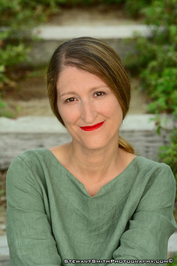
Kelly Rimmer Author PictureAbout the Author

Kelly Rimmer is the USA Today bestselling author of contemporary fiction novels including Me Without You, The Secret Daughter, When I Lost You, A Mother’s Confession and her most recent release, Before I Let You Go. She lives in rural Australia with her husband and children.

Connect with Kelly

Website  ǀ  Facebook  ǀ  Twitter  ǀ  Instagram ǀ Goodreads