Book Review – How To Make A Bomb: A Novel by Rupert Thomson

About the Book

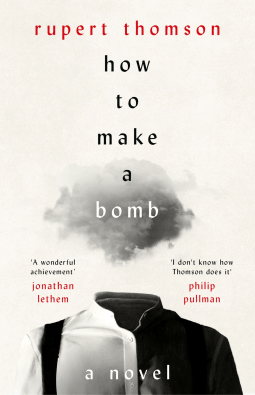
Book cover of How To Make A Bomb: A Novel by Rupert Thomson

If he suddenly found what surrounded him unbearable, it was because it was artificial
Everything had been designed and manufactured, and he was trapped in it

Philip Notman, an acclaimed historian, attends a conference in Bergen, Norway. On his return to London, and to his wife and son, something unexpected and inexplicable happens to him, and he is unable to settle back into his normal life.

Seeking answers, he flies to Cadiz to see Inés, a Spanish academic with whom he shared a connection at the conference, but his journey doesn’t end there. A chance encounter with a wealthy, elderly couple sends him to a house on the south coast of Crete. Is he thinking of leaving his wife, whom he claims he still loves, or is he trying to change a reality that has become impossible to bear? Is he on a quest for a simpler and more authentic existence, or is he utterly self-deluded?

As he tries to make sense of both his personal circumstances and the world surrounding him, he finds himself embarking on a course of action that will push him to the very brink of disaster.

Format: ebook (402 pages) Publisher: Head of Zeus
Publication date: 11th April 2024 Genre: Contemporary Fiction

Find How To Make A Bomb on Goodreads

Purchase How To Make A Bomb from Bookshop.org [Disclosure: If you buy books linked to our site, we may earn a commission from Bookshop.org, whose fees support independent bookshops]


My Review

I’ve only read one other book by Rupert Thomson and that was back in 2016, a historical mystery called Secrecy. How To Make A Bomb is very different. Firstly it’s not set in 17th century Florence but in the present day. Stylistically it’s different too. Each sentence in the book starts on a new line, there are no quotation marks or full stops, but plenty of commas and the occasional question mark.

I liked the idea of a malaise created by the modern world with its proliferation of choices and where everything has been designed to the nth degree. For Philip Notman this ‘civilisation sickness’ manifests itself both physically, as he experiences bouts of intense nausea and dizziness, and psychologically, as he starts to question the artificiality of modern life. ‘Everything I see around me has been thought about. Everything has been made.’

Leaving his wife Anya behind because he fears she won’t understand what he’s experiencing – and who could blame her – he retreats to a house in a remote part of Crete in search of a simpler more unconnected lifestyle. ‘He had clicked on unsubscribe.’

It offers a temporary respite but he becomes unnerved when he learns about the violent history of both the house and the island. Various events make him conclude that positive action, as opposed to eloquent manifestos, is sometimes the only way to achieve change.

I enjoyed the observational humour, such as Philip’s experience of navigating the Duty Free zone at the airport, the ‘glitzy, tyrannical no-man’s-land that lay between Security and the Departure Lounge’. I also enjoyed the insights into the early days of Philip and Anya’s relationship when he seemed like a genuinely funny and appealing person. And I liked the fact that often the wisest insights came from female characters. However, as the book progressed, for me, Philip’s story began to resemble more a mid-life crisis than an earth-shattering revelation about modern day life. And the ending left me a bit puzzled. Did he actually carry out his plan or did he just imagine doing it? Although maybe we’re being invited to think about what might cause someone to take such an action…

How To Make A Bomb was one of those books that made me wonder if I was quite clever enough to understand what the author was attempting to communicate. But it was fun trying.

I received a review copy courtesy of Head of Zeus via NetGalley

In three words: Inventive, witty, thought-provoking


About the Author

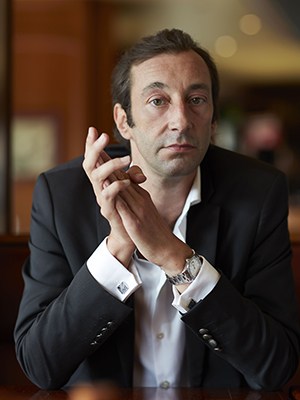
Author Rupert Thomson

Rupert Thomson is the author of more than a dozen acclaimed novels, including Barcelona Dreaming, Never Anyone But You, Katherine Carlyle, Secrecy, The Insult, which was shortlisted for the Guardian Fiction Prize and selected by David Bowie as one of his 100 Must-Read Books of All Time, The Book of Revelation, which was made into a feature film by Ana Kokkinos, and Death of a Murderer, which was shortlisted for the Costa Novel of the Year Award. His memoir, This Party’s Got to Stop, was named Writers’ Guild Non-Fiction Book of the Year. He lives in London. (Photo: Amazon author page)

Connect with Rupert
X/Twitter

Author Interview – A Place Without Pain by Simon Bourke

Book cover of And the Birds Kept on Singing by Simon Bourke

My guest today on What Cathy Read Next is author Simon Bourke. I absolutely loved his first book, And the Birds Kept on Singing, and have featured it numerous times in round-ups of books that deserve more attention from readers. And it’s not just me who’s a fan. Others who’ve read it have also loved it, describing it as ‘stunning’, ‘a powerful debut’, ‘a real page turner’, ‘a real treat’ and a ‘gritty, realistic and powerful coming-of-age saga’. Okay, full disclosure, that last one was mine!

So I was delighted when Simon got in touch to tell me about his latest novel, A Place Without Pain, published on 30th January 2024. It has secured its place in my review pile and I look forward to sharing my thoughts on it in due course. In the meantime, you can read my interview with Simon in which he explains, amongst other things, his desire to give a voice to those whom society has forgotten or dismissed, and the challenges of writing a second novel.

I really hope Simon’s fascinating answers to my questions make you as keen to read A Place Without Pain as I am. And Simon, don’t make us wait five years for that next one!


About the Book

Book cover of A Place Without Pain by Simon Bourke

Aidan Collins has always been an outsider, a weirdo, an oddball. But the arrival of his worldly, urbane cousin Dan, changes his life completely. Dan introduces Aidan to alcohol, to girls, to a life beyond the four walls of his bedroom, and eventually, to the night out to end all nights out in Dublin.

What he sees in the capital, what he’s exposed to, also changes Aidan’s life, but not in a good way. A scene behind a closed door haunts him, torments him, leaving behind scars which may never heal.

Find A Place Without Pain on Goodreads

Purchase A Place Without Pain from Amazon [link provided for convenience not as part of an affiliate programme]


Q&A with Simon Bourke, author of A Place Without Pain

Q. Welcome, Simon. A rather cheeky question first… It’s five years since the publication of your previous novel, And the Birds Kept on Singing. Why the gap?

A. A variety of reasons, really. Initially I didn’t know what type of book I wanted to write, I only had one scene in my head that I wanted to build it around. That scene involved a lonely man, who hasn’t spoken to anyone in weeks, having a chance encounter with someone who would go on to play a big part in his life. Beyond that I had no solid plot in my head and just presumed it would write itself.

It didn’t write itself.

Instead, I wrote myself to a standstill on dozens of occasions, spent months on sections which ended up being deleted, and ultimately learned the value of creating a plot outline before committing to a novel.

In addition, I also work full-time as a journalist. It’s a pretty intense job at times, quite consuming. As a result, much of A Place Without Pain was written during weekends and short bursts during the odd evening when my head wasn’t completely fried.

Q. So what was the inspiration for the story when it eventually arrived?

A. I would have been that aforementioned lonely man at one point in my life. And during that time, while trying to blend into the background, trying to hide in the shadows, I couldn’t help but notice that there were other people like me, other people who always seemed to be on their own, always seemed to be hiding.

It made me wonder how they had got to that point in their lives, how they had become so isolated. I wanted to try and tell their story and give them a voice. For whatever reason, society has forgotten about them, has dismissed them, which seemed unfair. So, it was about humanising them, explaining how they had come to this point in their lives.

Q. How did you go about creating your main character, Aidan Collins? Did he change much during the time you were writing the book?

A. Aidan was a hard character to create. I wanted him to be a misfit, the type of person summarily described as a ‘weirdo’, but I had to ensure he was some way likeable or would elicit sympathy from readers.

From the start, I decided he would not be in any way heroic or inspiring, that his thought processes would be deeply flawed and occasionally problematic. But this would be underpinned by a childish innocence and naivete.

His addiction and mental health issues, despite their severity, added some colour to his life and, hopefully, justify some of his actions.

A Place Without Pain is set over 15 years in his life, so his character does undergo some subtle changes as he ages, which was challenging in of itself.

Q. How important to the story is the book’s setting?

A. Well, it’s very Irish, it’s rural, it’s coastal. But a lot of the story is set in the kind of environment which exists in every country and isn’t often documented: cheap rented accommodation, inner-city flats and apartments, housing estates, the supposed no-go zones of your local area. I wanted to challenge the perception of these places and the people who live in them. Often, these people are disregarded, labelled or discriminated against, so I wanted to tell their stories.

In contrast, Aidan comes from a middle-class background, so inserting him into this world allows the reader to experience it all through his eyes, through his naive, unassuming viewpoint.

Q. Were there any scenes in the book that were particularly challenging to write? If so, why?

A. Absolutely. One scene in particular, in the early stages of the book, was incredibly difficult to write. I won’t go into detail, but I was acutely aware that some readers may find said scene offensive, even triggering. However, as the story unfolds the reader will hopefully understand the necessity of that scene and its importance to the story.

There were other scenes, focusing on Aidan’s mental health, which were difficult too, which were triggering for me. Having to write about someone having an intense panic attack, a nervous breakdown, wasn’t easy. I’ve been there myself, and recreating that experience wasn’t something I enjoyed doing.

But again, it had to be part of the story, and told with as much authenticity as possible.

Q. Some authors say writing their second novel is more difficult than writing their first. Have you found this to be the case?

A. Yes. The innocence of the first novel was long gone. Back then I was just writing without really thinking about the consequences. For A Place Without Pain I was constantly second-guessing myself, doubting myself, wondering if I even had a second book in me.

Also, because the first book was fairly well-received, there was an additional pressure to prove I could do it again, that I wasn’t just a one-hit wonder.

Q. Do you have any writing heroes and, if so, how have they influenced your own writing?

A. I wouldn’t say I have “writing heroes” per se, but there are writers who have influenced me. He wouldn’t be my favourite author, and I probably haven’t read anything he’s done in the last 20 years, but as a teenager reading Irvine Welsh I was stunned by the risks he took and the style of his work.

Previous to that, I’d always assumed you had to be of a certain stock to be a novelist, that you had to be well-educated, an intellectual. But Welsh wrote about a world I could identify with. He made me realise you could write about anything, that there were no boundaries, and that all the degrees in the world are no substitute for writing talent.

Even today, authors from working-class backgrounds are under-represented in the world of literature, it would be great to see more voices like his given an opportunity to be heard.

Q. What are you working on next?

A. And the Birds Kept on Singing documented a boy’s life through childhood, teenage years, and early adulthood. A Place Without Pain sees the protagonist go from his early twenties to his mid-thirties. For the next one I want to cover a period I haven’t yet tackled: that year, month, week, where a boy or a girl comes of age.

    It’ll take place over the summer of 1990 and feature a group of kids from a housing estate in rural Ireland who have just finished primary school. It will be their last summer together before they all go on to secondary school in the autumn. More than that, it’ll be their last summer of true innocence, the summer where the girls suddenly aren’t so disgusted by the boys, and the boys can sheepishly admit they don’t mind hanging round with the girls.

    As well as telling the kids’ stories, the book will also feature their parents. In the early nineties, Ireland was still a very poor country; unemployment was rife, people found solace where they could get it, and there wasn’t much to be optimistic about. There was a sense of freedom, though, so I’ll try to incorporate that.

    And, of course, the summer of 1990 was the year Ireland played in the World Cup for the first time, so that will be the backdrop to the novel.


    About the Author

    Author Simon Bourke

    Having spent the majority of his teens and twenties wondering just what would become of him, Simon chanced upon a hitherto unrealised ability to write. This ability, limited as it was, compelled him to enrol as a mature student of Journalism at the University of Limerick.

    His dreams of super-stardom were almost immediately curtailed by a punishing, unexplained illness which took away three years of his life but perversely, enabled him to write his debut novel, And the Birds Kept on Singing. Those were dark, depressing years but in spite of the toll they took on him, Simon understands were it not for that illness he may never have fully embraced his desire to become an author. He has since completed his degree leading him to a job with the Wexford People. In February 2024 he released his second novel, A Place Without Pain.

    Connect with Simon
    Website | Twitter/X | Facebook