#BookReview The Whispering House by Elizabeth Brooks @DoubledayUK @izzieghaffari

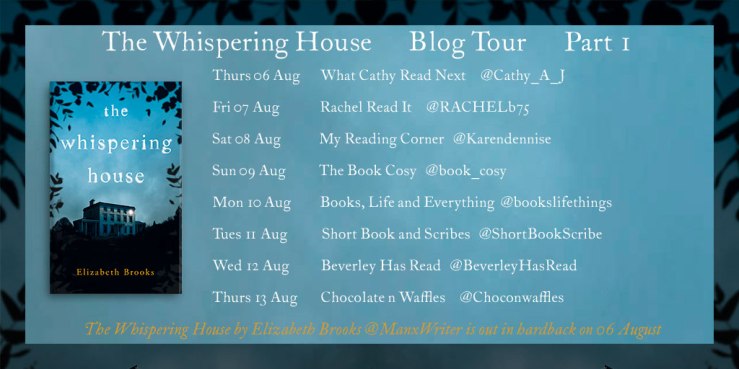
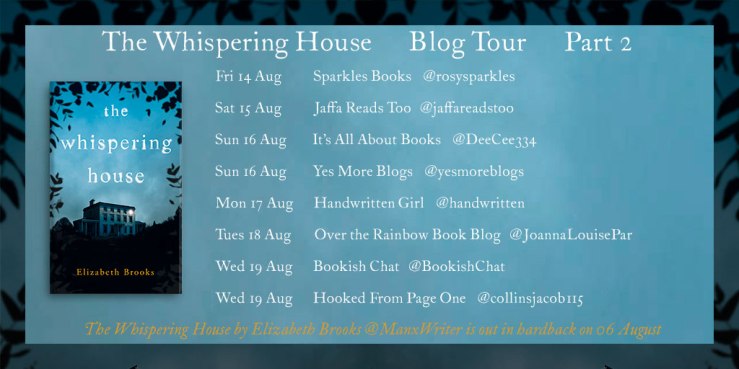
The-Whispering-House-blog-tour-week-1I’m delighted to welcome you to today’s stop on the blog tour for The Whispering House by Elizabeth Brooks. Not only is it the first day of the tour, it’s also publication day! My thanks to Izzie at Doubleday for inviting me to participate in the tour and for my digital review copy via NetGalley.


The Whispering HouseAbout the Book

Freya Lyell is struggling to move on from her sister Stella’s suicide five years ago. Visiting the bewitching Byrne Hall, only a few miles from the scene of the tragedy, she discovers a portrait of Stella – a portrait she had no idea existed, in a house Stella never set foot in. Or so she thought.

Driven to find out more about her sister’s secrets, Freya is drawn into the world of Byrne Hall and its owners: charismatic artist Cory and his sinister, watchful mother. But as Freya’s relationship with Cory crosses the line into obsession, the darkness behind the locked doors of Byrne Hall threatens to spill out.

Format: Hardcover (352 pages)       Publisher: Doubleday
Publication date: 6th August 2020 Genre: Fiction, Mystery

Find The Whispering House on Goodreads

Purchase links*
Amazon UK | Hive (supporting UK bookshops)
*links provided for convenience not as part of an affiliate programme


My Review

There’s no doubt that in Byrne Hall the author has created another mysterious location for her novel. Viewed for the first time from its gardens, as Freya does, or glimpsed from afar, it seems picture perfect. “There it was; there was Byrne Hall. Impossible to mistake the graceful white house with its pillared porch, and the tiered garden tumbling down through the trees like a wide, green river.” However, delve deeper and its elegant frontage is revealed as merely a facade; the rest of the house is in various stages of disuse and decay, “as godforsaken as Sleeping Beauty’s castle”.  This is something of a metaphor for the characters who inhabit it – Diana Byrne and her son, Cory.

Once doyenne of the art world, Diana is now ailing and physically frail, reliant on Cory, the son she dotes on, to look after her. However, through the occasional insights into her thoughts, the reader senses she possesses an inner steel and a strong will. In a curious and rather unsettling way, the house seems to inhabit her as much as she inhabits it. “She – Diana – had become the whispering voice of the house. No, more than that, she had become it’s mind and soul.”

Even Freya begins to think of Byrne Hall as in some sense having a life of its own. “We didn’t get silences like this back home. It was a silence with character and colour; it was the wakeful mind of Byrne Hall, brimful of history and intent.” This air of unreality, along with her desire to find out more about the circumstances of her sister’s death, goes some way to explaining why Freya finds herself drawn into a relationship with Cory. I confess I struggled to see the attraction Cory held for Freya. Convinced he possesses as yet unrecognised artistic talent, his behaviour is increasingly manipulative and controlling. However, having always felt as if she was in her sister’s shadow, Freya finds Cory’s adoration difficult to resist. In addition, Byrne Hall seems to offer her the prospect of a new and more fulfilling life.

As Freya uncovers more connections between Byrne Hall and her sister’s death, picking up fragments here and there, she observes “It was like holding a couple of jigsaw pieces in my palm, knowing there was a whole picture to be made, if only I could find the rest.” You may think you know exactly where the story is going but, like me, you could be wrong. Never underestimate the lengths to which people will go to preserve the things they treasure.

With its atmospheric setting and gothic elements (yes, there is even an attic), The Whispering House combines suspenseful mystery with an absorbing story of delusion and obsession.

In three words: Atmospheric, creepy, immersive

Try something similar: Call of the Curlew by Elizabeth Brooks

Follow this blog via Bloglovin

Elizabeth Brooks. B+WAbout the Author

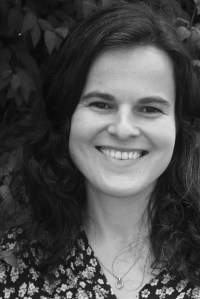
Elizabeth Brooks grew up in Chester and read Classics at Cambridge. Her debut novel Call of the Curlew was shortlisted for the Waverton Good Reads award. The setting for her new novel, The Whispering House, is a manor house named Byrne Hall and is inspired by the home of Agatha Christie. It is full of dark corners and old portraits that carry untold stories of their subjects. Elizabeth lives on the Isle of Man with her husband and children.

Connect with Elizabeth
Twitter | Goodreads
 

The-Whispering-House-blog-tour-week-1

The-Whispering-House-blog-tour-week-2

#BookReview The Housing Lark by Sam Selvon

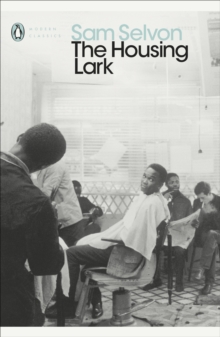
9780241441329About the Book

Sitting in his cramped basement room in Brixton, Battersby dreams of money, women, a T-bone steak – and a place to call his own. So he and a group of friends decide to save up and buy a house together. But amid grasping landlords, the temptations of spending money and the less-than-welcoming attitude of the Mother Country, can this motley group of hustlers and schemers, Trinidadians and Jamaicans, men and women make their dreams a reality?

Selvon’s meticulously observed narratives of displaced Londoners’ lives created a template for how to write about migrant, and postmigrant, London for countless writers who have followed in his wake, including Hanif Kureishi and Zadie Smith’ (Caryl Phillips)

Format: Ebook (160 pages)               Publisher: Penguin Modern Classics
Publication date: 6th August 2020 [1965] Genre: Contemporary fiction

Find The Housing Lark on Goodreads

Pre-order/Purchase links*
Amazon UK | Hive (supporting UK bookshops)
*links provided for convenience not as part of an affiliate programme


My Review

The Housing Lark is definitely a lark as it’s full of humorous episodes and laugh out loud character studies of Battersby’s house mates and friends. However, behind the humour, what the book does so well is to shed light on more serious issues: whether that’s the Anglo-centric nature of the history syllabus, the overt raciscm faced by immigrants or the lack of access to decent housing.

For example, although it has the serious issue of discrimination at its heart, one of my favourite stories concerns Sylvester. In order to find a room to rent, he is forced to convince the landlord he is from India rather than from Trinidad (the former being more acceptable seemingly than the latter.) He succeeds but has to keep up the part despite knowing little about India. Entering Sylvester’s room one day to find him standing on his head, the landlord asks what he is doing. Sylvester replies, “I am practising my yoghourt”. There are many more episodes of that kind.

One of Battersby’s moneymaking schemes to help raise the deposit for a house is to organise a coach excursion. The destination chosen is “Hamdon Court” and much hilarity ensues from the very start. “And the food and drink – well, it look like they setting off for an expedition to the North Pole or something.” When they finally get going, “like if fete start up right away. Fellars begin beating bottle and spoon and singing calypso…three bottles of rum start to make rounds…a woman open up a pot of pilau and start dishing out food.”

On arrival at their destination, most of the men choose not to tour the palace, opting instead for the delights of the rum bottle and showing off their (supposed) knowledge of history. All English history, of course.
Nights of the round table and Richard with the lion heart and them fellars“, offers one. “Don’t forget Robin Hood and the Merry Men. And what about the fellar who was watching a spider and make the cakes burn?“, says another.

The book challenges the notion that people from the Caribbean region are a homogenous group. “To introduce you to all these characters would take you into different worlds, don’t mind all of them is the same colour.” It would be nice to think we can all deny the following accusation: “All you interested in is that he black – to English people, every black man look the same. And to tell you he come from Trinidad and not Jamaica – them two places a thousand miles apart – won’t matter to you, because to Englishers the West Indies is the West Indies, and if a man say he come from Tobago or St. Lucia or Grenada, you none the wiser.” As someone who has been lucky enough to visit several Caribbean islands over the years, I confess I was initially guilty of some of this thinking, imagining that the people from one island would frequently “pop over” to a neighbouring one. Of course, as I learned, they all have entirely different cultures, histories and, in some cases, languages.

The book demonstrates that, just as the British struggle to understand some of the immigrants’ customs, the newcomers are equally confused by what they find. For example, Battersby is perplexed by the UK’s changeable weather, so different from his homeland of Trinidad. “Funny thing in this country, you could never tell what sort of day waiting to pounce on you.” He also finds it hard to comprehend the British fixation with trying to forecast the weather. For instance, he marvels that on the television “they have this big map spread out, and a fellar come with a stick like a school master” who seems to have the power to determine the weather by moving symbols to different places.

I confess I struggled a little with some of the male characters’ attitude to women, especially the use of what seemed to me demeaning terms for them and a fixation with making sexual conquests. However, I’ll freely admit that this may be my own cultural prejudices and all the author is doing is faithfully recording the attitudes of the period.

The female characters come across as far more sensible than their male counterparts. For example, Battersby’s sister, Jean, does her best to keep him on the straight and narrow and ensure he looks respectable. This also extends to contributing to his rent, even though that means she has to work as, what she euphemistically describes, a kind of receptionist, explaining “I have to entertain the customers, and make sure they satisfy“.

As Battersby eventually realises, the idea of buying a house might be a lark to some of them but to women like Teena, struggling to bring up a family in cramped accommodation, it’s anything but. As she says, “Shame, shame and sorrows, is what scalliwags and scoundrels like the set of you bring on the heads of. Everything is a skylark and a fete and a bacchanal.” The omniscient narrator seems to agree. “You say this whole plan to buy a house was doom to turn old mask from the very beginning. Look at all these dreamers, and imagine that characters like these could get serious.”

In a recent online article recommending books about the Windrush generation, including Sam Selvon’s The Lonely Londoners, Sara Collins (author of The Confessions of Frannie Langton) writes, “Selvon said that he was the first Caribbean writer to employ dialect in a full-length novel for narrative and dialogue. The result is musical, addictive, unparalleled prose.” I think you can see the evidence of this from the quotes I’ve included – the rhythmic speech, the colloquialisms and use of dialect. At one point the word ‘buttards’ is used and the narrator notes, “That’s a good word, but you won’t find it in the dictionary…. It ain’t have no word in the English language to mean that, so make it up.”

Published on 6th August 2020 as part of Penguin’s Modern Classics series, The Housing Lark is a fascinating insight into the experiences of immigrants to Britain in the 1960s. It’s also a huge amount of fun. My thanks to Matt Hutchinson at Penguin for my advance review copy via NetGalley.

In three words: Spirited, authentic, funny

Try something similar: The Lonely Londoners by Sam Selvon

Follow this blog via Bloglovin


About the Author

Sam Selvon was born in San Fernando, Trinidad, in 1923 and worked in his homeland as a wireless operator and reporter. In 1950 he left Trinidad for the UK, where after hard times he established himself as a writer with A Brighter Sun (1952). Many other books followed, including his best-known novel, The Lonely Londoners (1956), and its two sequels, Moses Ascending(1975) and Moses Migrating (1983). He moved to Canada in the late 1970s and died in 1994. (Bio credit: Publisher website)