
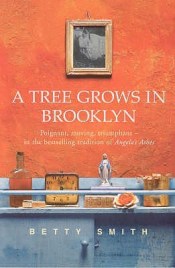
 About the Book
The Nolan family are first-generation immigrants to the United States. Originating in Ireland and Austria, their life in the Williamsburg slums of Brooklyn is poor and deprived, but their sacrifices make it possible for their children to grow up in a land of boundless opportunity.
Francie Nolan is the eldest daughter of the family. Alert, imaginative and resourceful, her journey through the first years of a century of profound change is difficult – and transformative. But amid the poverty and suffering among the poor of Brooklyn, there is hope, and the prospect of a brighter future.
Format: Paperback (496 pages) Publisher: Cornerstone
Publication date: 17th September 1992 [1943] Genre: Literary Fiction, Modern Classics
Find A Tree Grows in Brooklyn on Goodreads
Purchase links
Bookshop.org
Disclosure: If you buy a book via the above link, I may earn a commission from Bookshop.org, whose fees support independent bookshops
Hive | Amazon UK
Links provided for convenience only, not as part of an affiliate programme
My Review
It’s always tricky to write a review of a book that so many people love and that is regarded as a modern classic. Having now joined the ranks of admirers of the book, I thought I’d share just a few of the things I especially loved about the book.
- Completely identifying with young Francie’s love of reading: “She read everything she could find: trash, classics, timetables and the grocer’s price list.”
- How the neighbourhood is brought to life: Francie’s and her brother Neeley’s Saturday morning trips to the ‘junkie’ to sell rubbish they’ve collected during the week followed by a visit to Cheap Charlie’s penny candy store; the musicians, pretzel seller and organ grinder who visit their street from time to time.
- Learning of occupations you didn’t know existed, such as singing waiters.
- The multicultural nature of early 20th century New York with Jewish, Irish and other nationalities living side by side.
- The strong female characters. “Those were the Rommely women: Mary, the mother, Evy, Sissy, and Katie, her daughters, and Francie, who would grow up to be a Rommely woman even though her name was Nolan. They were all slender, frail creatures with wondering eyes and soft fluttery voices. But they were made out of thin invisible steel.”
- The way the book is a love letter to Brooklyn: ‘She looked out over Brooklyn. The starlight half revealed, half concealed. She looked out over the flat roofs, uneven in height, broken once in a while by a slanting roof from a house left over from older times. The chimney pots on the roofs…and on some, the shadows looking of pigeon cotes… sometimes, faintly heard, the sleepy cooing of pigeons… the twin spires of the Church, remotely brooding over the dark tenements.. And at the end of their street, the great Bridge that threw itself like a sigh across the East River.’
- The theme of resilience and overcoming adversity, epitomized by the tree of the book’s title. Katie: “Look at that tree growing there out of that grating. It gets no sun, and water only when it rains. It’s growing out of sour earth. And it’s strong because its hard struggle to live is making it strong. My children will be strong that way.”
- The power of a book to take Francie, as so many other readers, to other worlds. ‘Books became her friends and there was one for every mood. There was poetry for quiet companionship. There was adventure when she was tired of quiet hours. There would be love stories when she came to adolescence and, when she wanted to feel a closeness to someone, she could read a biography,’
- Imagining the mischievous smile on Betty Smith’s face as writes the following section in which her teacher responds to Francie’s choice of subject matter for a composition competition. “But poverty, starvation and drunkenness are ugly subjects to choose. We all admit these things exist. But one doesn’t write about them.”
- The echoes of Hitchcock’s film Rear Window in the view Francie has into neighbouring apartments on a Saturday night. ‘Through the leaves, she looked into the open uncurtained windows and saw growlers being rushed out and returned overflowing with cook foaming beer. Kids ran in and out, going to and returning from the butcher’s, the grocer’s and the baker’s. Women came in with bulky hock-shop bundles. The man’s Sunday suit was home again. On Monday, it would go back to the pawnbroker’s for another week… Francie saw young girls making preparations to go out with their fellers. Since none of the flats had bathrooms, the girls stood before their kitchen sinks in their camisoles and petticoats, and the line the arm made, curved over the head while they washed under the arm, was very beautiful.’
As you may have gathered, I loved my time spent with the Nolan family. A Tree Grows in Brooklyn is a book from my Classics Club list. In fact, I’ll confess it’s a book I was supposed to read for a Classics Club spin – and not even the last one, but the one before that. Worth the wait.
In three words: Absorbing, emotional, inspiring
Try something similar: O Pioneers! by Willa Cather
Follow this blog via Bloglovin
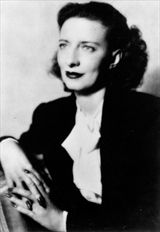 About the Author
Betty Smith was born Elisabeth Wehner on December 15, 1896, the same date as – but five years earlier than – her fictional heroine Francie Nolan. The daughter of German immigrants, she grew up poor in the Williamsburg section of Brooklyn, the very world she recreates with such meticulous detail in A Tree Grows in Brooklyn. Smith also wrote other novels and had a long career as a dramatist, writing one-act and full-length plays for which she received both the Rockefeller Fellowship and the Dramatists Guild Fellowship. She died in 1972. (Photo credit: Publisher author profile)


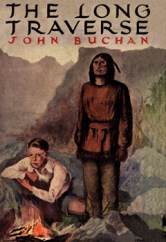 About the Book
 The first story, ‘The Long Traverse’, introduces the reader to Donald, a young Canadian boy whose interests lie more in Hollywood movies and outdoor pursuits than in the study of Latin, Mathematics or History – as his recent school report shows! The reader also meets Negog, a Cree Indian whose people originated from the southwest corner of Hudson Bay but moved eastward towards Labrador. Negog reveals the concept of ‘the long traverse’, a journey into the past that can be viewed in the ‘Lake of Gold’ when conditions are right and by use of traditional magic.
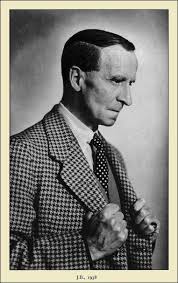 About the Author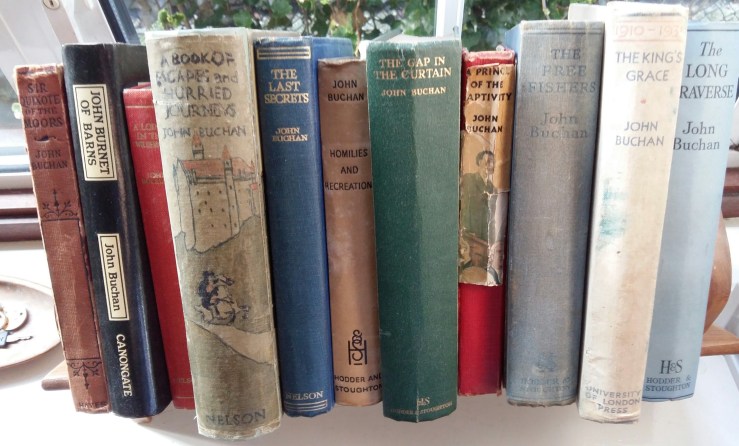

 What Cathy Read Next...