The Time Machine by H.G. Wells #BookReview #classics #sciencefiction

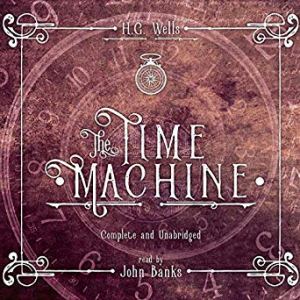
61fg+BR7jTL._SX342_About the Book

When a Victorian scientist propels himself into the year 802,701 AD, he is initially delighted to find that suffering has been replaced by beauty, contentment and peace.

Entranced at first by the Eloi, an elfin species descended from man, he soon realises that this beautiful people are simply remnants of a once-great culture – now weak and childishly afraid of the dark. But they have every reason to be afraid: in deep tunnels beneath their paradise lurks another race descended from humanity – the sinister Morlocks.

And when the scientist’s time machine vanishes, it becomes clear he must search these tunnels, if he is ever to return to his own era.

Format: Audiobook (3h 22m)                            Publisher: Ladbroke Audio
Publication date: 6th February 2017 [1895] Genre: Classics, Science Fiction

Purchase links*
Audible UK| Hive
*links provided for convenience not as part of an affiliate programme


My Review

The Time Machine
The Time Machine (1960)

The Time Machine is a story I realised I knew mainly from the 1960 film version starring Rod Taylor. I was interested, therefore, to see how much of the original book made it through the adaptation process. The answer is a surprising amount.

Although in the book the lead character is never named but instead referred to throughout as ‘the Time Traveller’, in both versions he gives an account of his experiences to a group of (mostly disbelieving) friends gathered for a weekly dinner. He describes how, far from the utopia hoped for, in the time period to which he travelled humankind has evolved into two distinct races: the degenerate, underground-dwelling Morlocks; and the indolent, rather childlike, surface-dwelling Eloi.

In the film there is no discussion about how the change in society might have come about but in the book the Time Traveller gives a lot of thought to the cause of such a marked stratification of society. His initial theory positions the Eloi as the superior, aristocratic race given they live a life of leisure, engaging in no work to feed or clothe themselves. The Morlocks on the other hand are the workers toiling beneath the surface. This probably reflects Wells’s own socialist views and life experiences.  It was common at the end of the 19th century for workers to live ‘below stairs’ or work in basements and the idea of the ‘haves’ exploiting the ‘have nots’ easily transfer to the book.

However, the Time Traveller becomes perplexed and a little frustrated by the passivity and lack of curiosity of the Eloi. In his view, humanity cannot make progress or innovate without struggle. In addition, the Eloi seem to have little care for one another or any fear of danger – until nightfall, that is. The reason for the latter gradually becomes apparent and eventually the awful truth of the relationship between the two races is revealed.

In the book, the Eloi are described as short, pale, and elfin-like whereas in the film they are blonde and beautiful. The Weena of the book, the only member of the Eloi who engages with the Time Traveller, is definitely not the glamorous character played by Yvette Mimieux in the film. In fact, the Time Traveller’s relationship with the childlike Weena in the book felt a little uncomfortable. The Morlocks in the book are albino and spider-like and I found the scenes in which they appear much scarier than I remember from watching the film.

Events towards the end of The Time Machine mean it is left to the reader to imagine what direction – past or future – the Time Traveller’s adventures will take him and when, or if, he might return to his own time. In the film, it seems fairly obvious.

There are aspects of The Time Machine that now seem distinctly prophetic. For example, the Time Traveller notes the temperature in the future is much higher than in his own century. When he ventures even further ahead in time, what he sees is a vision of a dying Sun and apocalyptic climate change. (The film version sees the Time Traveller witnessing events in the much more immediate future.)

It’s amazing to think how many of the concepts associated with time travel in modern fiction and film are owed to The Time Machine, a book written in 1895.  It’s a testament to the fertile imagination of H.G. Wells.

The audiobook version I listened to was narrated by John Banks who did a good job throughout but especially in communicating the Time Traveller’s sense of fear in some of the more dramatic scenes. 

In three words: Inventive, thought-provoking, chilling

Try something similar: The War of the Worlds by H. G. Wells

Follow this blog via Bloglovin


About the Author

Herbert George Wells was a novelist, teacher, historian and journalist, who has become known as the “father of science fiction.” His works have been adapted countless times, and provided the basis for many literary and theatrical productions.

About the Narrator

John Banks is one of the UK’s most prolific audiobook narrators, working for the likes of Big Finish, Audible, Random House and Games Workshop. He is a true multi-voice, creating everything from monsters to marauding aliens. He is also an accomplished stage and TV actor.

#BookReview Homilies and Recreations by John Buchan #ReadJB2020

20200620_095517-1About the Book

A collection of essays on literary, political and historical matters.

Format: Hardcover (316 pages)            Publisher: Hodder & Stoughton         Publication date: 1939 [1926]                     Genre: NonFiction


My Review

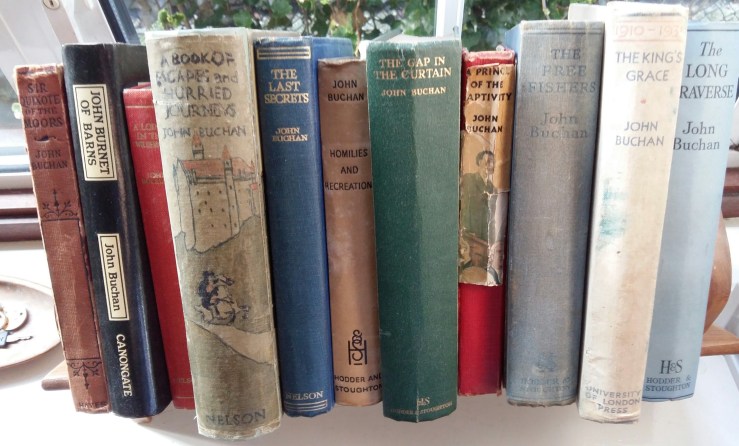
My Buchan of the Month for June is Homilies and Recreations which was published in September 1926 by Thomas Nelson & Sons.  My copy (pictured) is a later revised edition published by Hodder & Stoughton in 1939. You can read my earlier blog post introducing the book here.

I will admit to approaching the book with a degree of trepidation as the inclusion of the word ‘Homilies’ in the title suggested the prospect of a rather moralistic tone. In fact, I was pleasantly surprised by how interesting many of the essays were, especially those originally delivered as lectures or speeches. There were even one or two moments of humour.

John Buchan’s personal interests come through clearly in both the choice and content of the pieces. For example, his passion for the novels of Sir Walter Scott, his interest in history and education, his regard for the United States and his fondness for the countryside around Oxford.

In ‘Some Notes on Sir Walter Scott’, Buchan reveals himself as an amazingly prolific reader. Whilst convalescing in the spring of 1917, he reports he read (or reread) eight of Scott’s novels, several novels by Alexandre Dumas and Victor Hugo plus half a dozen by Balzac. Buchan rates Sir Walter Scott as the greatest of these novelists for his ability to see things on a grander scale, to clarify life and observe “justly and nobly”. Using examples from some of the author’s novels, he defends criticism of Scott’s verbal style, his construction of plots and lack of psychological depth in his characters. Admitting that at times Scott could write “abominably”, Buchan asks whether there is any great writer who does not sometimes, in his phrase, “nod”.

Staying with the literary theme, in ‘The Old and the New in Literature’, Buchan addresses the long-standing debate about the relative merits of classic and modern literature. As he says, “The strife of old and new, classic and modern, has been going on merrily since the caveman discovered a new way of making pictures on bone, and was snubbed by the elders of his tribe, who pointed to certain ancient daubs on the cave wall as the last word in art.” In defence of the modern novel, he praises the instinct of writers to try something different whilst stressing the need for the “shape and purpose” that he sees as a feature of classic works.

John Buchan was a long time student of American history, and had a particular regard for the political, military and strategic skills of Abraham Lincoln. (Lincoln has a starring role in the final story in The Path of the King, published in 1921.) In ‘Two Ordeals of Democracy’, Buchan observes, “Democracy as a form of government is subject to perpetual challenge, not from foreign enemies alone, but from foes in its own household. Liberty demands a close and unremitting guardianship.” Wise words that could equally apply to today’s world.

‘Literature and Topography’ brings together two of Buchan’s interests – history and the natural world. He argues that for a fictional place to seem real it is necessary for the author to create “a particularized landscape” which the reader can fix in their memory in order to follow the story. No surprise that he includes Sir Walter Scott in his list of writers who were masters of creating fictional landscapes, alongside Charles Dickens, Anthony Trollope and Thomas Hardy. For Buchan, an essential element of a “particularized landscape” are place-names, which he describes as “splendid things”. He writes, “They may have the flavour of ancient stateliness, or they may be harsh mementos of old passions or gnarled remnants of a forgotten humour, or they may reflect the poetry in the people’s heart and sing themselves to music”.

It has to be said that, despite the eloquence of Buchan’s prose, some of the subject matter has dated and is unlikely to be of interest to the general reader. I would include in that category ‘The Victorian Chancellors’, a series of pen portraits of (largely forgottable) men who held the office of Lord Chancellor, and ‘Lord Balfour and English Thought’.

One of my favourite essays was ‘Style and Journalism’ in which Buchan pulls no punches, describing much of modern writing as “careless, fantastic, shapeless and, to my conservative mind, undeniably bad“. English journalism, however, he believes has reached the highest level of competence. Nevertheless, he lists what he sees as common “pitfalls” in journalistic style, some of which may have you casting a nervous eye over your own output. His list includes mixed metaphors, split infinitives and misuse of adverbs such as ‘singularly’ or ‘literally’. He shows particular disdain for abstraction: “Unless your object is to avoid the law of libel do not say that a man has a ‘complex of misappropriation’ but that he is a thief.

elsfield-manor
Elsfield Manor, Oxfordshire

In ‘Thoughts on a Prospect of Oxford’, Buchan transports the reader to a ridge overlooking Oxford and describes how the view of the city would have changed over the centuries from the 4th century to the present day. In its role call of travellers on the road to Oxford, it recalls the opening chapter of his 1931 novel, The Blanket of the Dark. There’s even a reference to Elsfield, the manor house in Oxfordshire Buchan purchased as the family home in 1919.

In the final essay, ‘The Interpreter’s House’ (a reference to John Bunyan’s The Pilgrim’s Progress, an influential text for Buchan) he describes a university as not only “a seminary for the training of youth but a museum for record, a laboratory for discovery, a power-house for inspiration”. We’ll have to forgive his assumption that all the students will be male and his rather rosy view of the egalitarianism of Oxford colleges.

Next month’s Buchan of the Month is The Gap in the Curtain. Look out for my introduction to the book and my review.

Follow my blog via Bloglovin


John BuchanAbout the Author

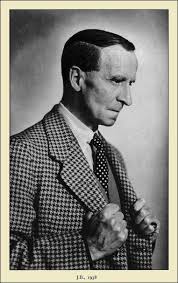
John Buchan (1875 – 1940) was an author, poet, lawyer, publisher, journalist, war correspondent, Member of Parliament, University Chancellor, keen angler and family man.  He was ennobled and, as Lord Tweedsmuir, became Governor-General of Canada.  In this role, he signed Canada’s entry into the Second World War.   Nowadays he is probably best known – maybe only known – as the author of The Thirty-Nine Steps.  However, in his lifetime he published over 100 books: fiction, poetry, short stories, biographies, memoirs and history.

You can find out more about John Buchan, his life and literary output by visiting The John Buchan Society website.

20200205_130743-1