Buchan of the Month: Mr. Standfast by John Buchan

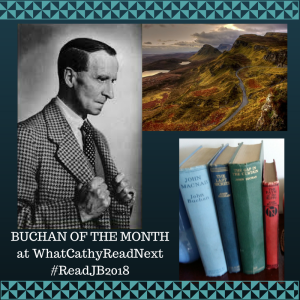
Buchan of the Month

JohnBuchanThrillersAbout the Book

“First we must go through the Valley of the Shadow…And there is the sacrifice to be made…the best of us.”

It is 1917 and Richard Hannay is brought out of the battlefield to perform the desperate task of tracking down and destroying a network of German spies.  Hannay’s opponent is Moxon Ivery, the bland master of disguise, who seeks to outwit Hannay and he and his agents are pursued through England, Scotland, France and Switzerland.

For its pace and suspense, its changes of scene, and thrilling descriptions of the last great battles against the Germans, Mr Standfast offers everything that has made its author so enduringly popular.

Format: Paperback (354 pp.)        Publisher: Oxford University Press
Published: 1993 [1919]                  Genre: Thriller, Adventure

Purchase Links*
Amazon.co.uk  ǀ  Amazon.com  ǀ Hive.co.uk (supporting UK bookshops)
*links provided for convenience, not as part of any affiliate programme

 Find Mr. Standfast on Goodreads


My Review

Mr. Standfast is the third book in my Buchan of the Month reading project.  For a spoiler-free introduction to Mr. Standfast, including details of its first publication and context, click here.  To find out more about the project and my reading list for 2018, click here.

Before I say any more, I’ll confess that Mr. Standfast is a book I’ve read many times before and it happens to be one of my favorite Buchan books (alongside Sick Heart River, which I shall be reading later this year).  For me, it has everything: a mystery, some thrilling set pieces, great characters, numerous locations, a touch of romance and some chilling scenes on the battlefields of World War One France.  I always get a bit tearful at the end.  As well as being a very entertaining book, Mr. Standfast explores some serious themes – courage, fortitude, sacrifice.

Since the title refers to one of the characters in John Bunyan’s The Pilgrim’s Progress, it’s probably no surprise that Mr. Standfast has a number of allusions and references to Bunyan’s work.  The Pilgrim’s Progress was an important text for Buchan and it informs many of the themes in Mr. Standfast mentioned above.  Full disclosure: my dissertation for my MA in English from The Open University was on the subject of the influence of The Pilgrim’s Progress on John Buchan’s books.  Don’t worry, I’m not going to test your patience by quoting from it extensively.  However, just a few thoughts on the connections between the two texts…

In his autobiography Memory-Hold-The-Door, Buchan attributes his regard for The Pilgrim’s Progress to ‘its picture of life as a pilgrimage over hill and dale, where surprising adventures lurked by the wayside, a hard road with now and then long views to cheer the traveller and a great brightness at the end of it’.   The reference to the journey being ‘over hills and dales’ acknowledges that life brings moments of difficulty and challenge as well as ease, involving either physical or mental effort. The  journey features ‘surprising adventures’ – the use of the word ‘adventures’ rather than ‘experiences’ suggesting that these will be exciting episodes – but these ‘lurk’ by the wayside.  There is a sense of the unexpected, of danger in the choice of the word ‘lurk’.  All of these elements I feel are apparent in Mr. Standfast.

As well as having thematic influences, The Pilgrim’s Progress, as a physical object, plays a role in Mr. Standfast.  It acts variously as a prize, a code-book and a source of moral comfort.

For example, The Pilgrim’s Progress is one of Peter Pienaar’s few cherished possessions; with the Bible, it acts as a source of comfort during his captivity in a German prisoner-of-war camp.  Pienaar, one of the most endearing characters in Mr. Standfast, is described as ‘puzzling over it’, using it as one of his ‘chief aids in reflection’ and for ‘self-examination’.  Peter searches The Pilgrim’s Progress for examples that he can apply to his own predicament.  Charmingly, Peter takes everything in The Pilgrim’s Progress literally and talks about the character Mr. Standfast ‘as if he were a friend’.  Arguably, Peter’s identification with the characters in The Pilgrim’s Progress in part inspires his actions at the end of the book.

For Richard Hannay, The Pilgrim’s Progress has a more practical and utilitarian function; he describes it as one of his ‘working tools’.  For example, it alerts Hannay to the fact that someone has searched his belongings as he observes ‘a receipted bill which I had stuck in The Pilgrim’s Progress to mark my place had been moved’.  Later, it provides a method of authenticating the character Hannay has adopted (he likes his disguises!).  Producing his copy of The Pilgrim’s Progress to the old postmistress of a Highland village, it creates a shared cultural connection between them as she comments, ‘I got it for a prize in the Sabbath School when I was a lassie’.

One of the most notable roles for The Pilgrim’s Progress in Mr. Standfast is as a means of communication between Hannay and his comrades.  This discourse operates at two levels: as a common language to express feelings, anxieties and hopes and, at a practical level, as a code for secret communications between the characters.  In particular, The Pilgrim’s Progress becomes a key part of the burgeoning relationship between Mary Lamington and Hannay.   At one point, Hannay sends a message of reassurance for Mary: ‘If you see Miss Lamington you can tell her I’m past the Hill Difficulty.  I’m coming back as soon as God will let me’.

There is a lot more I could say on the links between the two texts but I’ll just close by saying that Mr. Standfast is a great story even if you have no knowledge of The Pilgrim’s Porogress.  If, however, you are familiar with Bunyan’s work, you’ll have fun spotting other references and allusions.  I think Mr. Standfast is the best of Buchan’s Richard Hannay adventures and one of the finest books he wrote.

Follow my blog with Bloglovin

In three words: Thrilling, action-packed, moving


John BuchanAbout the Author

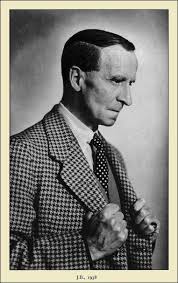
John Buchan (1875 – 1940) was an author, poet, lawyer, publisher, journalist, war correspondent, Member of Parliament, University Chancellor, keen angler and family man.  He was ennobled and, as Lord Tweedsmuir, became Governor-General of Canada.  In this role, he signed Canada’s entry into the Second World War.   Nowadays he is probably best known – maybe only known – as the author of The Thirty-Nine Steps.  However, in his lifetime he published over 100 books: fiction, poetry, short stories, biographies, memoirs and history.

You can find out more about John Buchan, his life and literary output by visiting The John Buchan Society website.

Book Review: The House of Mirth by Edith Wharton

The House of Mirth2About the Book

Lily Bart, beautiful, witty and sophisticated, is accepted by ‘old money’ and courted by the growing tribe of nouveaux riches. But as she nears thirty, her foothold becomes precarious; a poor girl with expensive tastes, she needs a husband to preserve her social standing and to maintain her in the luxury she has come to expect.

Whilst many have sought her, something – fastidiousness or integrity- prevents her from making a ‘suitable’ match.

Format: ebook (268 pp.)                            Publisher:
Published: 16th May 2012 [1905]             Genre: Literary Fiction, Modern Classics

Purchase Links*
Amazon.co.uk ǀ  Amazon.com  ǀ Hive.co.uk (supporting UK bookshops)
*links provided for convenience, not as part of any affiliate programme

Find The House of Mirth on Goodreads


My Review

Knowing Edith Wharton’s reputation as a writer but not having read any of her books, I was anticipating wit and dry humour.  What I wasn’t quite expecting was the deft way in which the author wields the literary equivalent of a scalpel to dissect the snobbery, hypocrisy and downright cruelty of the New York social scene. I mentioned the mocking humour and here are a few of my favourite examples:

On the eligible but tedious bachelor, Percy Gryce: ‘Mr. Gryce was like a merchant whose warehouses are crammed with an unmarketable commodity.’

On Lily’s aunt, Mrs Peniston: ‘To attempt to bring her into active relation with life was like tugging at a piece of furniture which has been screwed to the floor.’

‘It was the “simple country wedding” to which guests are conveyed in special trains, and from which the hordes of the uninvited have to be fended off by the intervention of the police.’

‘Lily presently saw Mrs. Bry cleaving her determined way through the doors, and, in the broad wake she left, the light figure of Mrs. Fisher bobbing after her like a row-boat at the stern of a tug.’

And I have to mention the elegance of the writing that can convey so much in just a few sentences. For example, as Lily observes those she has regarded as friends: ‘That very afternoon they had seemed full of brilliant qualities; now she saw that they were merely dull in a loud way.  Under the glitter of their opportunities she saw the poverty of their achievement.’

Throughout the book, my sympathy was always with Lily and the situation she finds herself in.  Yes, she has a role which is largely confined to being an ‘adornment’ to the social scene.  However, I admired her determination to use the gifts she has been given, even if that does involve a degree of manipulation.  Unfortunately, an entirely innocent action and a chance meeting set in motion a chain of events that put Lily in the power of others, risking her future happiness.  Lily believes her beauty allows her to manipulate men but, sadly, she finds it is she who is being manipulated because of a mistake and the need to maintain her social status because of her (relative) poverty.

It transpires that navigating the social scene is akin to a game of snakes and ladders. Working your way up takes time, requires skill in order to cultivate contacts and involves being seen in the right places with the right people.  ‘She had been fashioned to adorn and delight; to what other end does nature round the rose-leaf and paint the humming-bird’s breast?  And was it her fault that the purely decorative mission is less easily and harmoniously fulfilled among social beings than in the world of nature?’  However, one misstep, one troublesome rumour or item of mischievous gossip and you can slide down very quickly.   ‘Lily had the doomed sense of the castaway who has signalled in vain to fleeing sails.’

Very few of the characters in the book come out well.  So-called friends (I’m looking at you, Mrs. Fisher) prove to be anything but in Lily’s hour of need – because they are too timid, too afraid of what others will say or possess ulterior motives.

I’ll confess, I was unprepared for the impact the ending had on me.  Part of me could understand why Lily did what she did and part of me wished she had found the strength to take another course.  The romantic in me wanted another outcome altogether which, I’ll admit, would not have been true to the spirit of what the author was trying to communicate in the book.   Call me an old softy.

This will definitely not be the last book by Edith Wharton I read.  What an amazing author to have discovered; even more amazing when you realise The House of Mirth was Wharton’s first published novel.

The House of Mirth is a book from my Classics Club List and also forms part of my list for the 2018 TBR Pile Challenge hosted by RoofBeamReader.

Follow my blog with Bloglovin

In three words: Tragic, elegant, moving

Try something similar…The Death of the Heart by Elizabeth Bowen


Edith WhartonAbout the Author

Edith Newbold Jones was born into such wealth and privilege that her family inspired the phrase “keeping up with the Joneses.” The youngest of three children, Edith spent her early years touring Europe with her parents and, upon the family’s return to the United States, enjoyed a privileged childhood in New York and Newport, Rhode Island. Edith’s creativity and talent soon became obvious: By the age of eighteen she had written a novella, (as well as witty reviews of it) and published poetry in the Atlantic Monthly.

After a failed engagement, Edith married a wealthy sportsman, Edward Wharton. Despite similar backgrounds and a shared taste for travel, the marriage was not a success. Many of Wharton’s novels chronicle unhappy marriages, in which the demands of love and vocation often conflict with the expectations of society. Wharton’s first major novel, The House of Mirth, published in 1905, enjoyed considerable literary success. Ethan Frome appeared six years later, solidifying Wharton’s reputation as an important novelist. Often in the company of her close friend, Henry James, Wharton mingled with some of the most famous writers and artists of the day, including F. Scott Fitzgerald, André Gide, Sinclair Lewis, Jean Cocteau, and Jack London.

In 1913 Edith divorced Edward. She lived mostly in France for the remainder of her life. When World War I broke out, she organized hostels for refugees, worked as a fund-raiser, and wrote for American publications from battlefield frontlines. She was awarded the French Legion of Honor for her courage and distinguished work.

The Age of Innocence, a novel about New York in the 1870s, earned Wharton the Pulitzer Prize for fiction in 1921 – the first time the award had been bestowed upon a woman. Wharton travelled throughout Europe to encourage young authors. She also continued to write, lying in her bed every morning, as she had always done, dropping each newly penned page on the floor to be collected and arranged when she was finished. Wharton suffered a stroke and died on August 11, 1937. She is buried in the American Cemetery in Versailles, France.