
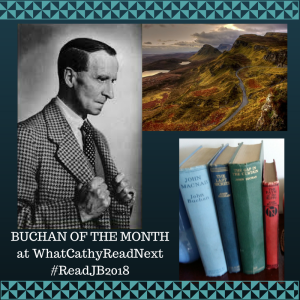
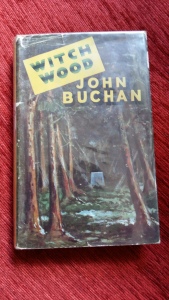
 About the Book
Set against the religious struggles and civil wars of seventeenth century Scotland, John Buchan’s Witch Wood is a gripping atmospheric tale in the spirit of Robert Louis Stevenson. As a moderate Presbyterian minister, young David Sempill disputes with the extremists of his faith, as all around, the defeated remnants of Montrose’s men are being harried and slaughtered.
There are still older conflicts to be faced however, symbolised by the presence of the Melanudrigall Wood, a last remnant of the ancient Caledonian forest. Here there is black magic to be uncovered, but also the more positive pre-Christian intimations of nature worship. In such setting, and faced with the onset of the plague, David Sempill’s struggle and eventual disappearance take on a strange and timeless aspect.
Format: Hardcover Publisher: Hodder & Stoughton
Published: July 1941 [1927] Genre: Historical Fiction
Purchase Links*
Amazon.co.uk ǀ Amazon.com ǀ Hive.co.uk (supporting UK bookshops)
*links provided for convenience, not as part of any affiliate programme
Find Witch Wood on Goodreads
My Review
Witch Wood is the tenth book in my Buchan of the Month reading project. (I did read it in October – honestly! – but have only now got round to writing my review.) You can find out more about the project plus my reading list for 2018 here. You can also read a spoiler-free introduction to the book here. Witch Wood is also one of the books on my Classics Club list.
Witch Wood was reputedly John Buchan‘s own favourite of his many novels and is dedicated to his brother, Walter Buchan. Shortly before writing the novel, Buchan had been carrying out research for his biography of Montrose, who does make a brief appearance in Witch Wood. The backdrop to the events in the book is the religious and civil strife in Scotland between 1644 and 1646 when Scottish Royalists under Montrose fought the Covenanters who were allied with the English Parliament.
The central story of David Sempill and his fight against the superstitious practices that he finds still hold sway among some of the inhabitants of Woodilee is the most engaging and accessible element of the book. In his honest attempts to root out evil and save the souls of his parishioners, David encounters opposition from religious extremists who seem to set more store by the Old Testament than the teachings of the New Testament. Their response is to search out evidence of witchcraft and demonic possession, showing no mercy. David’s calling is of a different nature: ‘The work for which he longed was to save and comfort human souls.’
I’ll admit to getting a little bogged down in the debates about religious doctrine and the role of Church and State in Scotland in this period of history. Despite reading the relevant sections from Buchan’s scholarly The Kirk in Scotland, I’m still not sure I really understand the distinction between episcopacy and prelacy (if indeed there is one). Another factor which may prove problematic for some readers is that Buchan presents much of the dialogue, especially of characters like David’s housekeeper, Isobel Veitch, in broad Scots, rendering it rather impenetrable at times.
Throughout the novel there is a great sense of the brooding presence of the ancient forest which abuts Woodilee. Even David is not immune to it. ‘It must be an eerie life under the shadow of that ancient formless thing.’ An ideal spot for devilish practices, as it turns out. ‘The Black Wood could tell some tales if the trees could talk.’ Conversely, the forest becomes the scene of a much more life-changing and life-affirming encounter for David.
Witch Wood combines history and romance in the manner of Robert Louis Stevenson’s Catriona or Sir Walter Scott’s Ivanhoe, with plenty of references to actual events and figures of the time as well as a touching and engaging love story. And it wouldn’t be a Buchan novel if it didn’t feature the themes of courage and self-sacrifice.
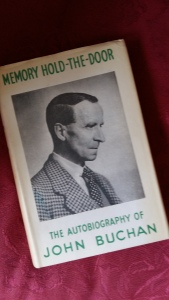 Next month’s Buchan of the Month is Memory-Hold-the-Door, Buchan’s autobiography.
Look out for my introduction to the book in the next few days and my review towards the end of the month.
In three words: Adventure, romance, superstition
Try something similar…The Magick of Master Lilly by Tobsha Learner (read my review here)
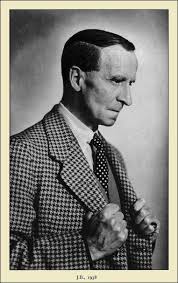 About the Author
John Buchan (1875 – 1940) was an author, poet, lawyer, publisher, journalist, war correspondent, Member of Parliament, University Chancellor, keen angler and family man. He was ennobled and, as Lord Tweedsmuir, became Governor-General of Canada. In this role, he signed Canada’s entry into the Second World War. Nowadays he is probably best known – maybe only known – as the author of The Thirty-Nine Steps. However, in his lifetime he published over 100 books: fiction, poetry, short stories, biographies, memoirs and history.
You can find out more about John Buchan, his life and literary output by visiting The John Buchan Society website.

 About the Book
 About the Author
 What Cathy Read Next...