
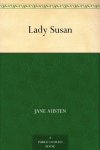

About the Book – Lady Susan by Jane Austen
Lady Susan is a short epistolary novel thought to have been written in 1794 (when she would have been 19) but never submitted for publication by the author and only published in 1871, years after her death. It takes the form of letters between Lady Susan and her friend Mrs Johnson, between Lady Susan’s sister-law, Mrs Vernon, and her mother Lady de Courcy and Mrs Vernon’s brother, Reginald.
Read my review of the book here.
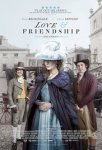
About the Film – Love and Friendship (2016)
Love and Friendship was written and directed by Whit Stillman and stars Kate Beckinsale as Lady Susan. Despite being an adaptation of Jane Austen’s novel Lady Susan it borrows its title from another juvenile work of Austen’s which, although epistolary in form, has completely different stories. More information about the film, Love and Friendship can be found here.
Book vs. Film
The film relies on the book for a great deal of its dialogue with written exchanges in letters being transformed in the film into conversations between characters, voiceovers by Lady Susan or dialogue delivered straight to camera. Any additional dialogue expands on characterisation from the novel – for instance, some very amusing examples of the stupidity of Sir James Martin – successfully imitating the tone of the novel. Kate Beckinsale delivers Lady Susan’s words with verve and wit, bringing to life her scheming, manipulative nature and astonishing chutzpah.
The characterisation is very true to the novel, bringing Austen’s creations faithfully to life on the screen. The film allows the writer/director to depict some of the minor characters who receive only passing mention in the book, such as the husband of Lady Susan’s friend, Mrs Johnson. The period atmosphere is also effectively conveyed through the costumes (gorgeous) and locations.
The film follows the story of the novel closely but of course has the benefit of being able to dramatize the exchanges between characters rather than recount them retrospectively as in the novel. It navigates the rather abrupt ending of the novel well, giving a mischievous hint of an additional angle to the relationship between Lady Susan, Sir James Martin and Mainwaring.
My Verdict
The film would be nothing without Jane Austen’s wonderful writing. However, the nature of an epistolary novel is that there is very little description of characters, locations, etc. Therefore, the film wins for me because it can do what the novel is unable to do: visually represent the characters – their appearance, mannerisms, etc. – and the period through costume and location.
What do you think? Have you seen the film or read the book? Which did you prefer?

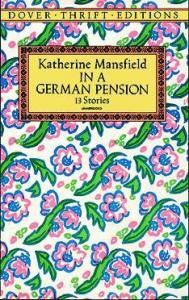
 Katherine Mansfield was born in New Zealand in 1888 and is widely considered the best short story writer of the modernist period. She left New Zealand for the UK when she was 19 and then travelled for a time in Europe. She was associated with a “new dawn” in English literature and together with T.S. Eliot, James Joyce and Virginia Woolf made the London of the period the centre of the literary world. Mansfield’s stories were written without a conventional plot but concentrated on one moment, a crisis or turning point rather than a sequence of events. Often very dark, common themes of her stories include human isolation, the conflict between love and disillusionment, idealism and reality. Katherine Mansfield died in 1923 at the age of only 34.
 What Cathy Read Next...