
Buchan of the Month: Greenmantle by John Buchan

Buchan of the Month

GreenmantleAbout the Book

In Greenmantle (1916) Richard Hannay, hero of The Thirty-Nine Steps, travels across war-torn Europe in search of a German plot and an Islamic Messiah. He is joined by three more of Buchan’s heroes: Peter Pienaar, the old Boer Scout; John S. Blenkiron, the American determined to fight the Kaiser; and Sandy Arbuthnot, Greenmantle himself.

The intrepid four move in disguise through Germany to Constantinople and the Russian border to face their enemies: the grotesque Stumm and the evil beauty of Hilda von Einem.

Note: I read my personal copy of Greenmantle published by Hodder & Stoughton in 1950 but the details and links below are for an ebook  public domain edition available free on Amazon.  Other paperback editions are widely available.

Format: ebook (178 pp.)    Publisher:
Published: [1916]               Genre: Adventure, Thriller

Purchase Links*
Amazon.co.uk  ǀ  Amazon.com
*links provided for convenience, not as part of any affiliate programme

Find Greenmantle on Goodreads


 My Review

Greenmantle is the fourth book in my Buchan of the Month reading project.  For a spoiler-free introduction to Greenmantle, including details of its first publication and context, click here.  To find out more about the project and my reading list for 2018, click here.

Recovering from injuries sustained at the Battle of Loos, Richard Hannay is charged by Sir Walter Bullivant with investigating rumours of an uprising in the Muslim world.  It seems the Germans plan to use religion to help them win the war by causing Britain and its allies to divert troops from the Western Front. Hannay reluctantly accepts the case seeing it as a diversion from his true role leading his troops on the front line.

The action of the book moves from wartime Germany to Asia Minor as Hannay and his comrades seek to disrupt the plot.  This involves a perilous journey through enemy territory to meet up with his friend, Sandy Arbuthnot, in Constantinople.  Hannay and his other companions Peter Pienaar and John S. Blenkiron, have to outwit some formidable foes, including the thuggish Ulric von Stumm, Turkish army officer Rasta Bey and the charismatic but malevolent, Hilda von Einem.

It’s all terrific fun involving coded messages, a dying prophet, disguises and a secret band known as The Companions of the Rosy Hours as Hannay seeks to foil the dastardly plot.  However, there are also elements of real life events.  For example, the character of Sandy Arbuthnot is based on Buchan’s friend Aubrey Herbert – with a touch of Lawrence of Arabia thrown in.  It all comes to a climax in a vividly described battle scene, again inspired by actual events in the First World War.

Next month’s Buchan of the Month is A Lost Lady of Old Years, first published in 1899.

Follow my blog with Bloglovin

In three words: Action-packed, thrilling, adventure

Try something similar…The Three Hostages by John Buchan

John BuchanAbout the Author

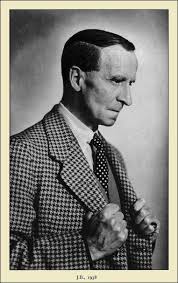
John Buchan (1875 – 1940) was an author, poet, lawyer, publisher, journalist, war correspondent, Member of Parliament, University Chancellor, keen angler and family man.  He was ennobled and, as Lord Tweedsmuir, became Governor-General of Canada.  In this role, he signed Canada’s entry into the Second World War.   Nowadays he is probably best known – maybe only known – as the author of The Thirty-Nine Steps.  However, in his lifetime he published over 100 books: fiction, poetry, short stories, biographies, memoirs and history.

You can find out more about John Buchan, his life and vast literary output by visiting The John Buchan Society website.

Buchan of the Month: Introducing…Greenmantle

Buchan of the Month

Greenmantle is the fourth book in my John Buchan reading project, Buchan of the Month. To find out more about the project and my reading list for 2018, click here.  If you would like to read along with me you will be very welcome – leave a comment on this post or on my original challenge post.

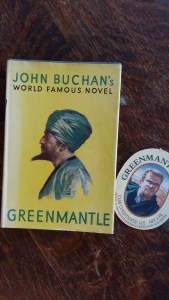
GreenmantleWhat follows is an introduction to the book (no spoilers!).  It is also an excuse to show off a picture of my 1950 Hodder & Stoughton edition of Greenmantle complete with dust jacket.  I will be posting my review of the book later in the month.

Although Buchan did not see active military service in World War One, he visited the Western Front on a number of occasions.  In May 1915 he was there as a special correspondent for The Times and in October the same year, this time in uniform, as a Lieutenant in the Intelligence Corps.  In June 1916 he was appointed Director of the Department of Information.   In between, during the first half of 1916, he worked on Greenmantle, his second novel featuring the character Richard Hannay.

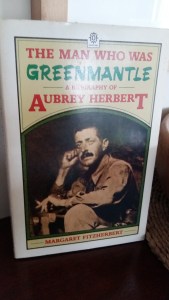
The Man Who Was GreenmantleCharacters and events in Greenmantle draw strongly on real life events.  For example, the character of Sandy Arbuthnot was inspired by Aubrey Herbert.  In her book The Man Who Was Greenmantle, Margaret FitzHerbert reports that, on learning of Herbert’s death in 1923, Buchan wrote to a friend “I drew Sandy in Greenmantle from him”.  Aubrey Herbert’s wife had recognised the similarity when Greenmantle first appeared in 1916, noting “I must confess I prefer my Aubrey to his Sandy but I daresay it’s like him.”  She sent a copy of Buchan’s book to Herbert, who was in Salonika at the time.  Reportedly his only comment was “He brings in my nerves all right doesn’t he?”

The plot of Greenmantle involves the uncovering of a German plot to incite an Islamic uprising in the Middle East that will cause Britain and its allies to divert troops from the Western Front.  The action moves from wartime Germany, through Europe to Constantinople as Hannay and his comrades seek to disrupt the plot.  The book features a cryptic code, plenty of disguises, narrow escapes, a bit of homoeroticism and a formidable female character.

Like Buchan’s earlier adventure stories, Greenmantle first appeared in instalment form.  It was serialised weekly in Land and Water magazine between 6th July and 9th November 1916.  Originally a magazine about sporting country life, in 1914 Land and Water switched its coverage to World War One under the editorship of Hilaire Belloc.

Greenmantle was published in novel form by Hodder & Stoughton on 26th October 2016.  Priced at six shillings, by the following March it had sold 34,000 copies.  Buchan’s biographer, Janet Adam Smith, reports that by 1960 combined sales of the Nelson and Hodder & Stoughton editions had reached 368,000, meaning that Greenmantle actually outsold its now more famous predecessor, The Thirty-Nine Steps.  Furthermore, the Pan paperback edition of Greenmantle published in 1952 had sold 200,000 copies by 1965.  Buchan’s advance for Greenmantle was £200 so, even taking into account royalties, Buchan’s publishers got a good deal.

David Daniell, author of The Interpreter’s House: A Critical Assessment of the Works of John Buchan, puts Greenmantle up alongside Mr Standfast as one of Buchan’s greatest books.  However, Daniell admits that one reviewer called Greenmantle ‘a daft sort of book’ that was ‘about two parts mad, but the third part was uncommonly like inspiration’.  I leave you, dear reader, to decide which of them is right.

Sources:

David Daniell, The Interpreter’s House: A Critical Assessment of the Work of John Buchan (Nelson, 1975)
Kate Macdonald, John Buchan: A Companion to the Mystery Fiction (McFarland, 2009)
Janet Adam Smith, John Buchan: A Biography (OUP, 1985 [1965])
Margaret FitzHerbert, The Man Who Was Greenmantle: A Biography of Aubrey Herbert by (OUP, 1985)