
 About the Book
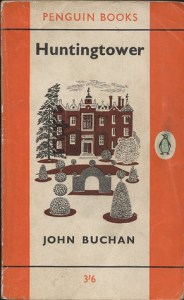
This modern fairy-tale is also the gripping adventure story about Dickson McCunn, a respectable, newly retired grocer who finds himself in the thick of a plot involving the kidnapping of a Russian princess held prisoner in the rambling mansion, Huntingtower. Here, Buchan introduces some of his best-loved characters and paints a remarkable picture of a man rejuvenated by joining much younger comrades in a fight against tyranny and fear.
Format: Paperback, ebook Publisher: Various
Published: Various [1922] Genre: Fiction, Adventure
Purchase Links*
Amazon.co.uk ǀ Amazon.com
*links provided for convenience, not as part of any affiliate programme
Find Huntingtower on Goodreads
My Review
Huntingtower is the eighth book in my Buchan of the Month reading project. You can find out more about the project plus my reading list for 2018 here. You can also read a spoiler-free introduction to the book here. My copy of Huntingtower is an undated (but probably 1920’s) hardcover edition published by Thomas Nelson & Son.
Huntingtower introduces readers to Dickson McCunn, a middle-aged Glasgow grocer newly retired from his successful business. With his wife away at a health spa, he finds himself at somewhat of a loose end following his retirement. ‘It was the end of so old a song, and he knew no other tune to sing. He was comfortably off , healthy, free from any particular cares in life, but free too from any particular duties.’ He decides to take a walking tour of the Highlands. Early in his travels, he reaches a point in the road where two potential routes converge. Uncharacteristically, he rejects his intended route, drawn by some whim instead to take the other direction. The author sagely notes: ‘For he [McCunn] had come, all unwitting, to a turning of the ways, and his choice is the cause of this veracious history.’
Dickson McCunn’s decision results in him becoming involved in an adventure like something out of the romance novels he favours. There’s a damsel in distress (Princess Saskia) imprisoned in, if not quite a castle, a gloomy Scottish manor house, there’s a gang of bad guys some of whom may be foreigners (or even worse, Bolsheviks) and a lovelorn hero (modernist poet, John Heritage). But things turn distinctly hairy when it becomes clear that the bad guys will stop at nothing, are large in number and heavily armed. As Dickson reflects ruefully, ‘Romance, forsooth! This was not the mild goddess he had sought, but the awful harpy who battened on the souls of men.’ However, he faces down his doubts and fears, clinging steadfastly to the belief that there is a solution to most problems if one one applies a business mind to it (such as some sleight of hand involving a left luggage office) – and that there’s life in the old dog yet.
There’s a lot of humour in the book, chiefly contributed by the exploits of the gang of Glasgow street urchins who come to the aid of Dickson and Heritage in their attempts to rescue the Princess. The self-styled ‘Gorbals Die-Hards’ are a bit like the militant wing of Sherlock Holmes’ trusty ‘Baker Street Irregulars’. Their appointed Chieftain is the feisty, courageous and resourceful Dougal.
The book includes two recurring features of Buchan’s adventure stories: a villain who has a great brain but no scruples to go with it; and the idea that only ‘a very thin crust’ separates civilization from anarchy (first explored in Buchan’s early novel, The Power-House). The book also finds a place in the story for Archie Roylance, the character first introduced in the Richard Hannay novel, Mr. Standfast.
I do need to mention some fine descriptions of food in the book, like that of the splendidly generous Scottish tea that follows. Those who are observing a strict diet should probably look away now. ‘There were white scones and barley scones, and oaten farles, and russet pancakes. There were three boiled eggs for each of them; there was a segment of an immense currant cake…; there was skim milk cheese; there were several kinds of jam, and there was a pot of dark-gold heather honey.’
As an adventure story, Huntingtower is great fun, with some exciting action scenes as the good guys go into battle against the bad guys. However, there are one or two elements to set against that. The first is that Buchan has chosen to render a lot of the dialogue in broad Scots, including liberal use of dialect words and phrases, which can at times be difficult to understand and could be off-putting for some readers. For example, ‘But if ye’re my nevoy ye’ll hae to keep up my credit, for we’re a bauld and siccar lot’. No, no idea either. However, I did like the description of one character as ‘as useless as a frostit tattie’.
Also distinctly off-putting to this reader was an ill-judged reference to Jews, the use of the word ‘cripple’ to describe someone with a disability and a general hostile and suspicious attitude to foreigners. However, one must perhaps bear in mind when this book was written (1922) and that language and attitudes we would find offensive today would have been considered less so at the time.
Next month’s Buchan of the Month is Castle Gay, the second novel in the Dickson McCunn trilogy. Look out for my introduction to the book next week and for my review of Castle Gay towards the end of September
In three words: Adventure, humour, romance
Try something similar…The Island of Sheep by John Buchan
 About the Author
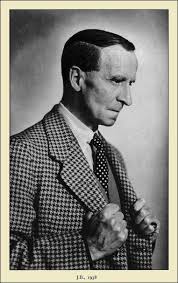
John Buchan (1875 – 1940) was an author, poet, lawyer, publisher, journalist, war correspondent, Member of Parliament, University Chancellor, keen angler and family man. He was ennobled and, as Lord Tweedsmuir, became Governor-General of Canada. In this role, he signed Canada’s entry into the Second World War. Nowadays he is probably best known – maybe only known – as the author of The Thirty-Nine Steps. However, in his lifetime he published over 100 books: fiction, poetry, short stories, biographies, memoirs and history.
You can find out more about John Buchan, his life and literary output by visiting The John Buchan Society website.


 What Cathy Read Next...