
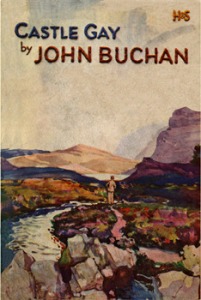
 About the Book
Retired Glasgow provisions merchant and adventurer, Dickson McCunn, first seen in Huntingtower, features for a second time in Castle Gay.
His group of boys known as the ‘Gorbals Die-Hards’ have gone on to Cambridge University. Now Dougal and Jaikie embark on ‘seeing the world’.
Their escapades involve Castle Gay, its occupant Mr Craw, and all manner of interesting characters.
Format: ebook (237 pp.) Publisher:
Published: [1930] Genre: Fiction, Adventure
Purchase Links*
Amazon.co.uk ǀ Amazon.com
*links provided for convenience, not as part of any affiliate programme
Find Castle Gay on Goodreads
My Review
Castle Gay is the ninth book in my Buchan of the Month reading project. You can find out more about the project plus my reading list for 2018 here. You can also read a spoiler-free introduction to the book here. Castle Gay is also one of the books on my Classics Club list.
Retired middle-aged Glasgow grocer, Dickson McCunn, first introduced in Huntingtower, returns for a second adventure in Castle Gay. This time he plays a less prominent role in proceedings (but ultimately no less significant, as it turns out). Instead, two of the group of boys known as the ‘Gorbals Die-Hards’ – Dougal and Jaikie – now young men making their way in the world, find themselves in the midst of an adventure involving a reclusive press baron and the political machinations of rival factions in the fictional central European country of Evallonia.
Unlike Huntingtower, there’s no damsel in distress but there is a besieged Scottish manor house and a gang of baddies who are not only foreigners but – even worse – possibly Bolsheviks. Throw in a few cases of mistaken identity (accidental and deliberate), some makeshift disguises, the laying of false trails and a few fortunate escapes on bicycle or on foot and you have a lighthearted entertaining adventure. Buchan also finds an opportunity to introduce a scene involving an impromptu political speech like that first seen in The Thirty-Nine Steps. As in Huntingtower, Buchan has chosen to render some of the dialogue in broad Scots, but, thankfully, in Castle Gay, this is confined to just one or two characters.
The book includes two recurring features of Buchan’s adventure stories: a villain who has a great brain but no scruples to go with it; and a female character whose attractions, along with her beauty, include tomboyish tendencies, courage, the ability to move through the countryside undetected and skills as a horsewoman. Once again Dickson McCunn plays a part in proceedings that demonstrates his calm, sensible and business-like approach to problems and that appeals to his sense of history and romance: ‘At last – at long last – his dream had come true. He was not pondering romance, he was living it…’.
Along the way, the previously mentioned reclusive press baron undergoes a sort of conversion. Shorn of the luxuries of life and the protective carapace he has built around himself, not to mention a few days’ experience of ‘roughing it’ in the Scottish countryside, he becomes a man of action rather than just populist rhetoric. ‘There were unexpected depths in him. He was a greater man than he had dreamt, and the time had come to show it.’
Next month’s Buchan of the Month is Witch Wood. Look out for my introduction to the book at the beginning of October and my review of Witch Wood towards the end of that month.
In three words: Adventure, action, romance
Try something similar…The Island of Sheep by John Buchan
 About the Author
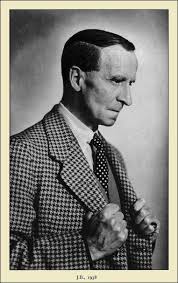
John Buchan (1875 – 1940) was an author, poet, lawyer, publisher, journalist, war correspondent, Member of Parliament, University Chancellor, keen angler and family man. He was ennobled and, as Lord Tweedsmuir, became Governor-General of Canada. In this role, he signed Canada’s entry into the Second World War. Nowadays he is probably best known – maybe only known – as the author of The Thirty-Nine Steps. However, in his lifetime he published over 100 books: fiction, poetry, short stories, biographies, memoirs and history.
You can find out more about John Buchan, his life and literary output by visiting The John Buchan Society website.


 What Cathy Read Next...