
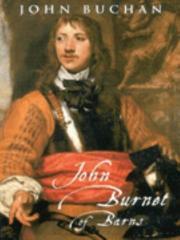
 About the Book
A story of adventure, treachery and revenge, set in the Scottish Borders in the 17th century, John Burnet of Barns is a young nobleman who sets out to gain an education abroad only to find himself betrayed in his absence by his cousin.
Format: Hardcover (317 pages) Publisher: Canongate
Publication date: 1978 [1898] Genre: Historical fiction
Find John Burnet of Barns on Goodreads
My Review
Like Sir Quixote of the Moors (last month’s Buchan of the Month), John Burnet of Barns is written in the first person and set in 17th century Scotland at a time of political and religious turmoil. However, its hero is a boy from Tweeddale with interests – fishing, walking – very similar to Buchan’s own. The reader witnesses John’s first meeting with local laird’s daughter, Marjory Veitch, their childhood games and, as he grows older, his growing affection for her. However,John comes to fear he has a rival in the person of his cousin, Gilbert Burnet. Rightly, as it turns out.
Initially John goes to study in Glasgow but, seized by a desire to travel, sets off for the Low Countries to continue his studies in Leyden. His studies are cut short by a plea from Marjory to return home where dastardly doings have been taking place (courtesy of guess who?). Setting foot back in Scotland, John finds himself unjustly declared an outlaw and pursued by soldiers. He is forced to takes to the hills leaving Marjory in the care of trusty companion, Nicol Plenderleith.
John has a number of narrow escapes and fortunate rescues whilst being chased across the Scottish countryside (in the manner of Buchan’s later and more famous character, Richard Hannay). There are detailed descriptions of John’s travels across various terrains, in fair weather and foul. A few too many detailed descriptions, if I’m honest, although it clearly demonstrates Buchan’s knowledge of the area in which the novel is set. Some of the dialogue, especially that of John’s companion Nicol Plenderleith, is rendered in broad Scots which may prove an obstacle for readers. I also have no idea why Buchan chose to have two characters who go by the name Gilbert Burnet – one of which is his sworn enemy and the other who helps him achieve his ambition of studying abroad.
Buchan shows his talent for creating exciting scenes including a battle in a gypsy camp, a duel with a one-eyed man and a dramatic cave collapse. And for depicting scenes of Scottish life such as a bowls match and the impact of the River Tweed in full spate. Buchan’s passion, shared with John Burnet, for the landscape of Tweeddale is evident in lyrical passages such as this:
“The goodly valley, all golden with evening light, lay beneath me. Tweed was one belt of pure brightness, flashing and shimmering by its silver shores and green, mossy banks. Every wood waved and sparkled in a fairy glow, and the hills above caught the radiance on their broad bosoms.”
Throughout the book, John does not ally himself strongly with one side or the other in the political and religious conflicts of the time. He considers himself a ‘King’s man’ more as an expression of instinctive loyalty. As Buchan’s biographer, Janet Adam Smith, notes John conforms to the pattern of other Buchan heroes by being a ‘passionate moderate’. Furthermore, in tempering his hatred for his enemy with a degree of admiration for his courage, John foreshadows later Buchan heroes who manage to retain a surprising respect for people out to kill them.
Does our hero John Burnet get the girl? You’ll have to read it for yourself to find out although John’s later description of Marjory and he as “comrades on the road, to cheer each other when the feet grow weary” perhaps gives you a clue.
I was more favourably impressed by John Burnet of Barns than I expected given it’s such an early novel. It has its flaws but the story is an engaging historical adventure/romance with more than a touch of Robert Louis Stevenson’s Kidnapped or Catriona about it. (Buchan was a great fan of the author.)
Next month’s Buchan of the Month is A Lodge in the Wilderness. Look out for my introduction to the book and my review.
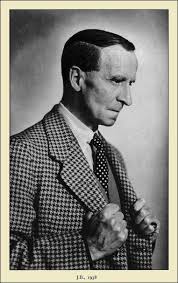 About the Author
John Buchan (1875 – 1940) was an author, poet, lawyer, publisher, journalist, war correspondent, Member of Parliament, University Chancellor, keen angler and family man. He was ennobled and, as Lord Tweedsmuir, became Governor-General of Canada. In this role, he signed Canada’s entry into the Second World War. Nowadays he is probably best known – maybe only known – as the author of The Thirty-Nine Steps. However, in his lifetime he published over 100 books: fiction, poetry, short stories, biographies, memoirs and history.
You can find out more about John Buchan, his life and literary output by visiting The John Buchan Society website.


 What Cathy Read Next...