#GuestPost The Case of the Emigrant Niece by David Cairns of Finavon

I’m delighted to welcome author David Cairns of Finavon to What Cathy Read Next today to talk about his latest book, The Case of the Emigrant Niece, the first in a new series of historical mysteries featuring 19th century Scottish engineer, Findo Gask. David has written a fascinating guest post about the inspiration for the book and about the ‘freedom to explore’ that writing historical fiction brings him.

The Case of the Emigrant Niece will be published as en ebook on 1st December 2022 and is available for pre-order now.


The Case of the Emigrant Niece coverAbout the Book

A multiple murderer on the loose, an inheritance stolen

Injured at the start of the Indian mutiny in 1858, Scotsman Findo Gask finds himself in Melbourne during the fabled Gold Rush where he stumbles across the mystery of a stolen inheritance. Captivated by the pretty heiress, together with his new idiosyncratic friend, Erroll Rait he begins to investigate for her, travelling back to London, Edinburgh, the Scottish highlands and then to Melbourne again, uncovering multiple murders before falling foul of a sinister plot to add himself and his client to the list of victims.

Taking readers back to the days of steam trains and clipper ships, gas-lit Edinburgh streets and the goldfields of Australia with the unravelling of a mystery and the discovery of a relentless murderer, The Case of the Emigrant Niece is a spellbinding novel that captures the imagination and transports you back to a different age.

Format: ebook (437 pages)                 Publisher: Finavon Press
Publication date: 1st December 2022 Genre: Historical Fiction, Mystery

Pre-order/purchase link
Amazon UK
Link provided for convenience only, not as part of an affiliate programme


Guest Post – The Case of the Emigrant Niece by David Cairns of Finavon

This is a story I promised to myself several years ago when I was driving from Perth (in Scotland) to Glasgow.  Swooping down the A9 into the fertile glen that Macbeth would have traversed hundreds of years earlier, I passed a signpost to Findo Gask – a small village off the A9 running by the River Earn – and the name struck me immediately as ideal for a swashbuckling hero.  A little later that month I was driving to Dundee and again was struck by a signpost (literally, not figuratively), this time to the villages of Errol and Rait.  Snap.  Another name – this time conjuring up Errol Flynn of course.  They sat at the back of my mind for several years and then, having completed my Helots’ Tale series I took the plunge and brought them to life, with Findo Gask and Erroll Rait meeting up on opposite sides of a cricket match in colonial Melbourne in November, 1858. I set the story in the mid 19th century for a number of reasons. I had spent almost three years researching and writing The Helots’ Tale series, which was set in the early to mid-1800s, so I was already embedded in the period, had a lot of research sources and, well, it felt like unfinished business.

The storyline came about after a Board meeting when I was considering the trust placed by us all in our lawyers. And I started to think, “What if?”.  I hasten to add that I do not subscribe to that line in Shakespeare’s Henry VI, “The first thing we do, let’s kill all the lawyers”.  I have good friends of high integrity who are lawyers and besides, if we start there, how long before they come after the accountants? (which is my original qualification, although it’s been a long time since I juggled the debits and credits for a living).

I have written poetry and short stories but the Emigrant Niece is my first full-length work of fiction. Previous novels have been true stories rounded out with imagined conversations and likely or at least possible events.  There is something very fulfilling about bringing to life people whom you know only as entries in dusty ledgers but who you would really like to have known.  However, it is writing with handcuffs.  You can’t tell a true story unless you are talking with truth and when an opportunity arises to add an imagined plot to the story because it, perhaps, spices things up or creates tension or some other such literary artifice, it must be pushed away.  Veracity is all.  The lives of the people have to be interesting and exciting enough to carry the story on its own merits.

A work of fiction, however, has none of these restrictions and writing historical fiction, you get the best of both worlds – freedom to explore and the ability to integrate your story with real events and real people of the time.  Who wouldn’t want to experience the fabulous gold rush in Ballarat or ride a horse in the first running of the world-famous Melbourne Cup or even meet Ned Kelly (hopefully not on a remote road at night)?

This story quickly follows Findo Gask from combat in the Indian mutiny, to London where a mystery is solved, setting the stage for more to come, to Edinburgh before taking us on a rugged 3-month journey across the oceans to the New World and Back Creek, north of Melbourne, bang in the middle of the fabulous gold rush.

This was the century that moulded Australia, at this time still a collection of colonies that earlier in the century had seen more than 160,000 convicts transported to serve their sentences as all but slaves – a story related in the Helots’ Tale series.  The enormous wealth generated on the goldfields of Australia saw tent cities rapidly evolve into proud, prosperous Victorian towns and cities (as in Queen Victoria, not just the colony of Victoria).

On the new world frontier, Findo falls for an attractive young governess who, like him, hails from Scotland and he begins to suspect that she has been tricked out of a substantial inheritance by an unscrupulous family lawyer.  One thing leads to another and he returns to Scotland with his new friend, Errol Rait, to investigate and try to set things straight.  The lawyer, however, has other ideas and both men are soon drawn into a dark web of deceit and a murderous plot.

Using contemporary sources and other research the plot is intertwined with actual events and people of the time and gallops along as twists and turns, puzzles and danger keep our heroes on the trail. One early reviewer told me the “setting of the mining camp was so well done with such detail, I had to finish the chapter because I thought I had mud all over me after finishing the last sentence of the chapter”. That’s when you know you’ve got the historical detail just right!

I have just started the next book in the series, The Case of the Wandering Corpse.  I’m looking forward to seeing where it takes me!
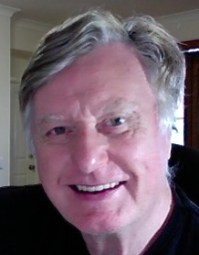

David CairnsAbout the Author

David Cairns, the Baron of Finavon (an ancient Scottish title), has always been a student of history.  Until recently, he was a technology entrepreneur with many successful (and – as he points out – one or two unsuccessful) ventures to his credit.

He has lived and worked on four continents and as a result has experienced the history of London and Boston, the buzz of Chicago, Nashville and Silicon Valley, the pioneering atmosphere of the South African bush, the lazy lifestyle of the Bahamas, the cultural diversities of Europe and the laid-back lifestyle of Australia, which is where he makes his home these days.

He is the author of The Helots’ Tale series – Downfall and Redemption.

Connect with David
Website | Twitter 

#BookReview Night-Time Stories edited by Yen-Yen Lu

Night-Time StoriesAbout the Book

A child waits for the tooth fairy; a mother spends a night watching a recording of the previous night; two women face the ghosts that haunted their grandmothers. The nights in these ten stories are thick and substantial, ambiguous and alluring.

Eerie, magical, hushed and surprisingly alive, this anthology shows the night as a place where connections are made and daylit lives can be changed.

With stories from Valentine Carter, John Kitchen, Winifred Mok, Leanne Radojkovich, Angela Readman, Jane Roberts, Rebecca Rouillard, Miyuki Tatsuma, Zoë Wells and Sofija Ana Zovko.

Format: Paperback (72 pages)             Publisher: The Emma Press
Publication date:  1st December 2022 Genre: Short Stories

Purchase links
Bookshop.org
Disclosure: If you buy a book via the above link, I may earn a commission from Bookshop.org, whose fees support independent bookshops

Publisher | Hive | Amazon UK
Links provided for convenience only, not as part of an affiliate programme


My Review

Night-Time Stories is The Emma Press’ first short story anthology. In her introduction to the book, editor Yen-Yen Lu writes that her aim was ‘to find stories that capture the strangeness and subtle magic’ of the night. I think she has definitely succeeded. The stories in this anthology are night-time stories rather than bedtime stories ranging from – to quote Yen-Yen Lu once again – ‘the intense and surreal to wonderfully mundane’.

As imagined by the contributors to the collection the night is a time for dreams (as in ‘Dream Lovers’), a time to reflect, a time for encounters of various kinds or a time to work whilst others are sleeping. The stories vary in length – from a paragraph (as in ‘Dream Boats’ by Jane Roberts) to several pages. They also differ in style and in atmosphere. For example, there is an intense eroticism to ‘(hippocampus paradoxus)’ by Valentine Carter.

There’s an element of fantasy but also whimsical humour in ‘Kikomora’ by Sofija Ana Zovko in which a mischievous creature a woman’s late grandmother believed lived behind her stove appears to wreak havoc on a night-time outing. Perhaps the creature wasn’t merely a product of her grandmother’s imagination after all?  I particularly enjoyed ‘Sleeping in Shifts’ by Winifred Mok in which a couple’s work patterns mean their timelines cross only briefly ‘like a lunar eclipse’ and what is dinner for one is breakfast for the other.

I also liked ‘Whose Lounge?’ by Leanne Radojkovich in which a mother sets out to answer her daughter’s question, ‘What happens when no-one is in the lounge?’ with unexpected results. Similarly, ‘Even This Helps’ by Zoë Wells explores the notion that, although many of us may be asleep at night-time, it does not mean everything in the world is still or silent. Unable to sleep, a woman heads to a 24-hour supermarket at 3am, a time when ‘only the elements are in motion’. She observes the clouds ‘shuffle quietly across the cosmos’ and hears ‘the low hum of the universe’. And, as many of the stories illustrate, the night is never completely dark. There is the light from the moon, the headlights of a passing car or the distant glow of a city that never sleeps.

I love it when a piece of writing makes me consider something I’d never thought of before. In this case, it’s that there are some things that only take place at night, such as the times of the year when the clocks go forward or back. In ‘Daylight Saving Time’ by Rebecca Rouillard, a young woman gets the feeling she is travelling back in time when she lives through the hour between 1am and 2am for a second time.

Night-Time Stories is an absorbing collection of skilfully crafted, often thought-provoking stories. I considered scheduling this review to be published at midnight but of course it’s always night-time somewhere in the world.

I received a digital review copy courtesy of The Emma Press. If my review has piqued your interest in the book and you’d like to find out more, you can register for the online book launch on 2nd December here.

In three words: Imaginative, atmospheric, intriguing

Try something similar: The Wooden Hill by Jamie Guiney


Yen-Yen LuAbout the Editor

Yen-Yen Lu is a freelance editor and writer. Her short stories have been published in online zines and the anthology In Which Dragons Are Real But (Fincham Press, 2018). As an editor, she is passionate about promoting underrepresented voices in independent publishing. She studied Creative Writing at the University of Roehampton. Her favourite things about the night-time are the lack of crowds, and sleeping.

About the Contributiors

Valentine Carter has short fiction published by The Fiction Pool, Bandit Fiction, In Yer Ear and The Mechanics’ Institute Review (Issue 15 and Issue 16), and poetry published by Perverse and Visual Verse. Her debut novel, These Great Athenians, published by Twenty Seven, has been shortlisted for the Polari First Book Prize 2022. She is studying for a PhD at Birkbeck, University of London

John Kitchen was a primary headteacher. After retirement he took a chance and signed up for a series of poetry workshops. He discovered he could write. It was life changing. Now he enjoys writing poems, plays, short stories; sharing these with a wide range of audiences; and the great thrill of seeing his work in print.

Winifred Mok is a filmmaker and podcaster (Kin: Fallen Star, Project FIA goes PC) with a passion for stories, books and site-specific theatre. She studied English Literature and Theatre Arts at the University of Birmingham. She likes exploring the spaces of language, culture and identity, and spends most of her time reading, learning, making, and wondering.

Leanne Radojkovich is the author of short story collections Hailman (2021) and First fox (2017), both published by The Emma Press. Recently her stories have appeared in Best Small Fictions 2021, Short Fiction Journal, Landfall and takahē. She holds a Master of Creative Writing (First Class Honours) from AUT Auckland University of Technology. Leanne has Dalmatian heritage and was born in Aotearoa New Zealand. She now lives in Tāmaki Makaurau Auckland where she works as a librarian. ‘Whose lounge?’ was first published in the journal Firewords Quarterly (Issue 5, 2015).

Angela Readman lives in Northumberland. Her stories have won the Mslexia competition, the Costa Story Award and the New Flash Fiction Review Prize. Her collection Don’t Try This at Home was shortlisted in The Edge Hill Prize, and won The Rubery Book Award. In 2022 her second collection The Girls are Pretty Crocodiles & Other Fairy Tales was released. She also writes poetry. Her latest collection Bunny Girls is out with Nine Arches in November 2022.

Jane Roberts’s fiction features in a variety of publications and presses, including: 100 Stories for Haiti, 100 Voices for 100 Years (Unbound), Aberystwyth University, Arachne Press, Flash: The International Short-Short Story Magazine, Litro, NFFD Anthologies, Refugees Welcome, Retreat West, Seventy2One, Stories for Homes, The Emma Press, The Lonely Crowd, The Mechanic’s Institute Review, The Shadow Booth, Under The Radar (Nine Arches Press), Unthank Books, Wales Arts Review, Visual Verse and Valley Press’s High Spirits: A Round of Drinking Stories (Best Anthology, Saboteur Awards 2019).

Rebecca Rouillard has a Creative Writing degree from Birkbeck, University of London, and was the Managing Editor of the Birkbeck Writers’ Hub for four years. Her writing has appeared in various online and print anthologies, including Watermarks: Writing by Lido Lovers and Wild Swimmers (The Frogmore Press, 2017), Dragons of the Prime: An Anthology of Poems about Dinosaurs (The Emma Press, 2019), and 100 Voices (Unbound, 2022) She was the winner of the 2017 Mslexia Novel Competition and works as a school librarian in South-West London.

Miyuki Tatsuma’s writing has been published in digital and physical anthologies such as the PAST, PRESENT, FUTURE anthology by Forest Publications (Edinburgh), and Bounds Green Book Writers’ Lockdown Lit. Imagination in Isolation (London). She grew up in Kraków, Poland, in a Japanese-Polish-Italian household. Since moving to the UK in 2021, she has occupied a realm between four cultures – an existential status which greatly informs not just her writing but also her personal ontology. Though she had written in prose since age ten, one fateful day she woke up and has only created poetry since.

Zoë Wells is a writer, poet and translator from Geneva, Switzerland, currently based in Manchester, UK. Her writing has been featured in a number of publications, including STORGY, Poetry Wales, Bandit Fiction, Hypertrophic Press and Ink, Sweat and Tears. She has previously been longlisted for the BBC National Short Story Award, the White Review Short Story Prize, and the Bridport Prize. She is currently drafting an AI-based grief fiction novel, as well as editing a collection of translated poems from the French-language writer Renée Vivien.

Sofija Ana Zovko is a writer, editor, and translator from Zagreb, Croatia. She holds an MSt in Creative Writing from the University of Oxford, focusing on depictions of the Balkans. Her work can be found in Ash, Flash Fiction Magazine and harana poetry, and two of her stories were longlisted for the 2021 Mslexia Short Story Competition.