#BookReview #Ad The Last Lifeboat by Hazel Gaynor @HarperCollins

About the Book

1940, Kent: Alice King is not brave or daring — she’s happiest finding adventure through the safe pages of books. But times of war demand courage, and as the threat of German invasion looms, a plane crash near her home awakens a strength in Alice she’d long forgotten. Determined to do her part, she finds a role perfectly suited to her experience as a schoolteacher — to help evacuate Britain’s children overseas.

1940, London: Lily Nichols once dreamed of using her mathematical talents for more than tabulating the cost of groceries, but life, and love, charted her a different course. With two lively children and a loving husband, Lily’s humble home is her world, until war tears everything asunder. With her husband gone and bombs raining down, Lily is faced with an impossible choice: keep her son and daughter close, knowing she may not be able to protect them, or enroll them in a risky evacuation scheme, where safety awaits so very far away.

When a Nazi U-boat torpedoes the S. S. Carlisle carrying a ship of children to Canada, a single lifeboat is left adrift in the storm-tossed Atlantic. Alice and Lily, strangers to each other — one on land, the other at sea — will quickly become one another’s very best hope as their lives are fatefully entwined.

Format: eARC (368 pages)            Publisher: HarperCollins
Publication date: 8th June 2023 Genre: Historical Fiction

Find The Last Lifeboat on Goodreads

Purchase links 
Bookshop.org 
Disclosure: If you buy a book via the above link, I may earn a commission from Bookshop.org, whose fees support independent bookshops

Hive | Amazon UK 
Links provided for convenience only, not as part of an affiliate programme


My Review

The Last Lifeboat is inspired by the true story of the sinking of the SS City of Benares, a ship carrying child evacuees from England to supposed safety in Canada in September 1940.

Opening with a dramatic scene in the aftermath of the torpedoing of the ship (named the SS Carlisle for the purposes of the novel) by a German U-boat, the book follows a small group of people, including a number of children, who find themselves adrift in a lifeboat. Amongst the group is Alice King, a young teacher acting as one of the escorts to the evacuees, and the lone woman in the lifeboat. Over the next few days, we follow them as they encounter storms, endure hunger and thirst, and are gradually weakened by exposure to the elements. The scenes are so vividly imagined that you really do feel you are experiencing it all alongside them. As their hopes of rescue begin to fade, their experience becomes one of grim endurance and a daily struggle to survive that takes a mental and physical toll.

For Alice, delivering the children entrusted to her care to safety becomes a personal mission, something to cling to during the dark times, and one for which she is prepared to sacrifice herself if necessary. ‘Buoyed by the bright morning, she gathers up the tattered fragments of hope the storm had torn from her in the night, and stitches them together into a patchwork of determination and belief; a blanket of courage big enough to cover them all.’

Alternating with the dramatic and absolutely gripping scenes aboard the lifeboat, we witness the anguish of the recently widowed Lily who made the difficult – and lonely – decision to place her son and daughter aboard the ship thinking this was the way to keep them safe from the increasingly heavy bombing raids on London. It turns out to be anything but. When news of the disaster is made public, she remains determined not to give up hope that her children may have survived or to stop pressing the authorities to continue the search for that last lifeboat.

Like the author’s earlier book, The Bird in the Bamboo Cage, The Last Lifeboat shines a spotlight on the courageous exploits of women in wartime. But it doesn’t ignore the ‘ordinary’ women, those women described as ‘the quiet essential backbone of the war on the home front’. There are some interesting male characters in the book and I liked the fact that they display a heroism that is rooted in moral principles.

There are emotional scenes towards the end of the book and if you can read them without reaching for the tissues then you must have a heart of stone. Personally, I would have been happy for the book to end at the final chapter with its moving last paragraph. However, the epilogue’s message that relationships formed in times of disaster may have enduring bonds is an uplifting one.

The Last Lifeboat is an utterly immersive story that is at times heartbreaking. It also demonstrates, as if we needed reminding, of the horror of war and its indiscriminate nature. At one point a character asks, ‘What on earth are we doing to each other?’ But what also shines through is the resilience of the human spirit.

In three words: Emotional, dramatic, moving

Try something similarThe Bird in the Bamboo Cage by Hazel Gaynor


About the Author

Hazel Gaynor is an award-winning New York Times, USA Today and Irish Times bestselling author of historical fiction, including her debut The Girl Who Came Home for which she received the 2015 RNA Historical Novel of the Year award. The Lighthouse Keeper’s Daughter was shortlisted for the 2019 HWA Gold Crown award. She is published in thirteen languages and nineteen countries. Originally from Yorkshire, Hazel lives in Ireland with her family.

Connect with Hazel
Website | Twitter | Facebook | Instagram

#WWWWednesday – 7th June 2023

WWWWednesdays

Hosted by Taking on a World of Words, this meme is all about the three Ws:

  • What are you currently reading?
  • What did you recently finish reading?
  • What do you think you’ll read next?

Why not join in too?  Leave a comment with your link at Taking on a World of Words and then go blog hopping!


Currently reading

The Geometer LobachevskyThe Geometer Lobachevsky by Adrian Duncan (Tuskar Rock) Shortlisted for the Walter Scott Prize for Historical Fiction 2023

‘When I was sent by the Soviet state to London to further my studies in calculus, knowing I would never become a great mathematician, I strayed instead into the foothills of anthropology …’

It is 1950 and Nikolai Lobachevsky, great-grandson of his illustrious namesake, is surveying a bog in the Irish Midlands, where he studies the locals, the land and their ways. One afternoon, soon after he arrives, he receives a telegram calling him back to Leningrad for a ‘special appointment’.

Lobachevsky may not be a great genius but he is not he recognises a death sentence when he sees one and leaves to go into hiding on a small island in the Shannon estuary, where the island families harvest seaweed and struggle to split rocks. Here Lobachevsky must think about death, how to avoid it and whether he will ever see his home again.

The WallThe Wall (City of Victory #3) by Adrian Goldsworthy (eARC, Aries via NetGalley)

Britannia, AD 117: Roman centurion Flavius Ferox is trying to live a quiet life of dignified leisure, overseeing his wife’s estate and doing his best to resist the urge to murder an annoying neighbour – until someone else does it for him. Dragged back into a life of violence, Ferox finds himself chasing raiders, fighting chieftains and negotiating with kings, journeying far into the north just as war breaks out.

With the new emperor, Hadrian, sending agents from Rome, the whole world seems to be changing: old friends become enemies, enemies claim they are friends, and new and deadly threats lurk in the shadows.

When, five years later, Hadrian himself comes to Britannia to inspect his great wall, a new war erupts suddenly, dividing tribes and families. Ferox is the only one who can save the emperor – but with his family, and his own life, in danger, Ferox must first decide whose side he is on…


Recently finished

Hokey Pokey by Kate Mascarenhas (Head of Zeus) 

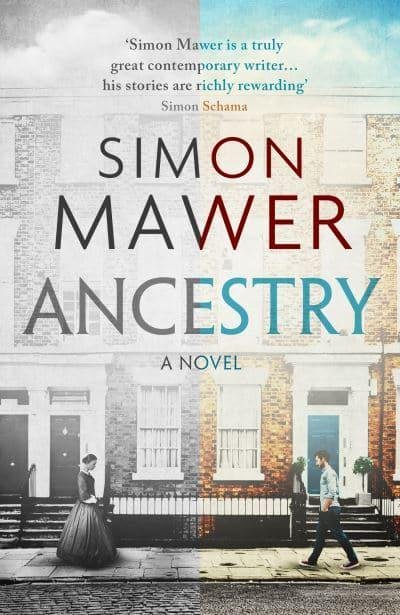
Ancestry : A Novel by Simon Mawer (Little, Brown)

The Last Lifeboat by Hazel Gaynor (HarperCollins)


What Cathy (will) Read Next

The Voluble TopsyThe Voluble Topsy, 1928-1947 by A. P. Herbert (ARC, Handheld Press)

The Voluble Topsy collects A P Herbert’s The Trials of Topsy (1928), Topsy MP (1929) and Topsy Turvy (1947) in one volume for the pleasure and admiration of a new generation.

It is the late 1920s. Topsy is a girl about town, a society deb, a dashing flapper. She writes breathless, exuberant letters to her best friend Trix about her life, her parties, her intrigues, and the men in her life. She deploys her native acumen and remarkable talent for kindness as well as being a doughty fighter for what she thinks is right (she hides a fox from the Hunt in her car). Then Topsy is unexpectedly drawn into politics, and to her amazement, she is elected as a member of Parliament.

Topsy’s extensive social life, her adventures in and out of the House of Commons (and her audacious attempts to legislate for the Enjoyment of the People), and her wartime activity as the mother of twins were recorded faithfully by the great comic writer A P Herbert as a series of satires in Punch.