 This meme was originally created by Lia at Lost in a Story as a way to tackle the gargantuan To-Read shelves a lot of us have on Goodreads.
The rules are simple:
- Go to your Goodreads To-Read shelf.
- Order on ascending date added.
- Take the first 5 (or 10 if you’re feeling adventurous) books
- Read the synopses of the books
- Decide: keep it or should it go?
- Repeat until the entire list has been filtered
My To-Read shelf on Goodreads now contains 249 books compared with 450 when I last undertook this exercise. In case you’re thinking I’ve read an awful lot of books in the last few months, I have to admit it’s because I created a new shelf on Goodreads for books I want to read but don’t yet own – a wishlist, in other words – and moved books that fit that category there. The ones I’m looking at here then are all books I own, either in physical or digital form.
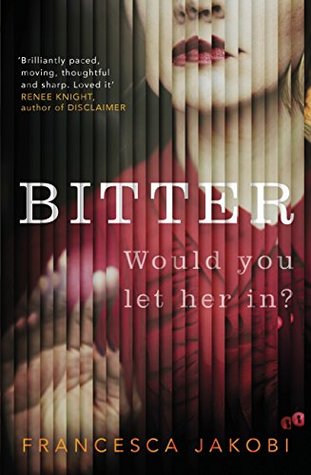 Bitter by Francesca Jakobi (added 21st October 2018)
It’s 1969, and while the summer of love lingers in London, Gilda is consumed by the mistakes of her past. She walked out on her beloved son Reuben when he was just a boy and fears he’ll never forgive her.
When Reuben marries a petite blonde gentile, Gilda takes it as the ultimate rejection. Her cold, distant son seems transformed by love – a love she’s craved his entire adult life. What does his new wife have that she doesn’t? And how far will she go to find out? It’s an obsession that will bring shocking truths about the past to light . . .
Verdict: Keep – I still like the sound of this and it has some great reviews.
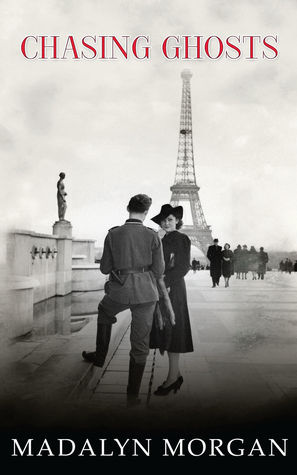 Chasing Ghosts by Madalyn Morgan (added 22nd October 2018)
1949. After receiving treatment for shell shock in Canada, Claire’s husband disappears.
Has Mitch left her for the woman he talks about in his sleep? Or is he on the run from accusations of wartime treachery?
Claire goes to France in search of the truth, aided by old friends from the Resistance.
Verdict: Keep – A giveaway prize, this is book six in the author’s ‘Dudley Sister’ saga. Ordinarily I wouldn’t be keen to start a series so far through but it’s a sequel to book three which I also have a copy of. I think there may be a little too much of a romance for my taste but I’ll try the earlier book and then decide on this one.
 China Blue by Madalyn Morgan (added 22nd October 2018)
At the beginning of World War II, Claire Dudley joins the WAAF. She excels in languages and is recruited by the Special Operations Executive to work in German occupied France with Captain Alain Mitchell, of the RCAF, and the French Resistance.
Against SOE rules Claire falls in love. The affair has to be kept secret. Even after her lover falls into the hands of the Gestapo, Claire cannot tell anyone they are more than comrades.
As the war reaches its climax, Claire fears she will never again see the man she loves.
Verdict: Keep – See above.
 Perfume River by Robert Olen Butler (added 30th October 2018)
Robert Quinlan and his wife Darla teach at Florida State University. Their marriage, forged in the fervor of anti-Vietnam-war protests, now bears the fractures of time, with the couple trapped in an existence of morning coffee and solitary jogging and separate offices. For Robert and Darla, the cracks remain below the surface, whereas the divisions in Robert’s own family are more apparent: he has almost no relationship with his brother Jimmy, who became estranged from the family as the Vietnam War intensified.
William Quinlan, Robert and Jimmy’s father, a veteran of World War II, is coming to the end of his life, and aftershocks of war ripple across all their lives once again when Jimmy refuses to appear at his father’s bedside. And a disturbed homeless man whom Robert at first takes to be a fellow Vietnam veteran turns out to have a devastating impact not just on Robert, but on his entire family.’
Verdict: Keep – I loved the author’s book Late City and after reading it added several from his backlist to my wishlist. I think I picked up this one in a charity shop.
 The Art of Love by A. B. Michaels (added 12th November 2018)
At the end of the Gilded Age, the “Golden City” of San Francisco offers everything a man could want—except the answers August Wolff desperately needs to find. After digging a fortune in gold from the frozen fields of the Klondike, Gus heads south, hoping to start over and put the baffling disappearance of his wife and daughter behind him. The turn of the century brings him even more success, but the distractions of a city some call the new Sodom and Gomorrah can’t fill the gaping hole in his life.
Amelia Starling is a wildly talented artist caught in the straightjacket of Old New York society. Making a heart-breaking decision, she moves to San Francisco to further her career, all the while living with the pain of a sacrifice no woman should ever have to make.
Brought together by the city’s flourishing art scene, Gus and Lia forge a rare connection. But the past, shrouded in mystery, prevents the two of them from moving forward as one. Unwilling to face society’s scorn, Lia leaves the city and vows to begin again in Europe. Gus can’t bear to let her go, but unless he can set his ghosts to rest, he and Lia have no chance at all.
Verdict: Dump – This is the first book in a series. I read book five – Josephine’s Daughter – back in 2020 as part of a blog tour and although I enjoyed it I don’t feel inclined to go back to the beginning of the series.
 The Parisian by Isabella Hammad (added 18th December 2018)
As the First World War shatters families, destroys friendships and kills lovers, a young Palestinian dreamer sets out to find himself.
Midhat Kamal picks his way across a fractured world, from the shifting politics of the Middle East to the dinner tables of Montpellier and a newly tumultuous Paris. He discovers that everything is fragile: love turns to loss, friends become enemies and everyone is looking for a place to belong.
Verdict: Dump – This is one of the oldest books on my NetGalley shelf and probably one of the reasons for that is that it’s 710 pages long. I’m not convinced I have the stamina to read it and it has divided opinions among reviewers.
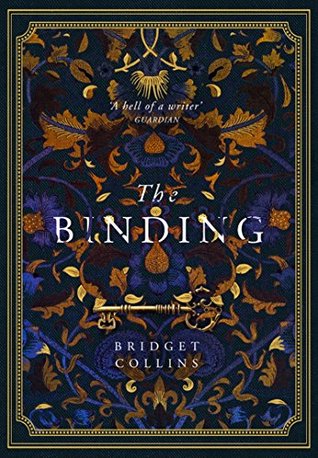 The Binding by Bridget Collins (added 10th January 2019)
Imagine you could erase your grief. Imagine you could forget your pain. Imagine you could hide a secret. Forever.
Emmett Farmer is working in the fields when a letter arrives summoning him to begin an apprenticeship. He will work for a Bookbinder, a vocation that arouses fear, superstition and prejudice – but one neither he nor his parents can afford to refuse.
He will learn to hand-craft beautiful volumes, and within each he will capture something unique and extraordinary: a memory. If there’s something you want to forget, he can help. If there’s something you need to erase, he can assist. Your past will be stored safely in a book and you will never remember your secret, however terrible.
In a vault under his mentor’s workshop, row upon row of books – and memories – are meticulously stored and recorded. Then one day Emmett makes an astonishing discovery: one of them has his name on it.
Verdict: Keep – Should you keep a book purely on the basis of it’s cover? Probably not, but I still find myself intrigued by this.
 In a Time of Monsters: Travels Through a Middle East in Revolt by Emma Sky (added 22nd January 2019)
Returning to the UK in September 2010 after serving in Iraq as the political adviser to the top American general, Emma Sky felt no sense of homecoming. She soon found herself back in the Middle East traveling through a region in revolt.
In a Time of Monsters bears witness to the demands of young people for dignity and justice during the Arab Spring; the inability of sclerotic regimes to reform; the descent of Syria into civil war; the rise of the Islamic State; and the flight of refugees to Europe.
With deep empathy for its people and an extensive understanding of the Middle East, Sky makes a complex region more comprehensible. A great storyteller and observational writer, Sky also reveals the ties that bind the Middle East to the West and how blowback from our interventions in the region contributed to the British vote to leave the European Union and to the election of Donald Trump as president of the United States.
Verdict: Dump – I won this book from Readers First and I like the idea of learning more about the fraught history of the Middle East but I can’t see myself ever getting around to reading it. Sorry, Emma.
 Things in Jars by Jess Kidd (added 1st February 2019)
Bridie Devine – female detective extraordinaire – is confronted with the most baffling puzzle yet: the kidnapping of Christabel Berwick, secret daughter of Sir Edmund Athelstan Berwick, and a peculiar child whose reputed supernatural powers have captured the unwanted attention of collectors trading curiosities in this age of discovery.
Winding her way through the labyrinthine, sooty streets of Victorian London, Bridie won’t rest until she finds the young girl, even if it means unearthing a past that she’d rather keep buried. Luckily, her search is aided by an enchanting cast of characters, including a seven-foot tall housemaid; a melancholic, tattoo-covered ghost; and an avuncular apothecary. But secrets abound in this foggy underworld where spectacle is king and nothing is quite what it seems.
Verdict: Keep – This is another book that has been on my NetGalley shelf for years. However, I really enjoyed the author’s recent book, The Night Ship, so I’m going to hang on to this one.
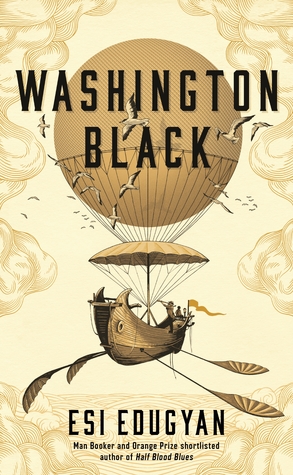 Washington Black by Esi Edugyan (added 6th March 2019)
When two English brothers take the helm of a Barbados sugar plantation, Washington Black – an eleven year-old field slave – finds himself selected as personal servant to one of these men. The eccentric Christopher ‘Titch’ Wilde is a naturalist, explorer, scientist, inventor and abolitionist, whose single-minded pursuit of the perfect aerial machine mystifies all around him.
Titch’s idealistic plans are soon shattered and Washington finds himself in mortal danger. They escape the island together, but then then Titch disappears and Washington must make his way alone, following the promise of freedom further than he ever dreamed possible.
From the blistering cane fields of Barbados to the icy wastes of the Canadian Arctic, from the mud-drowned streets of London to the eerie deserts of Morocco, Washington Black teems with all the strangeness and mystery of life. Inspired by a true story, Washington Black is the extraordinary tale of a world destroyed and made whole again.
Verdict: Keep – The moment I discovered this was partly set in Barbados – an island I have visited many times – I snapped up the copy I found in my local charity bookshop. It’s reminding me a little of William Boyd’s The Romantic which I read recently.
The Result – 7 kept, 3 dumped. Not bad, I suppose… Would you have made different choices?

 On What Cathy Read Next last week

 Sanctuary Motel by Alan Orloff (eARC, Level Best Books via NetGalley)


 What Cathy Read Next...