
About the Book

Jasmine Yang thought her daughter was dead at birth. But five years after she was taken from her arms, she learns that her controlling husband sent the baby to America to be adopted, a casualty of China’s one-child-policy. Fleeing her rural Chinese village, Jasmine arrives in New York City with nothing except a desperate need to find her daughter. But with her husband on her trail, the clock is ticking, and she’s forced to make increasingly risky decisions if she ever hopes to be reunited with her child.
Meanwhile, Rebecca Whitney seems to have it a high-powered career, a beautiful home, a handsome husband and an adopted Chinese daughter she adores. But when an industry scandal threatens to jeopardise not only Rebecca’s job but her marriage, this perfect world begins to crumble.
Two women in a divided city, separated by wealth and culture, yet bound together by their love for the same child. And when they finally meet, their lives will never be the same again…
Format: Hardback (288 pages) Publisher: Viper
Publication date: 2nd November 2023 Genre: Thriller
Find The Leftover Woman on Goodreads
Purchase The Leftover Woman
Bookshop.org
Disclosure: If you buy a book via the above link, I may earn a commission from Bookshop.org, whose fees support independent bookshops
My Review
The book opens with a prologue set in 2022 but the majority of the story is set fifteen years earlier, i.e. 2007. In all honesty I didn’t get much of a sense of an earlier time period. In fact, at one point Rebecca’s adopted daughter, Fiona, asks if she can watch a film on her iPad – which wasn’t introduced until 2010!
Although Rebecca Whitney seems to have it all, she’s a woman trying to juggle a lot of things: a high-profile role as editor-in-chief of the publishing company founded by her father and bringing up her adopted daughter. It’s fair to say she’s not doing particularly well with either of them. ‘Failure has never been tolerated in the Whitney household and yet here she stands, a disappointment as an editor-in-chief and a mother.’ A well-documented scandal involving one of her authors has left her feeling in a precarious position and she desperately needs to land a deal with a bestselling author whose novel is the subject of an intense bidding war. The author depicts the publishing world as bitchy, gossipy and ultra competitive. Although quite fun, I felt this storyline had limited relevance other than the novel in question deals with motherhood and cultural identity.
Rebecca has come to rely more than she would like on Lucy, the Chinese nanny hired by Rebecca’s husband to care for her daughter. Rebecca doesn’t speak any Chinese, or perhaps more accurately, she hasn’t made any attempt to learn Chinese despite her husband being fluent in the language. Nor has she made any effort to educate her daughter in Chinese culture. Increasingly Rebecca comes to resent the obvious bond between Fiona and Lucy.
Jasmine’s mission to track down her daughter was much the strongest part of the book for me. Having paid a Chinese ‘snakehead’ gang to smuggle her into the United States she has a desperate need to earn money to pay back the debt; the consequences for non-payment are severe. Being undocumented means Jasmine is forced into the seamier side of New York’s economy. The snakeheads are not her only worry because she knows what Wen, the husband she abandoned is capable of: deceit, infidelity and violence.
Thankfully Jasmine discovers one ally she can rely on even if this does involve what I term ‘a Casablanca moment’. Not so much ‘Of all the gin joints in all the towns in all the world, she walks into mine’ as ‘Of all the benches in all the towns in all the world, she walks past mine’.
If I found the beginning of the book a little slow, the pace definitely picks up from about the half way point taking it into proper thriller territory. We learn just how far Jasmine is prepared to go in order to be reunited with her daughter. The author cleverly shifts your suspicions from one character to another and there were definitely some things I didn’t see coming.
The Leftover Woman is a skilfully crafted thriller that will have you turning the pages at a rate of knots in its concluding chapters. An ideal book to take to the beach (not at the moment in the UK, obviously) or on a long journey.
I received a review copy courtesy of Profile Books.
In three words: Intriguing, suspenseful, clever
Try something similar: After She’d Gone by Alex Dahl
About the Author
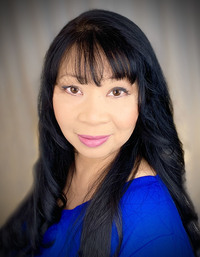
Jean Kwok is the internationally bestselling author of Girl in Translation, Mambo in Chinatown and Searching for Sylvie Lee, and contributor to the Sunday Times bestseller, Marple: Twelve New Stories. Both The Leftover Woman and Mambo in Chinatown are currently in development for television by Fifth Season. Her work has been published in twenty countries and she has been selected for numerous honours, including the Sunday Times EFG Short Story Award shortlist.
She is fluent in Chinese, Dutch and English, and currently lives in the Netherlands. (Photo: Goodreads author page)
Connect with Jean
Website | Twitter | Facebook | Instagram

 Top Ten Tuesday is a weekly meme created by The Broke and the Bookish and now hosted by Jana at






 What Cathy Read Next...