An interview with Laury A. Egan, author of Fair Haven @EganLaury

I’m delighted to welcome author Laury A. Egan to What Cathy Read Next today. Laury’s latest novel Fair Haven was published on 12th April 2025 by Spectrum Books and is available to purchase as an ebook and in paperback from Amazon. Read on as I chat with Laury about the book and her writing journey.


About the Book
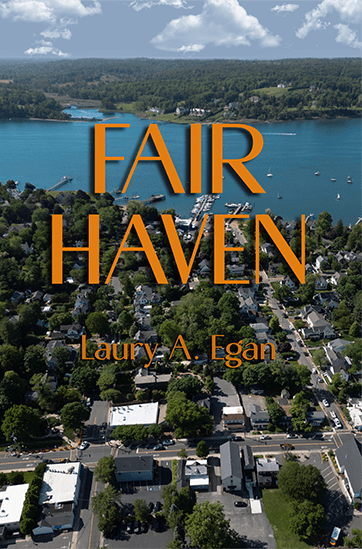
Front cover of Fair Haven by Laury A. Egan

A picturesque riverside town. A safe, serene, friendly place. And then, one sunny summer afternoon in 1994, Sally Ann Shaffer is electrocuted in her hot tub.

Who did it? One of her many lovers? Her husband? A thief? A jealous colleague at her tennis club? Fair Haven is suddenly embroiled in suspicion, interpersonal conflict, blackmail, financial fraud, and murder.

Find Fair Haven on Goodreads


Q & A with Laury A. Egan, author of Fair Haven

You’ve now written fifteen novels in a variety of genres, ranging from psychological suspense to romance, as well as numerous short stories and poetry, but where did your writing journey begin?

I began writing at age seven, sitting in a bathtub. I called for my mother to bring paper and pencil and then wrote out four stanzas of poetry. Needless to say, my mother was astonished. I wrote my first novel at twelve, short stories and poetry in high school, and then mostly stopped until later in life when I had more time and less concern about income. Patricia Highsmith was an inspiration for writing psychological suspense, which is still my favorite genre, although I also enjoy literary work, such as my partially linked novellas, The Black Leopard’s Kiss & The Writer Remembers and The Swimmer (magical realism). Fair Haven fits in the murder mystery category.

You describe Fair Haven as being similar in style to the British TV crime drama series Midsomer Murders. What are the elements of the story that make you say that?

The murder of Sally Ann Shaffer happens in the very short prologue. Criminal acts occur afterword, but unlike many American crime novels or thrillers, this novel is more about relationships and intrigue in a small town, much as Midsomer Murders focuses on characters amid bucolic settings. The cast is diverse, each with a connection to the murdered woman, and each person could be the killer—again, very like the series.

Fair Haven has a large cast of characters. What challenges did this bring?

Challenges? You should see my notes! Descriptions of how each person looks, their back story, connection to other characters, and to Sally Ann Shaffer. Keeping their intricate timelines in order and maintaining the possibility that they could have killed Shaffer. Wow!

Fair Haven is described as ‘a picturesque riverside town’. How important to the story is the book’s setting?

First, although I live near Fair Haven and attended Rumson-Fair Haven Regional High School, I loved the wry irony of the town’s name for a murder mystery. I wanted to contrast this quiet, somewhat wealthy village with the sensational and shocking death of one of its residents but also to reveal the secrets that underpinned the story, which include fraud, deceit, theft, and affairs of many kinds.

The book is set in 1994. Why did you choose that particular time period?

Because cell phones weren’t used (although some characters own Motorola car phones and the police have their phones). In addition, the internet wasn’t active, thus making online research and email correspondence impossible. Avoiding these two technological crutches we now take for granted allowed me more freedom to keep characters in the dark—always good for a mystery!

What are your favourite and least favourite parts of the writing process?

I tend to go over a manuscript 30 or more times before submission and then more times after I receive the publisher’s edits. Toward the end of this process, my patience wears thin, though I grit my teeth and do it because I hate seeing mistakes in my work. The absolute worst parts of having a book published is doing promotion. The best parts? The joy of meeting my characters and learning who they are, how they think and feel…like newly met friends. I also love being immersed in a setting, which is often a major inspiration for a novel.

What are you working on next?

In mid-May, a collection, Contrary: Stories and a Play, will be published. Most of the 21 stories have appeared in journals, but the play is my first and is unpublished. It’s a two-act drama about a photographer disabled after a plane crash and her therapist, who tries to help. On 18th October 2025, a revised edition of my first book, Jenny Kidd, set in Venice, will be issued by Spectrum Books. This is an exotic (and erotic) psychological suspense (in the mode of Patricia Highsmith). A masked ball at a palazzo, a countess and her brother. Another case of a location inspiring a book!

Finally, how do you celebrate publication days?

I may pop open a bottle of prosecco with some friends. I’m really pleased to celebrate Fair Haven, which actually was begun in 1985 when I bought my first computer. This under-the-mattress manuscript would never have seen the light of day except that my wonderful publisher, Andrew May of Spectrum/Enigma Books in London, cleared four other projects off my desk, leaving me to resurrect this novel, which required huge amounts of work. This “first” novel is a special joy to see appear after all this time.


About the Author

Author Laury A. Egan

Laury A. Egan is the author of fifteen novels: Fair Haven, Jack & I, The Black Leopard’s Kiss & The Writer Remembers, The Psychologist’s Shadow, The Firefly, Once Upon an Island, Wave in D Minor, Turnabout, Doublecrossed, The Swimmer, The Ungodly Hour, A Bittersweet Tale, Fabulous! An Opera Buffa, The Outcast Oracle and Jenny Kidd; and two collections, Fog and Other Stories and Contrary: Stories and a Play. Four poetry volumes have been published: Snow, Shadows, a Stranger, Beneath the Lion’s Paw, The Sea & Beyond and Presence & Absence.

Ninety of her stories and poems have appeared in literary journals and anthologies. She is a reviewer for The New York Journal of Books, a graduate of Carnegie Mellon University, and a 2024 recipient of a New Jersey State Council on the Arts Individual Artist Award in prose.

Connect with Laury
Website | Bluesky | X/Twitter | Facebook | Instagram | Blog

#WWWWednesday – 16th April 2025

Hosted by Taking on a World of Words, this meme is all about the three Ws:

  • What are you currently reading?
  • What did you recently finish reading?
  • What do you think you’ll read next?

Why not join in too?  Leave a comment with your link at Taking on a World of Words and then go blog hopping!


One of the books on the shortlist for the Walter Scott Prize for Historical Fiction, an author review copy and a book from my NetGalley shelf

Glorious Exploits by Ferdia Lennon (Fig Tree)

Ancient Sicily. Enter GELON: visionary, dreamer, theatre lover. Enter LAMPO: feckless, jobless, in need of a distraction.

Imprisoned in the quarries of Syracuse, thousands of defeated Athenians hang on by the thinnest of threads. They’re fading in the baking heat, but not everything is lost: they can still recite lines from Greek tragedy when tempted by Lampo and Gelon with goatskins of wine and scraps of food.

And so an idea is born. Because, after all, you can hate the invaders but still love their poetry.

It’s audacious. It might even be dangerous. But like all the best things in life – love, friendship, art itself – it will reveal the very worst, and the very best, of what humans are capable of. What could possibly go wrong?

Sister Rosa’s Rebellion (The Meonbridge Chronicles #6) by Carolyn Hughes (Riverdown)

How can you rescue what you hold most dear, when to do so you must break your vows?

1363. When Mother Angelica, the old prioress at Northwick Priory, dies, many of the nuns presume Sister Rosa – formerly Johanna de Bohun, of Meonbridge – will take her place. But Sister Evangelina, Angelica’s niece, believes the position is hers by right, and one way or another she will ensure it is.

Rosa stands aside to avoid unseemly conflict, but is devastated when she sees how the new prioress is changing from a place of humility and peace to one of indulgence and amusement, if only for the prioress and her favoured few. Rosa is terrified her beloved priory will be brought to ruin under Evangelina’s profligate and rapacious rule, but her vows of obedience make it impossible to rebel.

Meanwhile, in Meonbridge, John atte Wode, the bailiff, is also distraught by the happenings at Northwick. After years of advising the former prioress and Rosa on the management of their estates, Evangelina dismissed him, banning him from visiting Northwick again.

Yet, only months ago, he met Anabella, a young widow who fled to Northwick to escape her in-laws’ demands and threats, but is a reluctant novice nun. The attraction between John and Anabella was immediate and he hoped to encourage her to give up the priory and become his wife. But how can he possibly do that now?

Can John rescue his beloved Anabella from a future he is certain she no longer wants? And can Rosa overcome her scruples, rebel against Evangelina’s hateful regime, and return Northwick to the haven it once was?

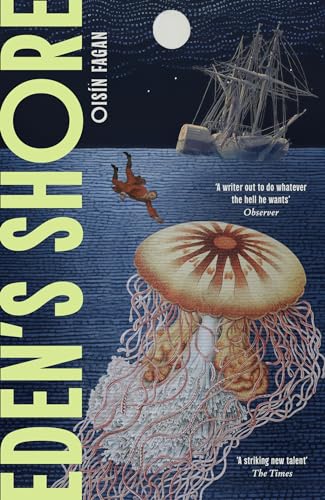
Eden’s Shore by Oisín Fagan (John Murray via NetGalley)

At the close of the eighteenth century, Angel Kelly, an Irishman, sets sail from Liverpool aboard the Atlas with the intention of creating a Utopian commune in Brazil. But when a mutiny takes place on the ship, he finds himself stranded upon the coast of an unnamed Spanish colony in Latin America.

In the aftermath, Kelly becomes unwittingly caught up in a series of crises culminating in displacement, rebellion and a deadly game of cat-and-mouse between empires.

Set in an era of global upheaval, Eden’s Shore is an epic and intricate tale of greed, revenge and love. Populated by a vivid and rich cast of revolutionaries and pirates, capitalists and aristocrats, sailors and soldiers, slaves and spies, this is a work of staggering ambition and wondrous imagination.

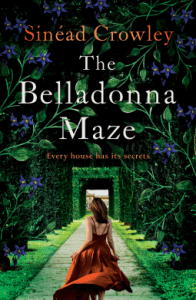
The Belladonna Maze by Sinéad Crowley (Head of Zeus)

The CIA Book Club by Charlie English (William Collins)

For almost five decades after the Second World War, Europe was divided by the longest and most heavily guarded border on earth. The Iron Curtain, a near-impenetrable barrier of wire and wall, tank traps, minefields, watchtowers and men with dogs, stretched for 4,300 miles from the Arctic to the Black Sea. No physical combat would take place along this frontier: the risk of nuclear annihilation was too high for that. Instead, the conflict would be fought in the psychological sphere. It was a battle for hearts, minds and intellects.

No one understood this more clearly than George Minden, the head of a covert intelligence operation known as the ‘CIA books programme’, which aimed to win the Cold War with literature.

From its Manhattan headquarters, Minden’s global CIA ‘book club’ would infiltrate millions of banned titles into the Eastern Bloc, written by a vast and eclectic list of authors, including Hannah Arendt and Aleksandr Solzhenitsyn, George Orwell and Agatha Christie. Volumes were smuggled on trucks and aboard yachts, dropped from balloons, and hidden in the luggage of hundreds of thousands of individual travellers. Once inside Soviet bloc, each book would circulate secretly among dozens of like-minded readers, quietly turning them into dissidents. Latterly, underground print shops began to reproduce the books, too. By the late 1980s, illicit literature in Poland was so pervasive that the system of communist censorship broke down, and the Iron Curtain soon followed.

Charlie English tells this true story of spycraft, smuggling and secret printing operations for the first time, highlighting the work of a handful of extraordinary people who risked their lives to stand up to the intellectual strait-jacket Stalin created. People like Miroslaw Chojecki, an underground Polish publisher who endured beatings, force-feeding and exile in service of this mission. And Minden, the CIA’s mastermind, who didn’t waver in his belief that truth, culture, and diversity of thought could help free the ‘captive nations’ of Eastern Europe. This is a story about the power of the printed word as a means of resistance and liberation. Books, it shows, can set you free. (Review to follow)

Defender of the Wall (Dragon of the North #1) by Chris Thorndycroft

Britain, 390 AD. As a barbarian prince fostered by a Roman family below Hadrian’s Wall, Cunedag’s loyalties have always been conflicted. His own people despise the Romans with a passion, yet he has grown to manhood among them and is now a cavalry officer stationed on the Wall. 

But Rome’s grip on Britain is slipping and the north, sensing weakness, explodes in all-out rebellion. As the Picts sweep down to harry the frontier, the province marshals its forces to fight back. And Cunedag is presented with a difficult choice; continue to defend Rome or rule his people as a free king.

A Roman military novel packed with action and adventure, Defender of the Wall is the first part of a thrilling historical fiction trilogy which tells the story of the legendary King Cunedag; a dark age warlord who went on to build the Kingdom of Gwynedd from the ashes of post-Roman Britain. (Review to follow)

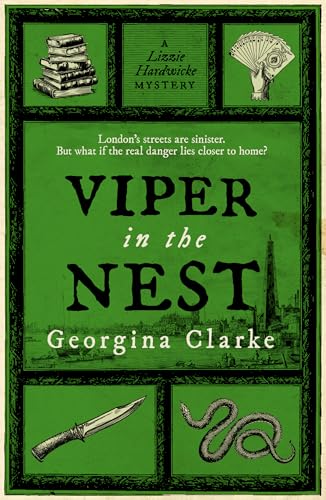
Viper in the Nest by Georgina Clarke (Verve Books)

London’s streets are sinister. But what if the real danger lies closer to home?

London, June 1759. When a charmless civil servant takes his own life, few are interested in his death. But Lizzie Hardwicke, who plies her trade in the brothels of London whilst also working as an undercover sleuth for the magistrate, can see no reason why a man who had everything to look forward to would wish to end his life.

Lizzie’s search for answers takes her from the smoke-filled rooms of fashionable gambling houses, where politicians mix ambition with pleasure, to the violent streets of Soho, ready to erupt with riots in the sultry summer heat. All the while, she is navigating her complicated feelings for the magistrate’s trusted assistant, Will Davenport, and a disturbing situation at home.

Then a gambling house owner is brutally murdered, and Lizzie finds herself tangled in a chaos that she cannot control. The darkest of secrets threatens to turn Davenport against her forever; its exposure will send her to the gallows.