The Winston Graham Historical Prize 2026 Shortlist

The shortlist for this year’s Winston Graham Historical Prize – Cornwall’s answer to The Booker – was announced earlier today.

The shortlisted novels are:

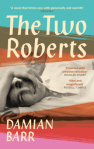
The Two Roberts by Damian Barr (Canongate)
Helm by Sarah Hall (Faber & Faber)
The Pretender by Jo Harkin (Bloomsbury)
Seascraper by Benjamin Wood (Penguin Random House)
Time of the Child by Niall Williams (Bloomsbury)

I’m thrilled to be a member of this year’s judging panel alongside Chair of the Judges award-winning writer Charlotte Hobson, distinguished academic and Winston Graham’s daughter-in-law Peggotty Graham, authors Wyl Menmuir and Patrick Gale, and editor and arts administrator Sravya Raju. 

The winner will be announced at an awards ceremony at the beautiful Cornwall Museum and Art Gallery in Truro on 12th March 2026 with Hotel Tresanton in St Mawes generously sponsoring accommodation for visiting authors and judges. You can read more about the Prize, the shortlisted novels and their authors below.

Interior of Cornwall Museum & Art Gallery in Truro

The Winston Graham Historical Prize

The prize celebrates the best new historical fiction with a powerful sense of place published in the past year; to enter novels must be set at least 60 years ago in the UK and Ireland.

Author Winston Graham

This quest to reveal atmospheric new windows onto the past is the legacy of Winston Graham, author of the Poldark novels, which painted an unforgettable picture of 19th century Cornwall through the lives of Ross, Demelza and co. Creation of the annual shortlist is carried out by readers’ groups across Cornwall who, via their local library, are provided with entries and tasked to report back.

Cornwall Museum’s Co-Director Jonathan Morton commented: “We’re proud of Winston Graham’s connection with the museum and always enjoy the prize ceremony and the anticipation it brings. We’re also now using Graham’s legacy to inspire young writers with Winston’s Wordsmiths, a creative writing prize for children aged 8-16. This year’s winners will be announced at Waterstones in Truro on the same day as the adults’ prize, so do look out for the names of emerging writers to watch!”

The shortlisted novels and their authors

The Two Roberts begins in Glasgow in the 1930s and is inspired by the lives of two nearly-forgotten artists, Robert MacBryde and Robert Colquhoun. Locked in a lifelong passion for each other and art, Barr charts their course to Paris, Rome and then London, where they mixed with the likes of Lucian Freud, Francis Bacon, Dylan Thomas and Wyndham Lewis as the bombs begin to fall and their lives become increasingly hedonistic as artistic success arrives and rapidly departs.

Damien Barr is an award-winning writer and columnist, who writes regularly for The Big Issue amongst others and often appears on BBC Radio 4. Maggie & Me, his memoir about coming of age and coming out in Thatcher’s Britain, was a BBC Radio 4 Book of the Week and Sunday Times Memoir of the Year. Barr’s first novel, You Will Be Safe Here, was published in 2019, The Two Roberts is his second.


Main character energy in Helm is firmly in the hands of a ferocious and mischievous wind, a unique force which has been living alongside humans for time immemorial. From neolithic roots, through the dark ages and into the Victorian Era, Helm symbolises the co-dependency of man and nature, but now that all may be about to change according to the novel’s second protagonist, Dr Selima Sutar. Is human pollution killing Helm, and what can be done to stop it?

Sarah Hall is an acclaimed author with seven multi award-winning novels under her belt, including two that were shortlisted for the Booker Prize. Her short story collections have won the BBC National Short Story Award twice, first with Mrs Fox in 2013 and then again in 2020 with The Grotesques. Hall is currently involved in a “Human Written” campaign to raise public awareness about AI and protect writers and their work.


Inspired by a footnote to history—the true story of the little known Simnel, who was a figurehead of the 1487 Yorkist rebellion and ended up working as a spy in the court of King Henry VII— The Pretender is a gripping and poignant portrait of an innocent caught up in power struggles for the English throne, with a cast of unforgettable heroes and villains drawn from 15th century England.

Jo Harkin’s first novel, Tell Me An Ending, was a New York Times Book of the Year, but The Pretender is her first historical novel. She said she is very much inspired by the great Hilary Mantel’s approach to writing historical fiction, in which anything recorded as historical fact she didn’t depart from, but the grey areas were where a novelist could step into character and run with it.


Though set in Northern England in the 1960s, Seascraper is described by critics as timeless – a moving portrayal of human nature and a celebration of the power of music. The setting is notably cinematic, as the bleak and foggy coast where the protagonist Thomas collects shrimp for a living emerges and recedes across the pages of the novel. Thomas is offered a once-in-a-lifetime opportunity to change his back-breaking existence by an exotic stranger, but where will the chance take him?

Seascraper is Benjamin Wood’s fifth novel. It won the 2026 Nero Prize for Fiction and was longlisted for the 2025 Booker Prize. His previous works have been shortlisted for, amongst other things, the Costa First Novel Award, and the Sunday Times Young Writer of the Year Award. Seascraper was inspired by Wood’s childhood memories of Southport Beach, where an industry of shrimpers used to thrive.


Time of the Child by Niall Williams takes us to rural Ireland in the 1960s during advent season. As the town readies itself for Christmas, Ronnie and Doctor Troy’s lives are turned upside down when a baby is left in their care. As the winter passes, father and daughter’s lives, the understanding of their family, and their role in their community are changed forever.

Born in Dublin where he studied English and French Literature at University College, Niall moved to New York after graduating before he and his wife Christine Breen returned to Ireland to live in Niall’s grandfather’s cottage in West Clare. Both writers, they published four books together about their lives in Ireland, before Niall moved onto plays and then novels. His first, Four Letters of Love, went on to become an international bestseller and was re-issued in 2016 as a Picador Modern Classic. Time of the Child is his 10th novel. 

Have you read any of the novels on the shortlist?

Book Review – Whale Fall by Elizabeth O’Connor

About the Book

It is 1938 and for Manod, a young woman living on a remote island off the coast of Wales, the world looks ready to end just as she is trying to imagine a future for herself.

The ominous appearance of a beached whale on the island’s shore, and rumours of submarines circling beneath the waves, have villagers steeling themselves for what’s to come. Empty houses remind them of the men taken by the Great War, and of the difficulty of building a life in the island’s harsh, salt-stung landscape.

When two anthropologists from the mainland arrive, keen to study the island’s people, Manod sees in them a rare moment of opportunity to leave the island and discover the life she has been yearning for. But, as she guides them across the island’s cliffs, she becomes entangled in their relationship, and her imagined future begins to seem desperately out of reach.

Format: Hardcover (224 pages) Publisher: Picador
Publication date: 25th April 2024 Genre: Historical Fiction

Find Whale Fall on Goodreads

Purchase Whale Fall from Bookshop.org [Disclosure: If you buy books linked to our site, we may earn a commission from Bookshop.org, whose fees support independent bookshops]

My Review

Shortlisted for the Winston Graham Historical Prize 2025, Whale Fall is a quietly seductive novel that immerses you in the life of a small, remote community. Even twenty years after the end of the First World War, the islanders are still living in its shadow. Many young men left the island to join up but never returned, either killed in action or because they have made a new life on the mainland. Remnants of the war – uniforms, helmets, fragments of naval mines – even still wash up on the shore.

Those that remain on the island scrape a living from traditional activities such as farming and fishing. The island, although beautiful, is a harsh environment in which to live especially when winter storms pummel its coastline and it is cut off from the mainland. The beached whale decaying on the shoreline seems a metaphor for the island’s decline.

Manod has spent her whole life on the island. Her father is a fisherman and the uncertain nature of his occupation means they lead a hand-to-mouth existence. Following the death of their mother, Manod has taken on the role of caring for her young sister. Although she is devoted to her, it’s something that ties her to the island leaving her increasingly frustrated that life is passing her by. Days unfold much as they always have. ‘Reverend Jones’s sermon took its usual path. Prosperous fishing must be prayed for, a trade with a proper godly life, then the shipping forecast for the coming week.’

Because of its remoteness, the outside world barely impinges on island life, until that is the prospect of war looms once again, as well as the arrival of two anthropologists, Joan and Edward, who want to study the islanders’ way of life. As one of the few English speakers on the island, Manod is employed to translate the stories they collect from the islanders. The relationship she forms with them leads her to believe this is the opportunity she has longed for: to make a new life for herself away from the island, to experience things she has only read about in books, and perhaps to find love.

Increasingly, though, she gains the impression they are not interested in portraying the reality of island life but some imagined, sanitised version they’d arrived at even before they set foot on the island. As she says to Joan, ‘The island that’s in your head. I don’t think it exists.’ Irritation at their dismissive attitudes, factual inaccuracies and staged photographs turns to disillusionment and, ultimately, a feeling of betrayal.

There is a haunting quality to Whale Fall in its depiction of a way of life slowly dying in the face of the intrusion of the modern world. I found the conflict Manod feels between her responsibilties and her quiet desperation for a more fulfilling life intensely moving.

In three words: Intimate, atmospheric, evocative
Try something similar: The Lost Lights of St Kilda by Elisabeth Gifford

About the Author

Elizabeth O’Connor lives in Birmingham. Her short stories have appeared in The White Review and Granta, and she was the winner of The White Review Short Story Prize in 2020. She has a Ph.D in English Literature from the University of Birmingham on the modernist writer H.D. and her writing of coastal landscapes. Whale Fall is her first novel. (Photo: Instagram profile)

Connect with Elizabeth
Instagram