Book Review – The Story of a Heart by Rachel Clarke

About the Book

This is the unforgettable story of how one family’s grief transformed into a lifesaving gift. With tremendous compassion and clarity, Dr Rachel Clarke tells the story of a girl, a boy and the heart they share.

In doing so she explores a history of remarkable medical innovations, stretching back over a century and involving the knowledge and dedication not just of surgeons, but of countless physicians, immunologists, nurses and scientists.

Format: Paperback (288 pages) Publisher: Abacus
Publication date: 5th June 2025 Genre: Nonfiction

Find The Story of a Heart on Goodreads

Purchase The Story of a Heart from Bookshop.org [Disclosure: If you buy books linked to our site, we may earn a commission from Bookshop.org, whose fees support independent bookshops]

My Review

The Story of a Heart is not just the moving story of Keira and Max, one of whom is destined to die and the other destined to live, but also a fascinating insight into the medical advances that have led to the possibility of successfully transplanting a heart from one person to another, such as respirators, tissue matching and drugs to prevent rejection. However, as the author makes clear, the process is still fraught with risk and uncertain outcomes, the average life expectancy after receiving a heart transplant being only 14 years.

The author’s description of the heart as ‘a toiling, tireless, muscular miracle’ is just one of the striking images in the book. I liked the way she drew attention to the ‘metaphorical richness’ of the heart. ‘Hearts sing, soar, race, burn, break, bleed, swell hammer and melt. They can be won or lost, cut or trampled, and hewn from oak or stone or gold.’ As she points out, such is the heart’s centrality to the English language, its definition in the Oxford English Dictionary runs to 15,000 words.

I particularly enjoyed the sections describing the intricate logistics and the many people involved in the delicate process of moving a heart from the donor to recipient in an optimum condition and in sufficient time to allow it do its life-saving work. The book demonstrates how much of a team effort this is but also that the people involved never lose sight of the fact this is a precious gift that has come about as a result of a person’s death. One of the many moving scenes in the book is Keira’s father waiting outside the hospital to see the box containing her heart being loaded into an ambulance for its onward journey. Another is when a moment of silence is observed by the surgical team before they begin organ retrieval.

The author briefly touches on the ethical dilemmas surrounding transplant surgery given that there are always more patients awaiting a transplant than there are organs available, and that the healthiest organs are likely to be those of a young person. At its most abhorrent, there are countries in the world where organs are for sale.

As you read The Story of the Heart prepare to be moved to tears, to be uplifted by the courage of the individuals involved and to marvel at the skill and dedication of medical professionals, as well as the pioneering individuals responsible for developing technology that seemed unimaginable at the time. The book demonstrates that the NHS at its very best is a remarkable institution and one that we would do well to cherish.

Tackling a difficult, complex subject with clarity and sensitivity, and just about steering clear of sentimentality, The Story of a Heart is a well-deserved winner of the Women’s Prize for Nonfiction 2025.

This was a book club pick (by me) and I’m delighted to say everyone throughly enjoyed the book, including one person who has personal experience of the journey the book depicts.

In three words: Moving, informative, inspiring
Try something similar: Heart: A History by Sandeep Jauhar

About the Author

Dr Rachel Clarke is an NHS palliative care doctor and the author of three Sunday Times bestselling non-fiction books. The most recent of these, Breathtaking (2021), was adapted into an acclaimed television series, broadcast on ITV in 2024. It reveals how she and her colleagues confronted the height of the Covid-19 pandemic. Dear Life (2020), depicting her work in an NHS hospice, was shortlisted for the 2020 Costa Biography Award and longlisted for the 2020 Baillie Gifford Prize. Your Life in My Hands (2017) documents life as a junior doctor.

Before going to medical school, Rachel was a broadcast journalist. She produced and directed current affairs documentaries focusing on subjects such as Al Qaeda, the Iraq War and the civil war in the Democratic Republic of Congo. She continues to write regularly for the GuardianSunday TimesNew Statesman and Lancet among others, and appears regularly on television and radio. Inspired by a visit to Ukraine during the conflict in late 2022, Rachel founded a UK-registered charity, Hospice Ukraine, which supports the work of local palliative care teams in Ukraine. (Photo/bio: Publisher author page)

Connect with Rachel
Website | X/Twitter | Instagram | Facebook | Bluesky

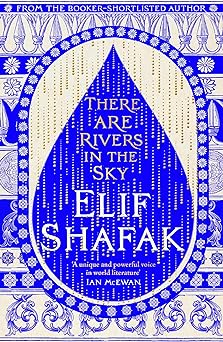
Book Review – There Are Rivers in the Sky by Elif Shafak

About the Book

In the ruins of Nineveh, an ancient city of Mesopotamia, there lies, hidden in the sand, fragments of a long-forgotten poem, the Epic of Gilgamesh.

In Victorian London, an extraordinary child is born at the edge of the dirt-black River Thames. Arthur’s only chance of escaping poverty is his brilliant memory. When his gift earns him a spot as an apprentice at a printing press, Arthur’s world opens up far beyond the slums, with one book sending him across the seas: Nineveh and Its Ruins.

In Turkey in 2014, Narin, a Yazidi girl living by the River Tigris, waits to be baptised with water brought from the holy Lalish in Iraq. The ceremony is cruelly interrupted, and soon Narin and her grandmother must journey across war-torn lands in the hope of reaching the sacred valley of their people.

In London in 2018, broken-hearted Zaleekhah, a hydrologist, moves to a houseboat on the Thames to escape the wreckage of her marriage. Zaleekhah foresees a life drained of all love and meaning, until an unexpected connection to her homeland changes everything.

Format: Hardcover (484 pages) Publisher: Viking
Publication date: 8th August 2024 Genre: Historical Fiction

Find There Are Rivers in the Sky on Goodreads

Purchase There Are Rivers in the Sky from Bookshop.org [Disclosure: If you buy books linked to our site, we may earn a commission from Bookshop.org, whose fees support independent bookshops]

My Review

This was a book club pick and I’m so grateful to the person who chose it because it has been sitting on my bookshelf ever since I bought a copy at last year’s Henley Literary Festival. I loved it and, with one exception, all the other book club members enjoyed the book as well.

I can’t summarise it better than the first sentence on the inside front cover: ‘This is the story of one lost poem, two great rivers and three remarkable lives – all connected by a single drop of water.’ I usually run a mile at the prospect of any element of magical realism in a book but I found it easy to accept the concept that a single drop of water could manifest itself in different forms, repeatedly changing from liquid to solid to vapour and back again over vast periods of time. ‘Water is the consummate immigrant, trapped in transit, never able to settle.’

The drop of water is not the only thing that connects the three characters and their stories. There are myriad others, some very small details – an oak tree, the colour lapis lazuli, mudlarking – that give you moments of pleasure when you spot them. And there are larger themes such as environmental pollution, climate change, migration, and social and economic inequality, that run through all three stories.

Storytelling is a big part of Narin’s story. Her grandmother tells her stories from Yazidi culture as they make the long journey to Iraq. It’s poignant because not only have the Yazidi been reduced in number because of systemic persecution but Narin is losing her hearing so this is her last chance to commit them to memory. Memory is another theme, particularly in relation to immigrants who carry with them stories from their heritage even while adjusting to a new one, making them members of what the author dubs ‘the memory tribe’.

Arthur’s story is the standout part of the book, not just because of the depth of his characterisation but because of the epic journey the author sends him on fuelled by his learning of the ancient city of Nineveh, once the largest city in the world but reduced to a ruin over the centuries. Arthur’s possesses a photographic memory, is able to solve complex mathematical problems in his head and has the ability to interpret patterns. (Today we might classify him as neurodivergent.) His ability to see patterns enables him to decipher the cuneiform tablets displayed in the British Museum, in particular those fragments that record, in incomplete form, the ancient poem the Epic of Gilgamesh. It fuels in him an insatiable desire to travel to the site of Nineveh in the hope of uncovering the lost fragments that tell the story of a great flood, predating that of Noah’s Ark in the Bible. (Arthur is based on George Smith, the first person to translate the Epic of Gilgamesh.)

In Arthur’s story, I loved the way the author conjured up the sights and sounds of Victorian London, the London of Dickens who actually makes a fleeting appearance. ‘Above and around him London wakes up – the scullery maids, the crossing-sweepers, the fish-curers, the dog-killers, the caddy-butchers, the costermongers, the coffin-makers, the rat-catchers, the long-song-sellers . . . Noise escalates, movements multiply; the city gushes forth, like a fountain that never runs dry.’

Perhaps, as some of my fellow book club members felt, the author tries to cram in too many ideas, some of which are not developed, and perhaps Zaleekhah’s story is the least compelling but, for me, the quality of the writing and the wonderful connections between the storylines outweighed any shortcomings. I also love a historical novel that teaches me things I did not know and makes me want to find out more about them. There Are Rivers in the Sky did just that. I very rarely reread books but this one may be the exception.

In three words: Epic, immersive, multi-layered
Try something similar: The Romantic by William Boyd

About the Author

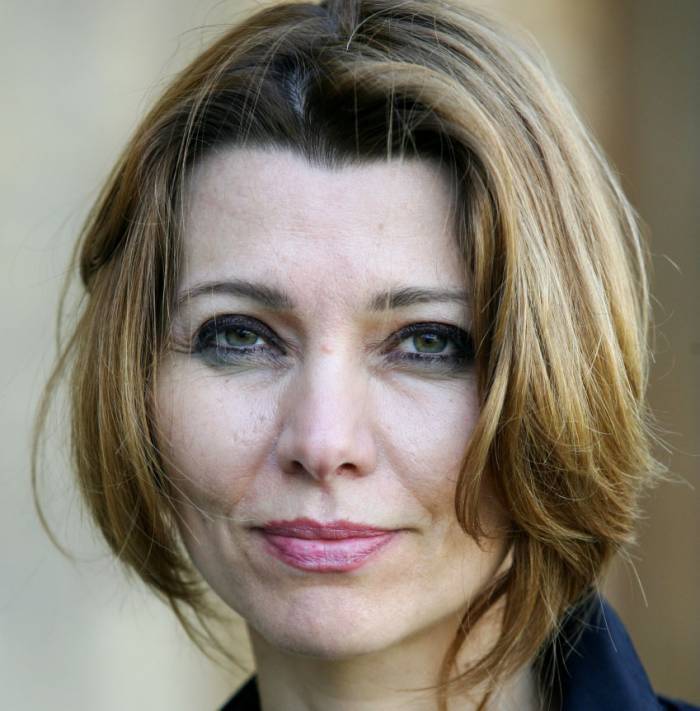
Elif Shafak is an award-winning British Turkish novelist, whose work has been translated into fifty-six languages. The author of nineteen books, twelve of which are novels, she is a bestselling author in many countries around the world. Shafak’s last novel, The Island of Missing Trees, was a top ten Sunday Times bestseller and was shortlisted for the Costa Novel Award and the Women’s Prize for Fiction. Her novel 10 Minutes 38 Seconds in This Strange World was shortlisted for the Booker Prize and the RSL Ondaatje Prize.

Connect with Elif
Website | X/Twitter | Instagram