I’m delighted to host today’s stop on the blog tour for Sugar, Sugar: Bitter-sweet Tales of Indian Migrant Workers, the debut short story collection by Lainy Malkani. I’m so pleased that Lainy has agreed to answer some questions about the inspiration for the fascinating stories that make up the collection.
Follow my blog with Bloglovin
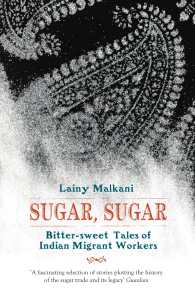 About the Book
Sugar, Sugar is a contemporary collection of short stories which reveals the rich and culturally diverse history behind India’s migrant workers and one of the most abundant and controversial commodities in the world. Inspired by historical documents between 1838 and 1917 and the living memories of the descendants of indentured workers, Sugar, Sugar, spans five continents, travelling through time to uncover inspiring tales of courage and resilience. With sugar at its heart, this collection unveils lives rarely exposed in modern British literature and adds a new dimension to the history of sugar, post emancipation, whilst sharing a previously untold strand in the story of the making of contemporary Britain.
Sugar, Sugar is part of a much larger, year-long collaborative project funded by Arts Council England. It aims not only to explore the history of the indenture programme but to inspire others to explore their own heritage and use their personal archive of photographs, letters and memories to write about their own experiences.
Book Facts
- Format: ebook, Paperback
- Publisher: Hope Road Publishing
- No. of pages: 204
- Publication date: 25th May 2017
- Genre: Short Stories, Contemporary Fiction
To purchase Sugar, Sugar from Amazon.co.uk, click here (link provided for convenience, not as part of any affiliate programme)
Find Sugar, Sugar on Goodreads
Interview: Lainy Malkani, author of Sugar, Sugar
Please can you tell us about the inspiration for the stories that make up Sugar, Sugar: Bitter-Sweet Tales of Indian Migrant Workers?
The initial inspiration for Sugar, Sugar came from my own experiences of growing up hearing wild and adventurous stories of my parents’ generation who came to London in the 1960’s from British Guiana, now known as Guyana. At first, as the first born in the UK, I was more interested in finding ways to be British than to explore my past. So while I longed to eat egg, chips and beans for dinner and watch Top of the Pops on TV, my mother was intent on maintaining our cultural heritage with Indian and Caribbean food and listening to the music of her youth like Indian film songs and calypso. However, reminders of my heritage as a descendent of indentured sugar workers, was never far away at home. In our dining room hung a map of Guyana with key landmarks outlined in silver and green glittering lines on a black velveteen background and it is this that fuelled my curiosity as I got older. In 2016, my story was broadcast on BBC Radio 4. Sugar, Saris and Green Bananas prompted responses from other communities who also shared this history and it was then that I decided not only to write about Guyana but also extend the collection to include South Africa, Fiji, Mauritius, Trinidad and of course London. I trawled through historical archive at the British Library which included manuscripts, reports and newspaper cuttings between 1838 and 1917 and spoke to many wonderful people from the wider diaspora about their own stories and experiences.
Your BBC Radio 4 documentary ‘Sugar, Saris and Green Bananas’ told the story of the indentured labourers shipped from India to work on the British-owned sugar estates. Why do you think this subject has received so little attention up until now?
If you speak to most people who share this history they are very well informed about their heritage, but unlike other black or Asian communities living in the UK, they are not concentrated in one particular geographical area so perhaps without this physical presence the wider community lumped them all together as Asian. ‘Sugar Is Our Thing’ one of the short stories in the collection touches on this. This very British term, ‘Asian’ means different things to different people; it includes people from Pakistan, Bangladesh, the Sub-Continent and other areas which are all culturally very different but bound together by brown skin. It is because of this that when my own family moved to Britain, they instantly became invisible. They looked ‘Indian’ but were not quite Indian enough. From a British perspective, they were not quite Caribbean enough because to be Caribbean was imagined to be of African origin. Indo-Caribbean culture is influenced by all of these communities and the fusion of Indian and African cultures is what makes it quite unique and yet very few people are aware of this.
[To find out more about the documentary, click here]
What made you decide to revisit this subject in the form of a collection of short stories?
I like short stories. To me, they represent what happens to us in real life. We experience brief encounters that influence our next move all the time, and I like that; it’s exciting. For example, I miss the bus, I meet an old friend, better still an old boyfriend, while waiting for the next bus to come and so it goes on. I also chose to write short stories as I wanted to explore and connect people from around the world together so that enjoy this collection as a shared history. Each story is unique and can stand alone as shorts or they can read them in the context of each other, and as in the case of The Complaint, some stories may be connected. It was a challenging experience but one which I thoroughly enjoyed.
Can you tell us about your research for the book?
Most of the historical research was done at the British Library where I would sit for hours reading old manuscripts and records dating back to the mid 1800’s. As a journalist I was particularly fascinated by old newspaper cuttings and advertisements from the time. There were notices detailing the arrival of ships from Calcutta or Madras laden with provisions for Indian workers such as rice, dhal and mustard oil alongside for sale signs offering bonnets and silk gloves for the British settlers. In the Royal Gazette in British Guiana (now Guyana), there was an ad for One Hundred Hogs of Sugar and in the very next column an announcement of the arrival of a ship laden with cheeses, candles, cement and bricks. I remember feeling overwhelmed by the smell wood smoke as I turned the pages of old documents and feeling the thickness of the paper between my fingers. Last September I was lucky enough to visit the Sugar Museum in Pamplemousse, Mauritius, there I spoke to former sugar workers about what it was like to cut sugar cane. The museum, on the site of a former sugar factory detailed the journey of indentured labourers with photographs and maps and artefacts that belonged to those first Indians that made the journey across the ‘kali pani’ or ‘black sea’. In the glass showcases were little clay pots and cooking utensils as well as ankle bracelets and emigration records. It was this visit that inspired me to write ‘The Tin Ticket’.
Was there anything that particularly surprised or shocked you during your research? If you like, examples of the ‘bitter’ and the ‘sweet’…
If you have ever tasted freshly-cut sugar cane you will know how sweet raw sugar cane juice can be. But getting to it is not easy. You have to strip the hard and fibrous stalk of its bark with your teeth before chewing the inside. The weight of one fully matured sugar cane stalk, perhaps eight feet tall is heavy enough, but imagine carrying bundles and bundles all day long in the midday sun to wooden carts pulled by oxen or as in the case of Guyana, by mules along the many canals and waterways that led to the sugar plantations. I have stood in a vast sugar cane field and listened to leaves rustling as though they were whispering to each other. It is quite an amazing experience. But as beautiful as the sound, is the experience also leaves you with a great sense of sadness and loss. ‘The Natal Baby’ is based on a real-life account by a Brigade-Surgeon (1885-7) who tells of the discovery of the body of an Indian baby in sugar cane field. The submission, an extract of which you will find in the book, is only about 300 words long but it was a powerful reminder of the tragedy and hardship that many, many Indians faced.
What was the biggest challenge you encountered when writing the book?
By far, the biggest challenge has to be writing ten short stories in six months. Was I naive or ambitious? I am still trying to decide. The first four stories were pretty straight forward. I had characters and plot lines already planned but as the weeks went along, I found myself running out of steam. I was supported by Arts Council England with funding to help me take time to write the collection and to pay for a mentor. Jamie Rhodes, who had written his own collection of short stories read through my drafts and provided me with feedback. I began the project in September. I had a tight timetable of researching and writing each story within a two week period. I allowed myself a week to redraft each story and while I was waiting for further feedback from Jamie I began researching the next story. Well, that was the theory anyway – in reality the process took on a very different rhythm which involved a whole month sleeping on the sofa, yes I mean literally sleeping on the sofa. Every night in January and a little into February, I got some sheets, the duvet and a pillow from the spare bedroom and made my bed downstairs on the sofa. I wrote until 1am and then resting the laptop on the coffee table I went to sleep and rose at 5am. I made a coffee and then started writing again until the family started getting up around 7. My daughters made me breakfast and my husband made me coffee. The day that I finally submitted the first draft of the manuscript to Rosemarie Hudson, my publisher was on 6 February 2017.
I realise this is rather like asking someone to pick their favourite child but is there a story you feel particularly proud of and, if so, why?
I have two children and in the interest of fairness and let’s face it an easy life, I have two favourite stories. The first is ‘The Natal Baby’. Often when we talk about hard labour, we do so in the context of what men did, but listening to the stories of the descendents of indentured women and indeed, remembering the stories my own mother told me about life in Guyana, it appeared to me that women worked incredibly hard on the sugar estates and as such I wanted to reflect that. The female characters in ‘The Natal Baby’, Nelu, Devki and Radha are all strong, determined women who retain compassion and love despite the difficulties they faced. And then there is ‘The Berbice Chair’, set in Finsbury Park, North London in 1986. Alicia, a curious English woman with an eye for a bargain owns a second-hand shop in Finsbury Park. When she buys an old colonial chair from an auction she is determined to sell it for a profit but in order to do so she must find out its history. I love this story because I think it reflects our modern interest in old things like buildings, chairs, lamps, games that we played at school, books we used to read when we were children. Most of the time, these old-fashioned items remind us of the good times we had and sometimes, as is the case in ‘The Berbice Chair’, they unleash in us dark emotions that we thought we had left behind a long time ago.
What message do you hope readers will take away from the stories in your book?
I’m not sure if there is a message that I would like readers to take away with as such. I like that the stories give a sense of pride and visibility to the many descendents of indentured Indians that live in the UK and in other parts of the world. It is a collection that I hope readers will cherish as part of their cultural heritage and one which they will pass on to their children. Sugar, Sugar, is also a very British story and I think readers will be charmed by some of the characters in the collection and surprised and shocked by others. First and foremost however, I would like this collection to be a great read and then perhaps, readers to come away having discovered another relatively untold part of British, Indian, South African, Caribbean, Fijian and Mauritian history.
If readers want to find out more about the subject matter covered in Sugar, Sugar how can they do this?
On 10th August 2017, I will be hosting an evening event at the British Library where readers can come along and find out more about the issues covered in Sugar, Sugar or they can find out about up and coming writing workshops and events by going to https://www.facebook.com/sugarsugartales/
What are you working on next?
Now, that’s an interesting question…
 About the Author
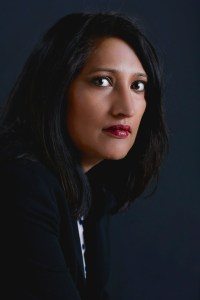
Lainy Malkani is a London born writer, broadcast journalist and presenter with Indo-Caribbean roots. In 2013 she set up the Social History Hub to bring the stories of ‘unsung heroes’ in society to life. Her critically acclaimed two-part radio documentary for BBC Radio 4, ‘Sugar, Saris and Green Bananas’, inspired her to create this collection of short stories. She has written for the British Library, the Commonwealth and the BBC. She is married with two children and lives in North West London. Her cross-cultural roots; from Britain, India and Guyana, in the Caribbean, has been a great source of her work, both as a writer and journalist.
Connect with Lainy
Website www.socialhistoryhub.com
Twitter https://twitter.com/lainymalkani
Email lainy@socialhistoryhub.com

 About the Book
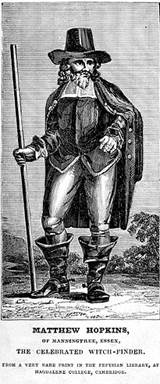 Some of his justifications for finding people guilty of witchcraft are a little on the thin side. For example, he provides the names of some of the familiars of an accused witch. On her fourth night of being kept awake, the accused woman confessed to having several familiars and imps. Hopkins lists the imps’ names given by the woman as ‘Elemanzer, Pyewacket, Peckin the Crown, Grizzel, Greedigut &c. which no mortall could invent…’ So, this woman’s fate has been sealed by her having a vivid imagination and a knack for making up names.
 About the Author