Blog Tour: A Sea of Sorrow


A Sea of Sorrow_Blog Tour Banner_FINAL

I’m thrilled to be hosting today’s stop on the blog tour for A Sea of Sorrow by the team of writers known as the H Team. They have come together to create stories that provide a different perspective on the tale of Odysseus recounted in The Odyssey.

Check out the tour schedule hereWinFrom the tour page you can also enter the giveaway (US only) with a chance to win a paperback copy of A Sea of Sorrow: A Novel of Odysseus.

The giveaway ends at 11:59pm EST on November 17th 2017.


ASeaofSorrowAbout the Book

Odysseus, infamous trickster of Troy, vaunted hero of the Greeks, left behind a wake of chaos and despair during his decade long journey home to Ithaca. Lovers and enemies, witches and monsters – no one who tangled with Odysseus emerged unscathed. Some prayed for his return, others, for his destruction. These are their stories…

A beleaguered queen’s gambit for maintaining power unravels as a son plots vengeance.
A tormented siren battles a goddess’s curse and the forces of nature to survive.
An exiled sorceress defies a lustful captain and his greedy crew.
A blinded shepherd swears revenge on the pirate-king who mutilated him.
A beautiful empress binds a shipwrecked sailor to servitude, only to wonder who is serving whom.
A young suitor dreams of love while a returned king conceives a savage retribution.

Six authors bring to life the epic tale of The Odyssey seen through the eyes of its shattered victims – the monsters, witches, lovers, and warriors whose lives were upended by the antics of the “man of many faces.” You may never look upon this timeless epic – and its iconic ancient hero – in quite the same way again.

Format: eBook, paperback (524 pp.)           Publisher: Knight Media, LLC
Published: 17th October 2017                        Genre: Historical Fiction

Purchase Links*
Amazon.co.uk ǀ Amazon.com ǀ Barnes & Noble
*links provided for convenience, not as part of any affiliate programme

Find A Sea of Sorrow: A Novel of Odysseus on Goodreads


My Review

A Sea of Sorrow: A Novel of Odysseus is a collaborative work by six authors who style themselves The H Team: David Blixt, Amalia Carosella, Libbie Hawker, Scott Oden, Vicky Alvear Shecter, Russell Whitfield and Gary Corby (Introduction). Each story focuses on one of six “supporting” characters in The Odyssey.

The individual stories are united by a number of common themes and all present the stories in a realistic, prosaic way, shorn of the mythological element of Homer’s version. Here the gods do not intervene in human affairs, although the characters retain their belief in the gods. There are no monsters, just men made monstrous. There is a real life explanation for all the events and the motivations are all too human.

One theme running through all the stories is the concept of xenia or guest-friendship.  It is clearly illustrated in one of the tales I particularly enjoyed, Xenia in the Court of the Winds, which focuses on Polyphemus, the monstrous Cyclops of Homer’s The Odyssey. However in Scott Oden’s story, Polyphemus is no monster but re-cast as a sympathetic, human figure who has suffered cruelly at the hands of Odysseus and now finds himself a helpless refugee dependent on others (surely a theme of contemporary relevance). Arriving on the island of Aeolia, Polyphemus is greeted with anger and suspicion by the islanders and it is only a boy, Glaukos, who responds in the true spirit of xenia to Polyphemus. As Glaukos explains, ‘Xenia…is the duty one man owes to another: that he offer the hospitality of his oikos, his household, to a stranger in need.’ When Polyphemus recounts his tale, it becomes clear that one of Odysseus’s crimes was to abuse the guest-friendship offered to him.

Another story I really liked was Penelope’s story, Song of Survival by Vicky Alvear Shecter. Deserted by her husband, we see Penelope’s cleverness and everyday practicality as she deals with the issues facing the kingdom of Ithaca. Penelope has a refreshingly no-nonsense view of her husband’s character and comes pretty close to the mark as she wonders how he will account for his absence should he return.  “Will you blame a god for what was surely your decision – and probably on a whim – to pursue more glory? Will you spin fantastical accounts that absolve you of the consequences from the choices you made? Of goddesses who seduced? Monsters who attacked? Beasts who betrayed?”

Odysseus’s reputation as a ‘trickster’ is another theme of the stories. The amiable teller of riddles is revealed as a deceiver and liar. ‘His tales were as smooth as a fine wine. But always there was a hint of something just under the surface – something sour, but too subtle to the palate to call it a bald-faced lie.’

The most sympathetic rendition of Odysseus is in the story, Calypso’s Vow by David Blixt. Here we see Odysseus racked by guilt at the death of comrades, his betrayal of Circe, his failure to assist the Sirens and his hubris (another theme of the stories). Recognising himself as a habitual oath-breaker, Odysseus’s time on Calypso’s isle becomes a self-imposed test of his ability to be true to an oath. For once, his skills and experience are used in the service of others.

I really enjoyed reading this collection of imaginative stories which, although the product of different writers, share a common style that gives a feeling of continuity. I think readers familiar with The Odyssey will enjoy the new perspectives the stories provide on established characters.   Equally, I believe they will encourage readers not familiar with The Odyssey to seek out Homer’s original.

I received an advance reader copy courtesy HF Virtual Book Tours in return for an honest review.

Follow my blog with Bloglovin

In three words: Imaginative, intriguing, retelling

Try something similar…A Song of War by The H Team


About the Authors

Amalia Carosella graduated from the University of North Dakota with a Bachelors degree in Classical Studies and English. An avid reader and former bookseller, she writes about old heroes and older gods. She lives with her husband in upstate New York and dreams of the day she will own goats (and maybe even a horse, too). Amalia’s novels include Tamer of Horses, Helen of Sparta, By Helen’s Hand, and Daughter of a Thousand Years.

Website ǀ Facebook ǀ Twitter ǀ Goodreads

David Blixt‘s work is consistently described as “intricate,” “taut,” and “breathtaking.” A writer of Historical Fiction, his novels span the early Roman Empire (the COLOSSUS series, his play EVE OF IDES) to early Renaissance Italy (the STAR-CROSS’D series) up through the Elizabethan era (his delightful espionage comedy HER MAJESTY’S WILL, starring Will Shakespeare and Kit Marlowe as inept spies). His novels combine a love of the theatre with a deep respect for the quirks and passions of history. Living in Chicago with his wife and two children, he describes himself as “actor, author, father, husband. In reverse order.”

Website ǀ Facebook ǀ Twitter ǀ Goodreads

Libbie Hawker writes historical and literary fiction featuring complex characters and rich details of time and place. Libbie’s recent novels include Daughter of Sand and Stone, Mercer Girls, A Song of War, White Lotus and Persian Rose. She lives in the San Juan Islands of Washington State.

Website ǀ Facebook ǀ Twitter ǀ Goodreads

Russell Whitfield was born in Shepherds Bush in 1971. An only child, he was raised in Hounslow, West London, but has since escaped to Ham in Surrey. Gladiatrix was Russ’s first novel, published in 2008 by Myrmidon Books. The sequel, Roma Victrix, continues the adventures of Lysandra, the Spartan gladiatrix, and a third book, Imperatrix, sees Lysandra stepping out of the arena and onto the field of battle.

Website ǀ Facebook ǀ Twitter ǀ Goodreads

Scott Oden was born in Indiana, but has spent most of his life shuffling between his home in rural North Alabama, a Hobbit hole in Middle-earth, and some sketchy tavern in the Hyborian Age. He is an avid reader of fantasy and ancient history, a collector of swords, and a player of tabletop role-playing games. When not writing, he can be found walking his two dogs or doting over his lovely wife, Shannon. Oden’s previous works include the historical fantasy, The Lion of Cairo, and two historical novels, Men of Bronze and Memnon. He is currently working on his next novel.

Website ǀ Facebook ǀ Twitter ǀ Goodreads

Vicky Alvear Shecter is the author of multiple books set in the ancient world, including the YA novels, CLEOPATRA’S MOON, based on the life of Cleopatra’s only daughter, and CURSES AND SMOKE: A NOVEL OF POMPEII and the adult historical collaborations, A SONG OF WAR, A YEAR OF RAVENS, and A DAY OF FIRE. She has written a mid-grade series on mythology (ANUBIS SPEAKS, HADES SPEAKS, and THOR SPEAKS) as well as two award-winning biographies for kids. She is a docent at the Michael C. Carlos Museum of Antiquities at Emory University in Atlanta.

Website ǀ Facebook ǀ Twitter ǀ Goodreads

H Team Amalia CarosellaH Team David BlixtH Team Libbie HawkerH Team Russell WhitfieldH Team Scott OdenH Team vickyalvearshecter1


Blog Tour: The Coven (Beatrice Scarlet #2)by Graham Masterton

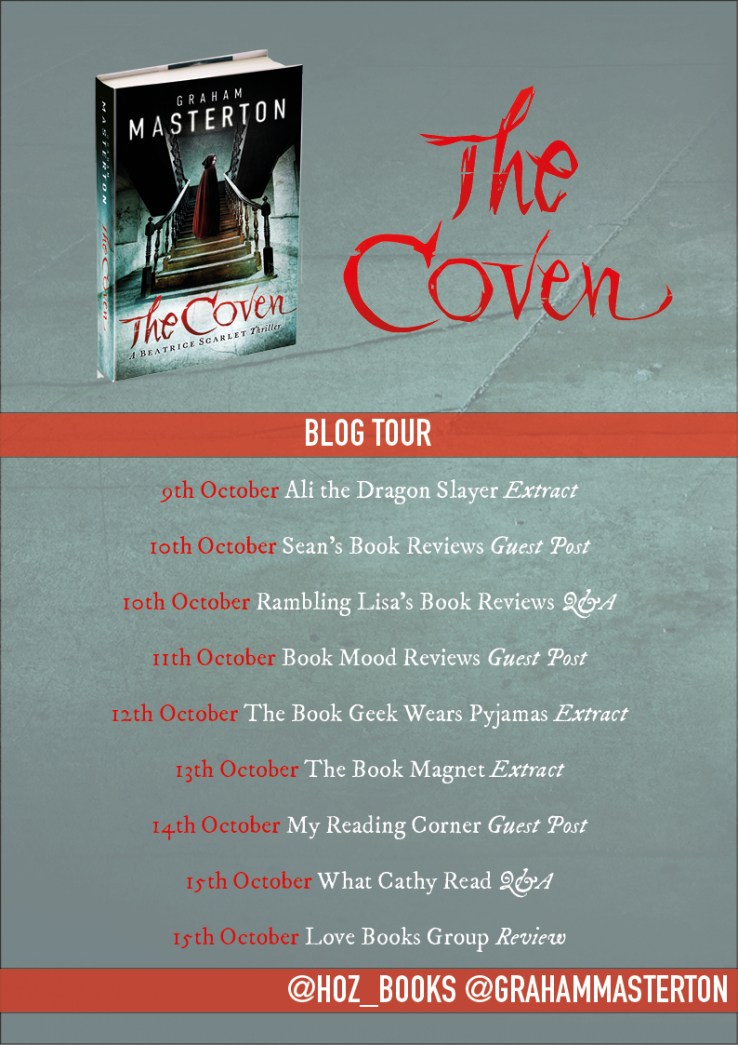
The Coven blog tour banner

I’m delighted to be hosting today’s stop on the blog tour for The Coven by Graham Masterton, a historical mystery set in 18th century London. The Coven is the second book in the Beatrice Scarlet series and the follow-up to Scarlet Widow. I’m thrilled that Graham has agreed to answer some questions about The Coven and how he goes about researching his novels.

Follow my blog with Bloglovin


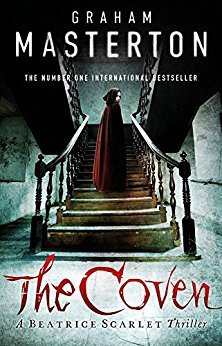
TheCovenAbout the Book

They say the girls were witches. But Beatrice Scarlet, the apothecary’s daughter, is sure they were innocent victims… London, 1758: Beatrice Scarlet, the apothecary’s daughter, has found a position at St Mary Magdalene’s Refuge for fallen women. She enjoys the work and soon forms a close bond with her charges.  The refuge is supported by a wealthy tobacco merchant, who regularly offers the girls steady work to aid their rehabilitation. But when seven girls sent to his factory disappear, Beatrice is uneasy. Their would-be benefactor claims they were a coven of witches, beholden only to Satan and his demonic misdeeds. But Beatrice is convinced something much darker than witchcraft is at play…

Format: eBook (368 pp.), Hardcover (416 pp.) Publisher: Head of Zeus
Published: 5th October 2017                                Genre: Historical Mystery

Purchase Links*
Amazon.co.uk ǀ Amazon.com
*links provided for convenience, not as part of any affiliate programme

Find The Coven on Goodreads


Interview with Graham Masterton, author of The Coven

Without giving too much away, can you tell us a bit about The Coven?

Beatrice Scarlet is the daughter of an inspirational London apothecary, who taught her everything he knew about chemicals and cures. She emigrated to America with her husband, a non-conformist parson, but after his tragic death she has to return to London, where the church have offered her a position at a home for reforming young prostitutes. The home is mainly financed by a tobacco baron, George Hazzard, who regularly picks out girls to work at his factory in Hackney stripping tobacco leaves and rolling cigars. However the latest seven girls that he has recruited go missing, and when Beatrice tries to find out where they might have gone, George Hazzard shows her evidence that they must have formed a coven and summoned Satan, and escaped from the factory by using dark magic. Beatrice is sceptical about this, and tries to find forensic evidence to show what really happened to them. Eventually her chemical research reveals the truth, and it is far more horrific than anything the Devil could have devised. It plunges Beatrice into the sordid depths of 18th century London, with all its dirt and disease and poverty and sexual exploitation, and puts both Beatrice and her young daughter into terrible jeopardy.

The Coven is the second book in your Beatrice Scarlet series. What are the challenges of writing a series compared to a standalone novel?

Remembering who all the characters are and what they did in the first novel is quite a challenge, especially if you have written other novels in between. For me, the most important consideration is to make sure that the characters develop emotionally, and that they learn by their experiences. No matter how outlandish some of my plots maybe, I try to make my characters and their situations as real and as vivid as possible, and particularly when I am writing about female characters, I am extremely sensitive to the social mores of the age and what was expected (and demanded) of women in whatever age the novel is set. What I do like about a series, though, is that you can leave a few cliff-hangers at the end.

When you conceived the idea for the Beatrice Scarlet series, what made you choose the 1750s as the time period in which to set the books?

Most importantly, it was a time when breakthroughs were beginning to be made in science and medicine, so there was an intriguing clash between old-school apothecaries and more progressive chemists like Beatrice’s father. Some of the traditional treatments were bizarre, like taking mercury to cure venereal disease, which made the patient’s teeth fall out and eventually killed them. Also it was the early days of American colonization, with its fervent religious drive, and in Scarlet Widow I wanted to show how religious zealotry conflicted with scientific fact. Apart from that, I was fascinated by the costumes and the language and by the challenge of writing a crime thriller in which nobody has a mobile phone or a car. You want to get to the scene of the crime quickly? Call for a hackney carriage, or run.

How do you approach the research for your books? Do you enjoy the process of research?

I relish the research, but it does make the process of writing a novel very slow. You have to check if every word was in usage at the time. Was ‘flabbergasted’ known in 1758? Answer – yes. But when a hackney driver suggests to Beatrice that London is so smelly that she will need a clothes-peg on her nose…no, sorry. Clothes-pegs weren’t invented until the 1820s by the Puritans in Boston. Before that, washing was hung out to dry on bushes in the summer or on fireguards in the winter, which led to a great many house fires in London. Did women wear knickers? What kind of street-lighting was there, if any? What time did people have breakfast, and what did they eat? How much did it cost to take a hackney from St Paul’s Cathedral to Bow Street? (About 1s 6d.) Thank the Lord for Google, but I also found an incredible book by Professor Jerry White about London in the 18th century and it contains almost every conceivable fact you would ever want to know about living in the capital in that era. Even a whole lot of facts you didn’t want to know.

On behalf of squeamish readers, will they need to leave the light on or check under the bed after reading The Coven?

All of my novels in their different ways are confrontational, in that I believe in facing up to the realities of life, as well as trying to be entertaining. There are some extreme moments in The Coven, although nothing worse than actually happened in 18th century London. As far as supernatural terror is concerned, it really depends on how superstitious you are, and whether you would be frightened by the sound of somebody or something clawing frantically at your bedroom door in the middle of the night.

You’ve written over one hundred novels. Do you still get the same feeling of excitement when you sit down to start a new one?

Yes, I love it. I love meeting the characters. I love describing new places. I love the way that I suddenly discover the relevance of events that I wrote about in the opening scenes of a novel, even though they seemed random at the time. In some ways it’s like being a clockmaker. You start off with a workbench scattered with scores of cogs and springs and levers and end up with a ticking timepiece. What is also exciting (if a little hair-raising) is that much of what I write about in my novels has a way of coming true. In my latest crime thriller Dead Girls Dancing, a dance studio overlooking the River Lee in Cork burns down after an arson attack. A week after the book was published, a building on the same side of the river less than half a mile away was burned down. In the same book, the leader of an IRA splinter group gets shot, and less than a week after I had written that, the former leader of an IRA gang was shot only two streets away from my fictitious shooting. Some people say that my 1980s horror novel The Hell Candidate in which a presidential hopeful is possessed by the Devil and wins the US election was predictive, but I couldn’t possibly comment about that.

Do you have a special place to write or any writing rituals?

My desk faces the window which overlooks the street where I live, because I am extremely nosy and like to see what the neighbours are up to. I have a photograph next to my computer of my late wife Wiescka smiling at me in encouragement, as she always did. I start writing about 9am with a mug of horseshoe coffee, so called because the American railroad workers said it was so strong you could float a horseshoe in it. I don’t listen to music while I write because I feel that it would affect the rhythm of what I am putting down on the page. I usually take a break around midday to stretch my legs and buy a newspaper then it’s back to work until 4pm or 5pm. After that I might slope off to the pub to meet some friends or take a pretty young woman out to dinner.

Although you’re probably best known for your horror books, you’ve published books in a wide range of genres. Is there a genre you’d still like to experiment with?

When I started writing novels, I didn’t know what a ‘genre’ was. In reality it’s a classification invented by WH Smith and other trade booksellers to save them the bother of reading books to find out what they’re about before they put them on their shelves for sale. I made a career mistake in some ways when I stopped writing horror for a year or two after The Manitou and The Djinn and Charnel House and tried my hand at historical sagas like Rich and Railroad and Maiden Voyage. The Manitou and Stephen King’s Salem’s Lot were published around the same time and it’s likely that if I had stuck with horror I could have continued steadily to build up my audience like he did. But I have no regrets. I have enjoyed every minute of writing. I can’t think of any particular genre I would like to experiment with, although I would like to go back to writing humour. I began a humorous novel about a country-and-western group called If Pigs Could Sing (you can check it out in the Fiction section of my website) but my then agent hated it and so I abandoned it.

How do you think you would have coped living in 18th century England?

Probably very badly. I am quite fastidious and the thought of never brushing my teeth and wiping my sticky hands on my jacket while I am having dinner and having to endure the loud and unashamed farts of other people in public…I don’t think I could take it. There were 65,000 prostitutes in London in the late 1750s and sex was readily available almost anywhere for a shilling or two (James Boswell had it under Westminster Bridge). The trouble was, most of the girls carried some kind of STD and you would be lucky not to end up with gonorrhoea or syphilis. Cholera and smallpox and typhus were rife, and you would be lucky to live until you were 33.

Will there be further adventures for Beatrice Scarlet?

Highly likely!

Thank you, Graham, for those fascinating answers. I’m sure fans of historical mysteries are going to love getting to know Beatrice Scarlet in Scarlet Widow and The Coven and, from the sound of it, in future books.


GrahamMASTERTON_BW400pxhAbout the Author

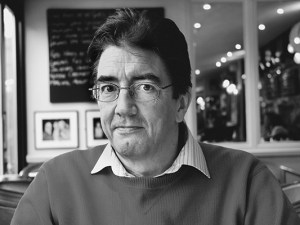
Graham Masterton was born in Edinburgh in 1946. His grandfather was Thomas Thorne Baker, the eminent scientist who invented DayGlo and was the first man to transmit news photographs by wireless. After training as a newspaper reporter, Graham went on to edit the new British men’s magazine Mayfair, where he encouraged William Burroughs to develop a series of scientific and philosophical articles which eventually became Burroughs’ novel The Wild Boys. At the age of 24, Graham was appointed executive editor of both Penthouse and Penthouse Forum magazines.

Graham Masterton’s debut as a horror author began with The Manitou in 1976, a chilling tale of a Native American medicine man reborn in the present day to exact his revenge on the white man. It became an instant bestseller and was filmed with Tony Curtis, Susan Strasberg, Burgess Meredith, Michael Ansara, Stella Stevens and Ann Sothern. Altogether Graham has written more than a hundred novels ranging from thrillers (The Sweetman Curve, Ikon) to disaster novels (Plague, Famine) to historical sagas (Rich and Maiden Voyage – both appeared in the New York Times bestseller list). He has published four collections of short stories, Fortnight of Fear, Flights of Fear, Faces of Fear and Feelings of Fear.

He has also written horror novels for children (House of Bones, Hair-Raiser) and has just finished the fifth volume in a very popular series for young adults, Rook, based on the adventures of an idiosyncratic remedial English teacher in a Los Angeles community college who has the facility to see ghosts.  Since then Graham has published more than 35 horror novels, including Charnel House, which was awarded a Special Edgar by Mystery Writers of America; Mirror, which was awarded a Silver Medal by West Coast Review of Books; and Family Portrait, an update of Oscar Wilde’s tale, The Picture of Dorian Gray, which was the only non-French winner of the prestigious Prix Julia Verlanger in France.

He lives in a Gothic Victorian mansion high above the River Lee in Cork, Ireland.

Connect with Graham

Website ǀ Twitter ǀ Goodreads