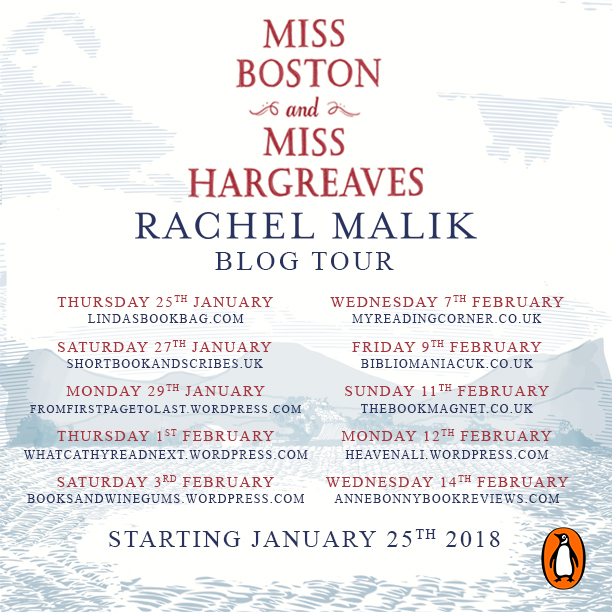
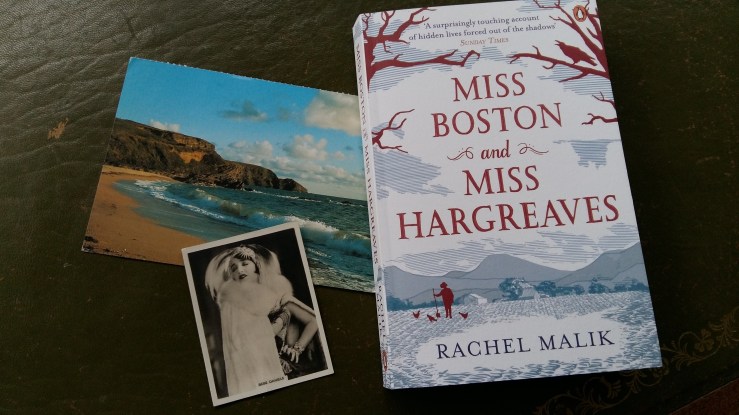
I’m thrilled to be hosting today’s stop on the blog tour for Miss Boston and Miss Hargreaves by Rachel Malik, published in paperback today. Miss Boston and Miss Hargreaves was one of my favourite books of 2017 and, since I read it, I haven’t stopped recommending it to other people. I included the hardcover version in my list of favourite book covers and in my wishlist of novels I’d like to see make The Walter Scott Prize for Historical Fiction longlist. You get the picture; I’m a fan of this book!
I’m absolutely delighted to share with you my Q&A with Rachel in which she talks about the inspiration for the book, her research process and a serendipitous meeting! Absolutely fascinating.
You can also read my review of Miss Boston and Miss Hargreaves and find out just why I loved it so much.
 About the Book
When Rene Hargreaves is billeted to Starlight Farm as a Land Girl, far from the city where she grew up, she finds farmer Elsie Boston and her country ways strange at first. Yet over the days and months Rene and Elsie come to understand and depend on each other. Soon they can no longer imagine a life apart.
But a visitor from Rene’s past threatens the life they have built together, a life that has always kept others at a careful distance. Soon they are involved in a war of their own that endangers everything and will finally expose them to the nation’s press and the full force of the law.
Format: Paperback (288 pp.) Publisher: Penguin
Published in paperback: 1st February 2017 Genre: Historical Fiction
Purchase Links*
Amazon.co.uk ǀ Amazon.com
*links provided for convenience, not as part of any affiliate programme
Find Miss Boston and Miss Hargreaves on Goodreads
Interview with Rachel Malik, author of Miss Boston and Miss Hargreaves
Miss Boston and Miss Hargreaves is inspired by your own family history. When did you first learn about the story of your grandmother?
My mum told me about Rene (Hargreaves) when I was in my late twenties – a long time ago. Rene had left her and the family home in Manchester when she was a little girl and never returned. She also told me that Rene had got caught up in a murder trial many years later when she was living in Cornwall – she didn’t know much more than that. I had quite recently started an academic job and I remember thinking that I should try and find out more about the trial – I definitely had my researcher’s hat (or nose) on.
What was the biggest challenge you faced when writing the book?
I think the biggest challenge was working out exactly what I was writing – and that took time. When I first started researching the story, I don’t think I knew I was going to write anything. I wrote notes about what I discovered, as I might about anything else I might read. I quickly became interested in how the press represented Rene and Elsie; there was definite sympathy but also a rather prurient interest in how they lived and looked. My notes started to turn into an essay at that point. As I started to find out more about the places where they lived, I began to think I should write a piece of creative non-fiction about how I tried to track Rene and Elsie down. And then one day, an incredibly strong image of them came into my head. There they were in the little kitchen at Wheal Rock in Cornwall – where much of the novel is set. And I think I realised then that I was starting to write a novel.
One reviewer has remarked that in the book there is ‘much left unsaid, and unexplored’. This seems particularly true of the relationship between Rene and Elsie. Was this deliberate on your part?
Yes, very deliberate. There are a number of reasons. I wanted readers to get to know Rene and Elsie and feel close to them but I also wanted them kept slightly at a distance – just as Rene and Elsie keep other people at a distance. They become so close that they make their own universe but, as in many relationships, there are important things they don’t know about each other and don’t share. Rene and Elsie are not very ‘talky’ about their feelings; Elsie in particular isn’t somebody who talks much at all. When Rene wants to tell Elsie her secret, she writes it in the form of a letter – that’s quite understandable I think for modern readers. But Elsie doesn’t say ‘I understand’ or ‘I won’t judge you’. She tells a story about a comparable situation to reassure Rene. I don’t think they’re longing for a language of feeling. This is their language and it works well for them – most of the time. There’s also the question of their sexuality. To me, it’s clear that theirs is a sexual relationship but that’s only a part of who they are and when the world judges them later in the novel, it isn’t only their sexuality that is presumed and judged.
The English countryside features strongly in the book. How did you go about recreating the landscape of the 1940s and 1950s?
Yes, the countryside is incredibly important and because Rene and Elsie have to keep moving in the second part of the novel, some places had to be registered very quickly, lightly. Some of the places in the book are well-known (the White Horse of Uffington for instance), some are tourist areas: the Lake District and Cornwall. Some aspects of these places have changed very little if at all – geography, geology – but others clearly had. I didn’t want to create a ‘general’ English countryside of the period, but a countryside from various points of view, in particular Rene and Elsie’s. The countryside they see is attuned to boundaries and ownership, land-use and agricultural work and the possibilities of the long walks they love. I read a lot: history but also fiction, memoirs, poetry; I also looked at old photographs and films.
How did you approach the research for the book? Do you enjoy the process of research?
I wasn’t as organised as I could have been. I got a lot from the trial documents I read at the National Archives in Kew. That and the press coverage of the trial – local and national – were my main sources for Rene and Elsie. Together this allowed me to plot a rough chronology but there were big gaps. All I knew about Elsie was that she came from a large family (the 1911 census) and that she’d been born in Willesden – on the outskirts of London in the early 20th century. I found and read lots of other things as I went along. Some things are just luck. I read Akenfield by Ronald Blythe on a friend’s recommendation. It’s an oral history of a village in Suffolk from the early 20th century to the sixties – the book’s mood had a huge impact on me. I visited the Museum of English Rural Life in Reading which has some wonderful material about farming in the 1930s and 40s – I love research but it’s very easy to get distracted. I spent way too long deciding on the names of the Starlight cows after looking through their milking records!
What was the most surprising fact you came across during your research?
It wasn’t a fact but a living person! I was in Fowey at the festival there and I decided to go and see the village where Rene and Elsie lived (Rosenys in the novel). When I arrived there was nobody about, I didn’t have a clue where Wheal Rock was. A red car pulled up in the car park and when a woman got out I took my courage in both hands and asked if she knew anything about Rene Hargreaves and Wheal Rock. Before I knew it I was sitting in her kitchen with a coffee. It turned out that her grandmother had known Rene quite well and wrote to her in prison and sent her cigarettes.
What do you think is the key to creating an authentic picture of a particular historical period?
I’m not sure there’s a single key; writers are trying to achieve different things. Some want to transport you (I had that feeling in Wolf Hall or in a different way when I read the Poldark saga) – you’re almost behind the curtain listening. In my case, I needed to show how life was changing in the countryside over a twenty-year period (and there are flashbacks to much further back). I didn’t want readers to become too immersed in one particular historical moment, I wanted them to travel through this changing world with Rene and Elsie. Because of that I created a kind of shorthand to signal particular moment: the wartime information posters they adapt for themselves, the 1950s adverts that Rene has a problem identifying with and so on. I only hope that it works
Although you have written articles, essays and reviews, Miss Boston and Miss Hargreaves is your first published novel. What advice would you offer to writers working on their own first novel?
I don’t know if I’m the best person to ask, seeing as it has taken me so long to do it! Writers work in such different ways so what works for me may not work for other people or for me – next time. Here goes:
- Count all the work you do on your novel as work: thinking, reading, brooding, plotting and re-plotting, writing, editing. Don’t fetishize writing as the only work that counts.
- Ignore all the people who say you must write this many words per day, every day or that they work 16 hours a day. If you pause for just a moment to think about it, this excludes so many people: parents, women particularly, but anyone with caring responsibilities, anyone who needs to earn money…
- Try to do some work on your novel as often as you can – even if it’s a few minutes thinking about a setting on the bus. It keeps your ideas moving, developing. And, if you’re anxious like me, it helps keeps the worry a little more in control.
Which other writers do you admire?
There are so many and I keep adding to it. A lot of 19th writing, especially George Eliot and Emile Zola. The first half of the twentieth century has so many brilliant writers, at the moment it’s Jean Rhys and Katherine Mansfield. I’ve been lucky enough to discover both Shirley Jackson and Barbara Comyns over the last year and they’re definitely in! Sybille Bedford, whom I wish people read and wrote about more. I’m also very keen on recent and contemporary Irish writing: Anne Enright, John McGahern and Colm Tóibín.
What are you working on next?
I’m working on another novel. I’m a bit superstitious about saying much about what I’m doing but it’s set in the 1920s and 1930s in Northern Italy…


My Review
The story is based on the life of Rachel Malik’s own grandmother but, as she states, the book is ‘a fiction and not a speculation and it should be read as such’. The author’s writing style has a rhythmic, almost poetic quality: ‘For they were all gone: two sisters married and third moved away; three brothers, dead such a long time ago – their names engraved on the memorial to prove it; her mother and her father as well’. I quickly became immersed in the story and totally engaged with the two main characters, Rene and Elsie.
From the start, Elsie is an enigmatic character, cherishing her solitude and resisting intrusion from neighbours, seeing this as ‘encroachment’. At the same time, she has a ‘lonely power’ that proves strangely attractive to Rene: ‘Elsie wasn’t quite like other people, but that didn’t matter to Rene’. Elsie’s strangeness is communicated in small ways, such as by gestures. When Rene first arrives at Starlight Farm: ‘She had offered her hand to Elsie, and Elsie had reached out hers but it wasn’t a greeting – Elsie had reached out as if she were trapped and needed to be pulled out, pulled free’. Gradually, they find each meets a kind of need in the other – Elsie, for companionship and a conduit to the outside world, and Rene, for refuge from her past: ‘Elsie knew that Rene fitted. A stranger to be sure, but one who didn’t make her feel strange.’
The development of Elsie and Rene’s relationship over time is tenderly observed without explicitly stating its nature. Instead their growing mutual dependence is indicated by small things, like shared evenings listening to radio plays or the way they address each other: ‘A “we” was creeping into their talk, sometimes an “us”‘. Eventually, Rene shares more details about her own history and the choices she has made. The war brings tumultuous change but also new beginnings for the pair. Then a figure from Rene’s past disrupts their way of life and brings with it grave consequences that puts their life together under an unwelcome and potentially life-changing spotlight.
This book is probably not everyone’s cup of tea (although there is plenty of tea drinking in it) but I absolutely fell in love with it. I received an advance review copy courtesy of NetGalley and publishers, Penguin Books UK, in return for an honest review.
In three words: Moving, tender, engaging
Try something similar… Mussolini’s Island by Sarah Day or Shelter by Sarah Franklin (click on titles to read my review)
 About the Author
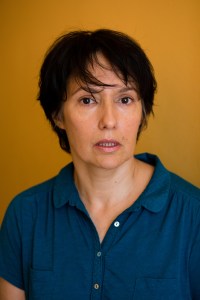
Rachel Malik was born in London in 1965 of mixed English and Pakistani parentage. She studied English at Cambridge and Linguistics at Strathcylde. For many years, Rachel taught English Literature at Middlesex University. Miss Boston and Miss Hargreaves is her first novel, and is based on the extraordinary experiences of her grandmother.
Connect with Rachel
Website ǀ Instagram ǀ Twitter ǀ Goodreads

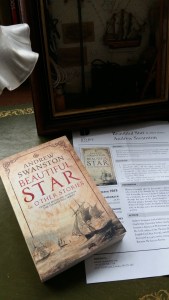 I’m thrilled to be hosting today’s stop on the blog tour for Beautiful Star & Other Stories by Andrew Swanston. Andrew is the author of the exciting Thomas Hill series (The King’s Spy, The King’s Exile and The King’s Return) set in the English Civil War. Incendium, the first in a new series set in the 1570s featuring lawyer and spy Christopher Ratcliff, was published in February 2017 (as A. D. Swanston).
 About the Author